Notification
حظر استيراد كافة أنواع الطيور الحية الداجنة والبرية وطيور الزينة وبيض التفقيس والصيصان عمر يوم ومخلفاتها الغير معاملة حراريا من تركيا ولحين استقرار الوضع الصحي

Period: 19–27 February 2026
During the period from 19 to 27 February 2026, Israeli violations against the agricultural sector in West Bank governorates continued to escalate, amid intensified field pressure on both land and farmers.
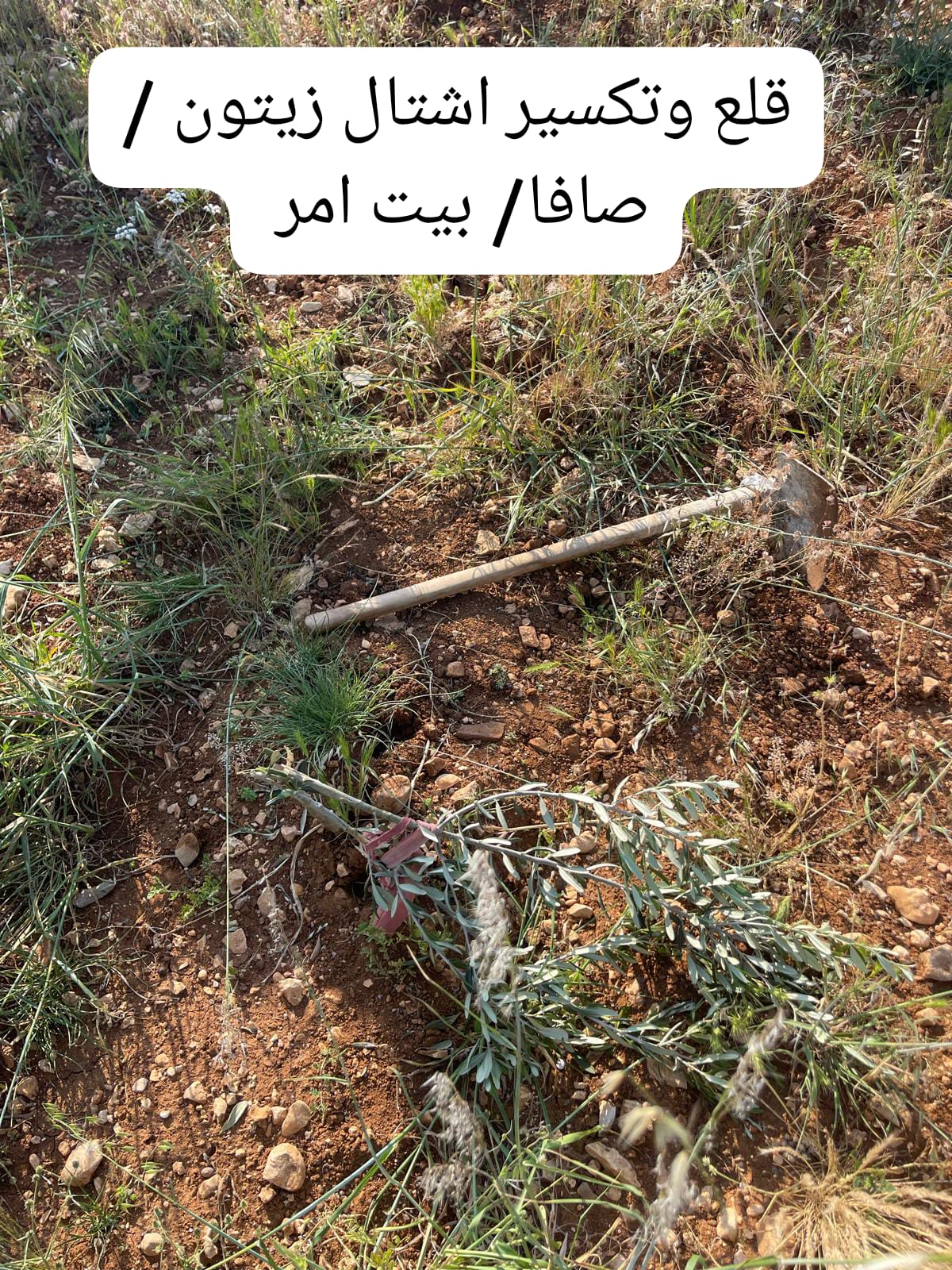
Attacks targeted fruit trees, field crops, and agricultural infrastructure, including wells, water ponds, and storage tanks. Violations also included land leveling, demolition, denial of access, and assaults by settlers against shepherds and livestock breeders.
These developments reflect an escalating pattern of systematic targeting of the foundations of Palestinian agricultural production, particularly in areas classified as “C,” where measures aimed at creating a coercive environment that discourages agricultural investment and undermines its sustainability have intensified.
This briefing is based on field documentation conducted by Ministry of Agriculture teams through the emergency damage assessment system. It aims to monitor the scale of losses incurred during the reporting period, outline their economic and social impacts, and highlight the growing challenges faced by Palestinian farmers in preserving their land and livelihoods under increasingly complex field conditions.
These violations coincided with decisions issued by the Israeli “Cabinet” during the past week, which moved toward:
Granting broader powers to evacuate lands located near the separation barrier or bypass roads.
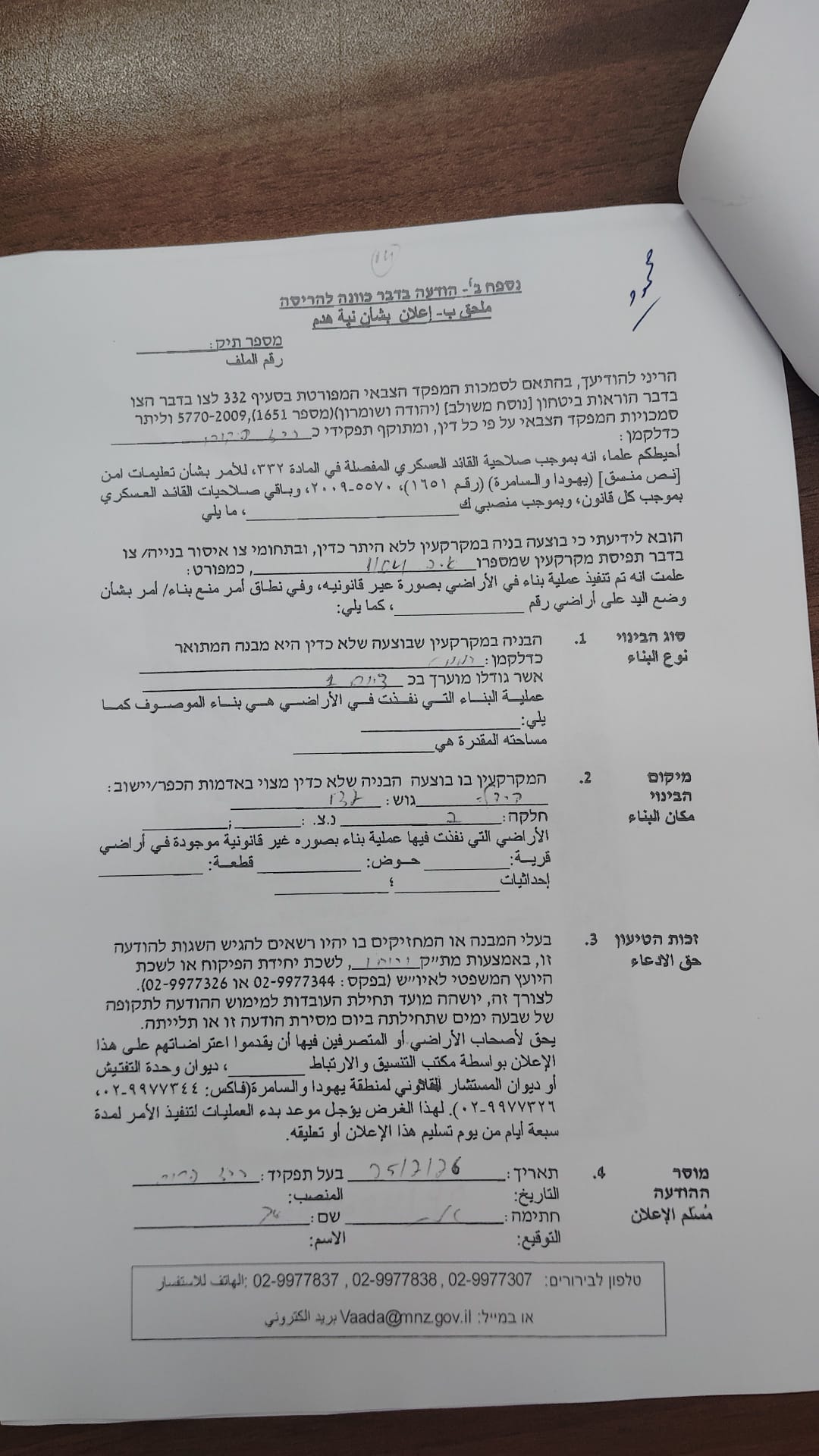
Accelerating orders to remove trees and agricultural structures under the pretext of “security considerations.”
Advancing the legalization of previously established outposts and integrating them into official settlement master plans.
Providing security cover and logistical support to pastoral outposts used as tools to control thousands of dunams through forced grazing and the prevention of farmers’ access.
Reactivating land files in Area C and advancing their gradual annexation through unilateral administrative measures outside negotiated frameworks.
Available data indicate that these decisions contribute to:
Accelerating the forced displacement of Bedouin and pastoral communities.
Undermining Palestinian food security through the targeting of land and crops.
Altering the demographic composition of Area C.
Weakening prospects for any future political settlement by fragmenting territorial continuity.
Transforming agriculture from a pillar of resilience into a high-risk sector.
During the week, Israeli media outlets circulated allegations that Palestinian-exported vegetables were contaminated with pesticide residues.
The Ministry of Agriculture categorically rejects these claims due to the absence of official laboratory reports issued by internationally recognized technical authorities. The Ministry affirms that promoting such allegations without documented scientific evidence constitutes a breach of transparency and fairness principles in international trade and represents systematic economic targeting of the Palestinian agricultural sector. Such actions undermine the right of Palestinian producers to fair market access and contravene relevant provisions of international humanitarian law concerning the protection of civilian property and livelihoods under occupation.
The total value of direct losses documented during the reporting period amounted to USD 1,305,394, distributed as follows:
| Governorate | Losses (USD) |
|---|---|
| Hebron | 153,154 |
| Bethlehem | 943,676 |
| Qalqilya | 16,500 |
| Jerusalem | 123,549 |
| Tubas | 57,000 |
| Salfit | 11,515 |
| Total | 1,305,394 |
Bethlehem Governorate recorded the highest level of losses during this week.
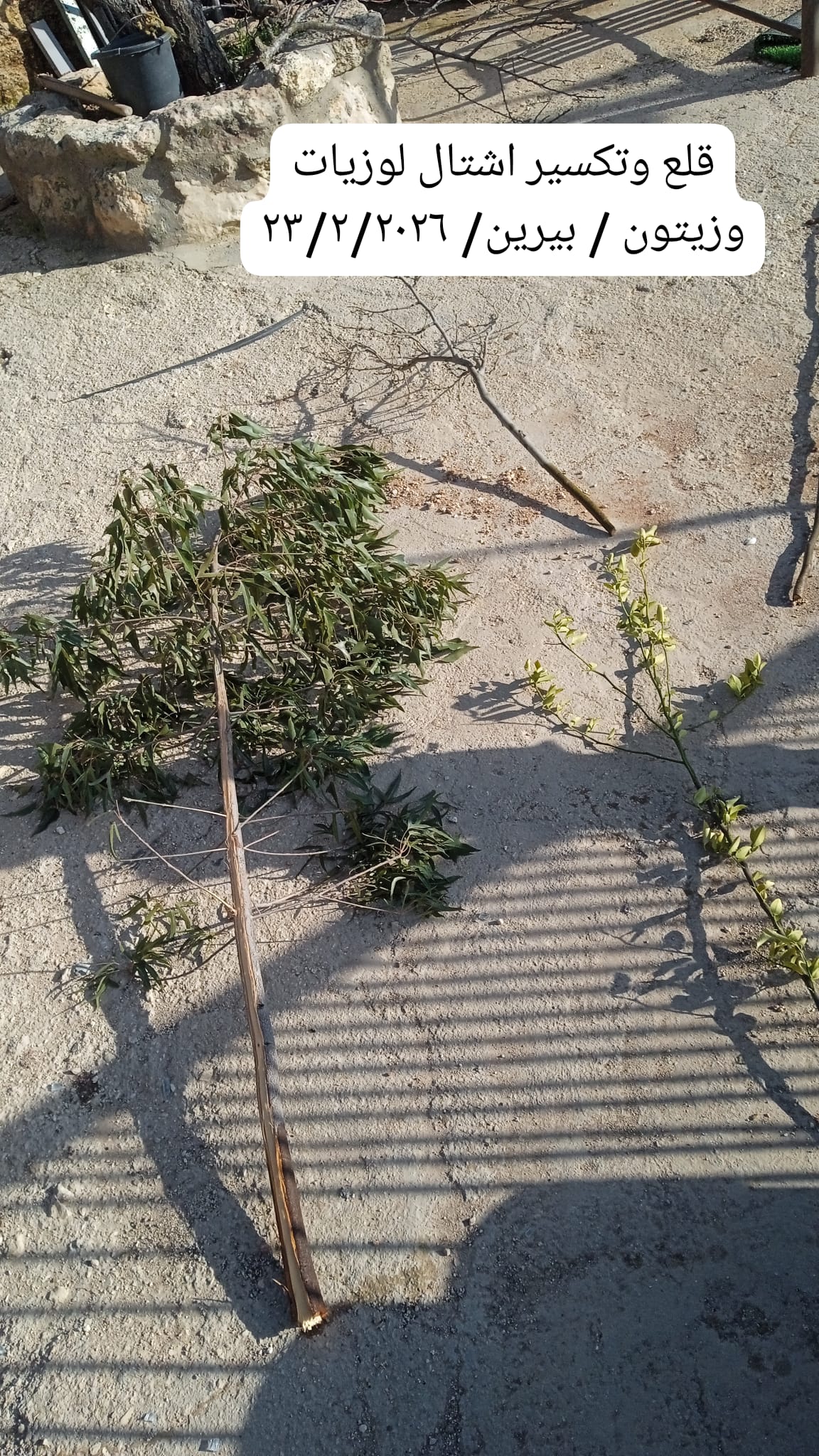
Uprooting and damaging dozens of fruit trees (olive, almond, grapevine, cactus).
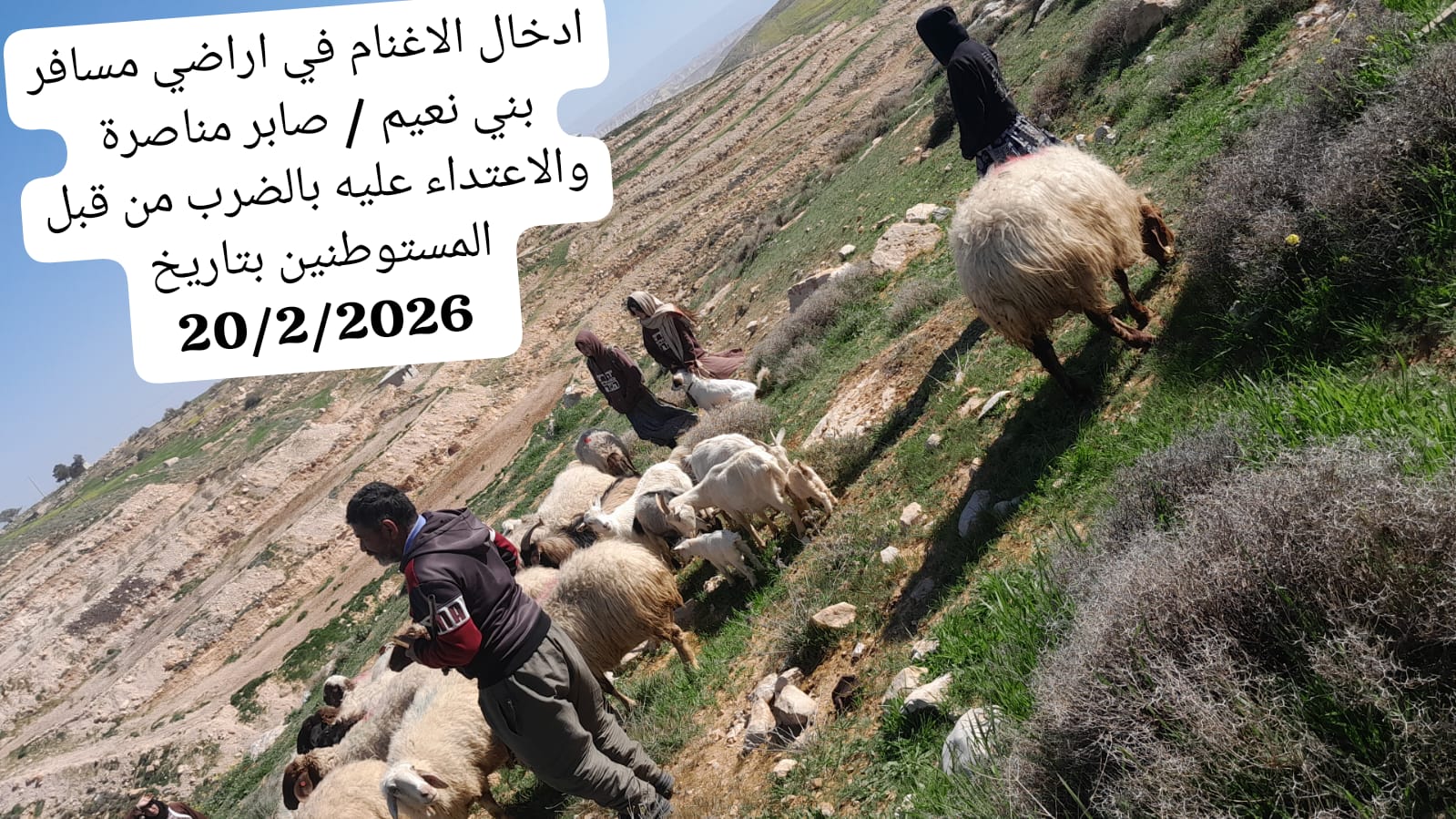
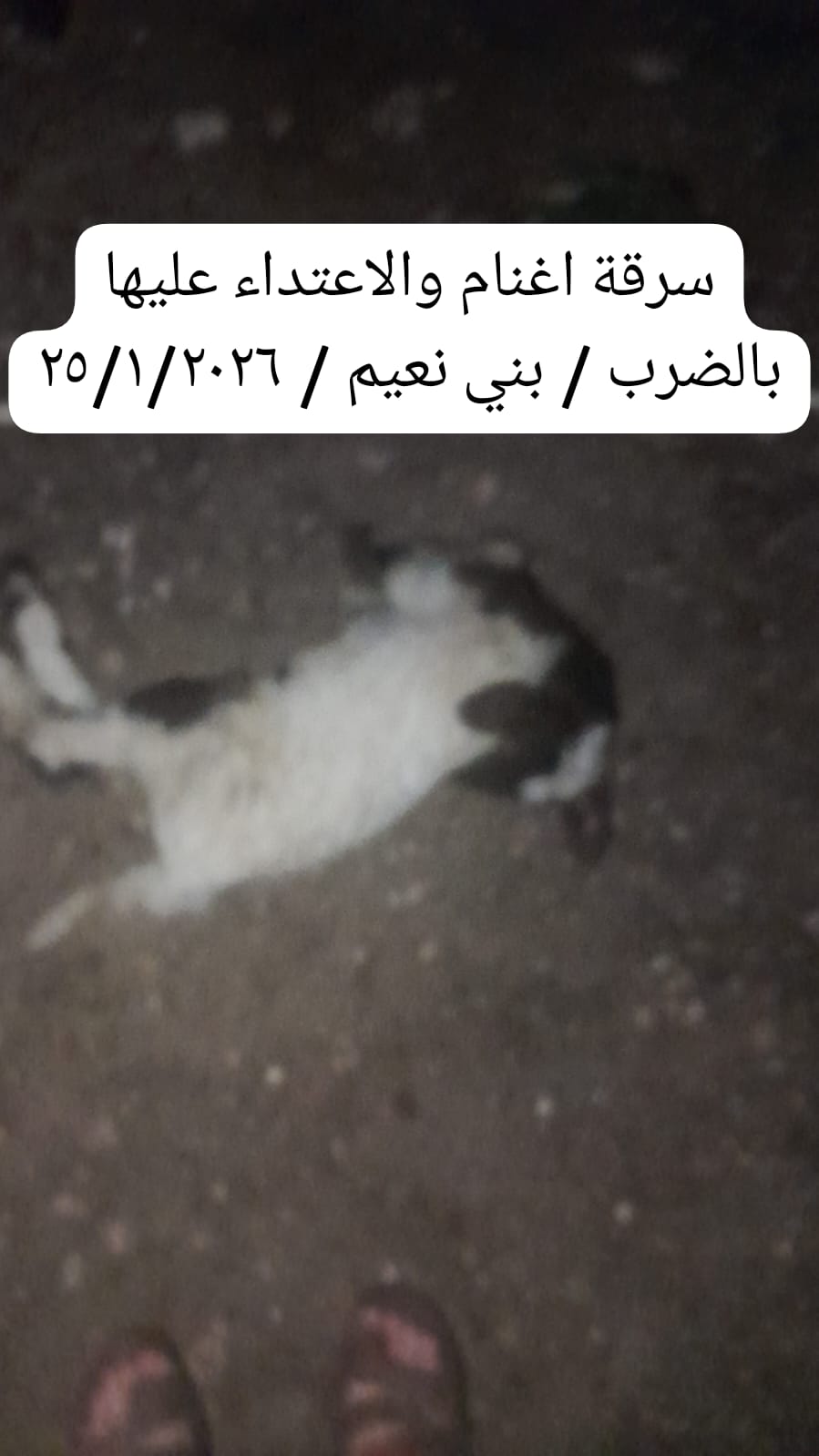
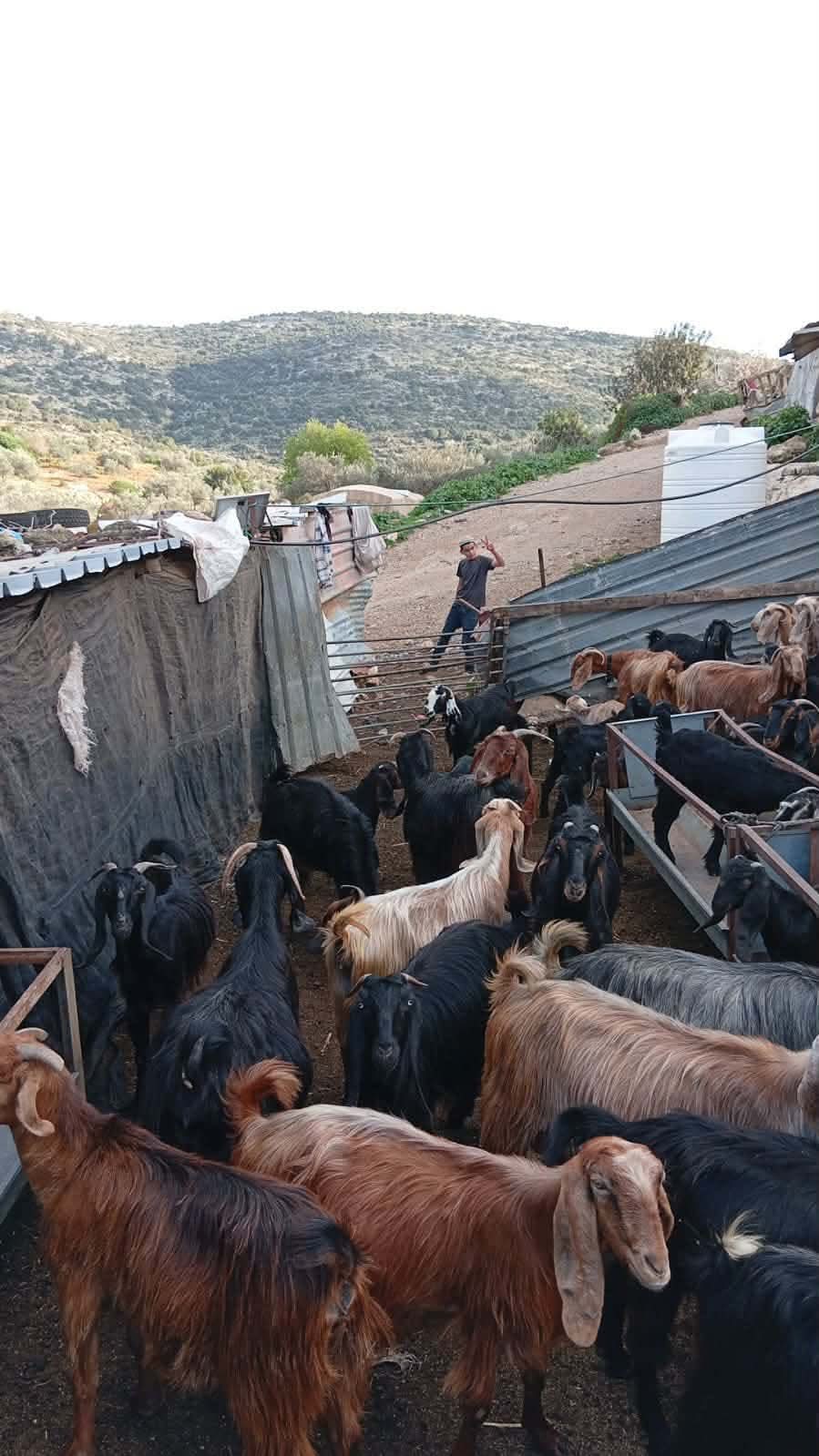
Theft of 63 sheep and killing of livestock.
Complete grazing of cultivated wheat and barley areas.
Burning of livestock pens and poultry structures, resulting in significant animal losses.
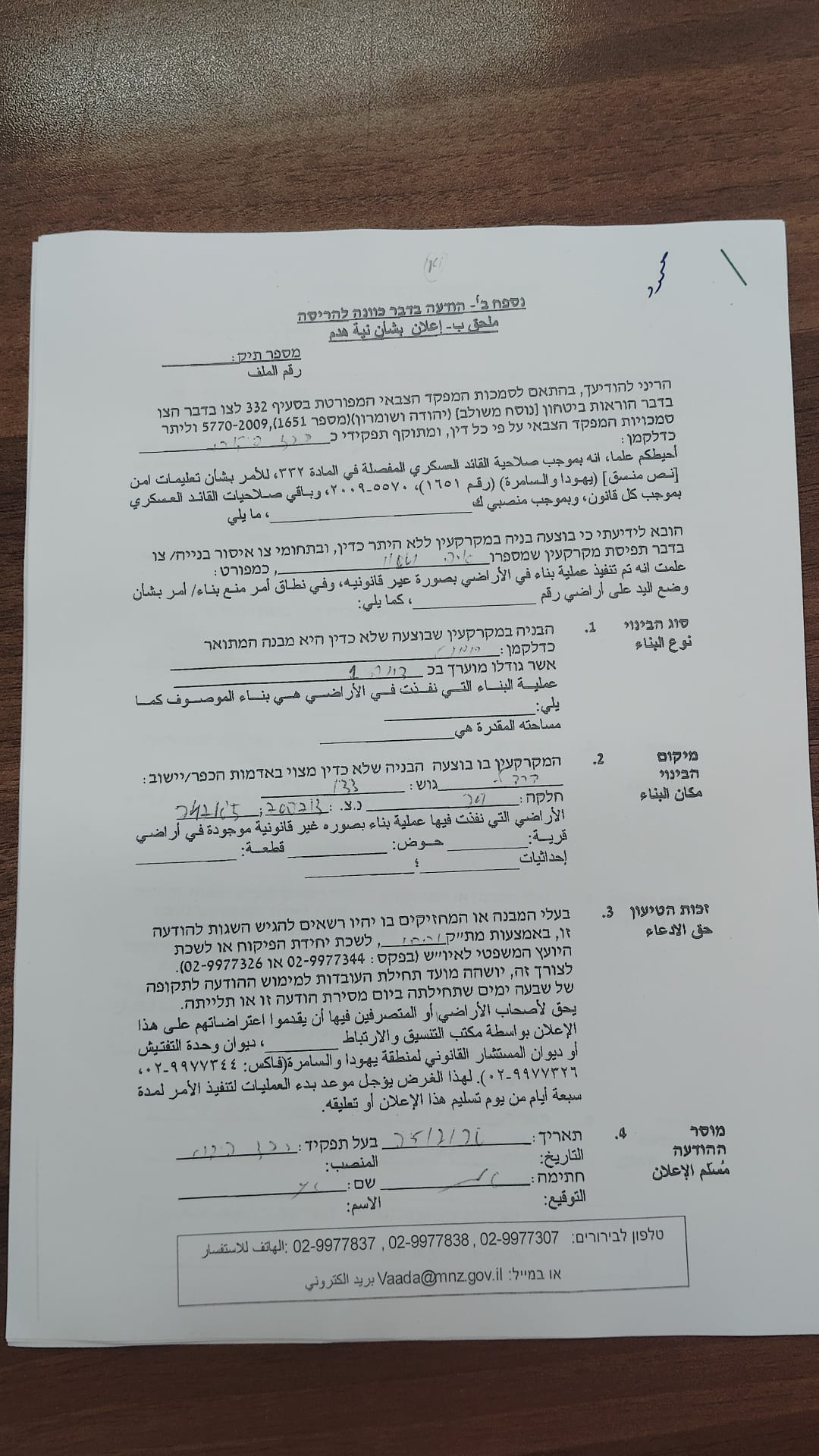
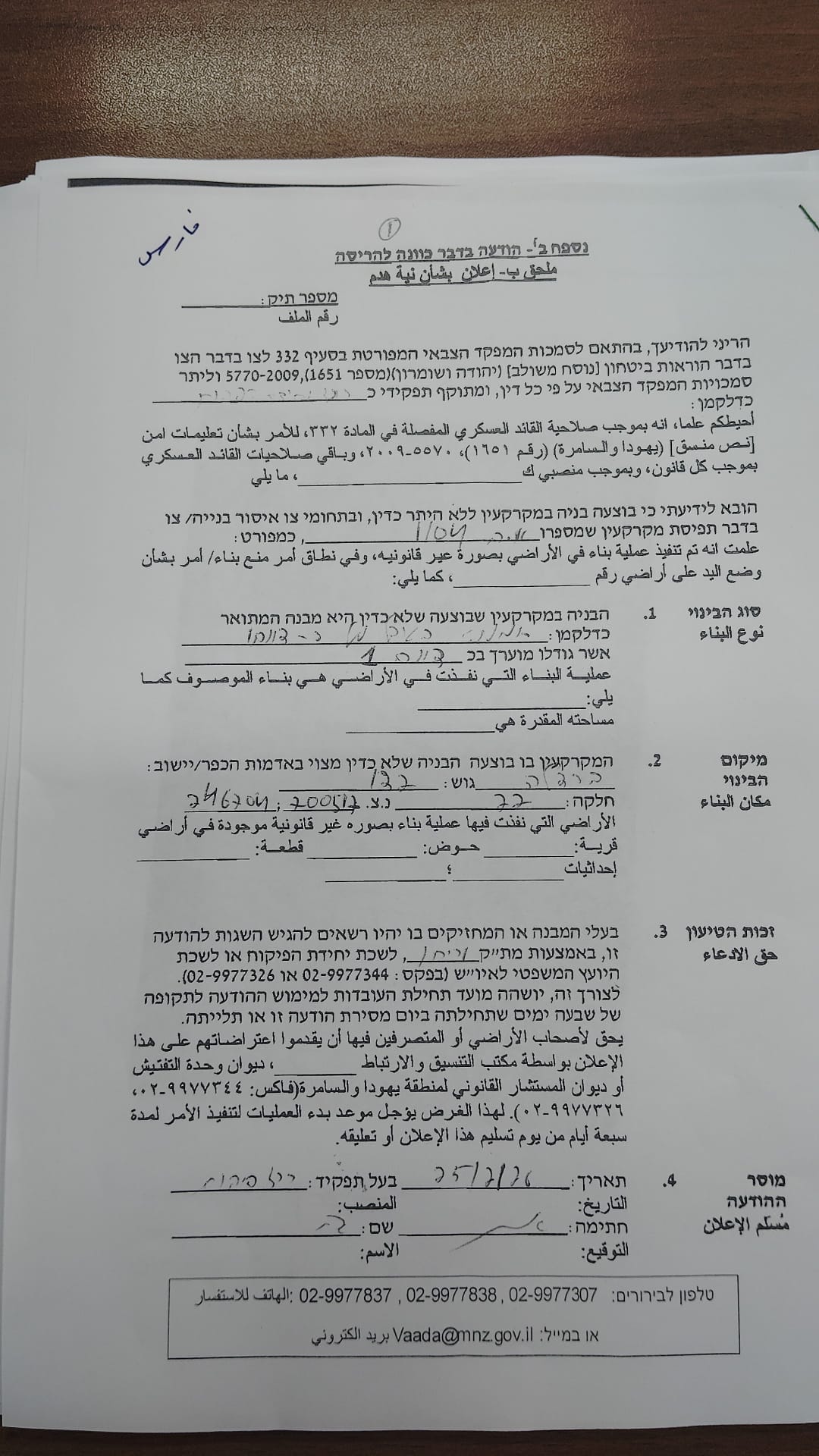
Notices issued to 11 farmers ordering the removal of greenhouses covering 40 dunams within one week.
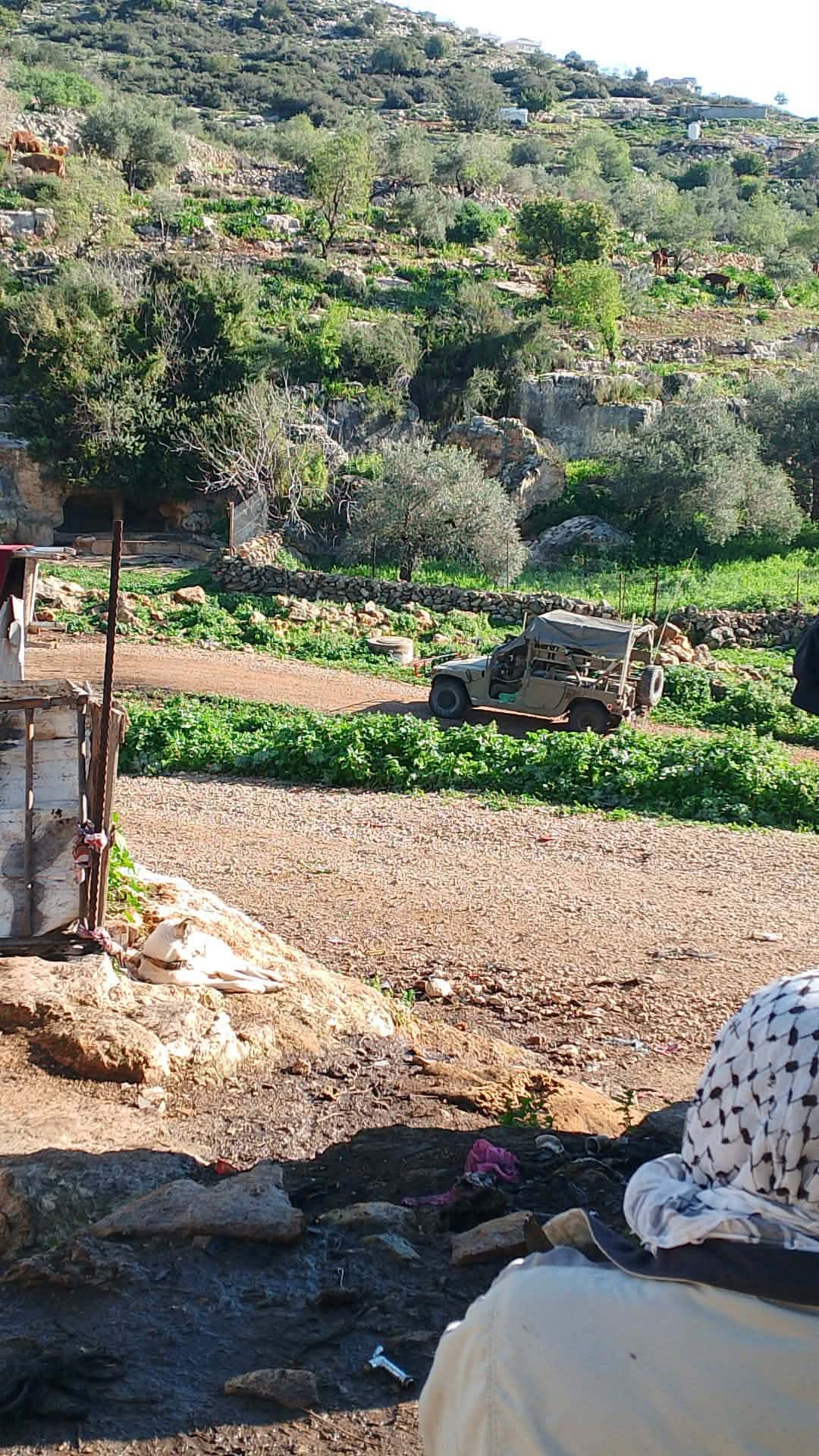
Daily harassment of shepherds.
Use of drones to pursue farmers and their livestock.
Theft of livestock and horses.
Uprooting of mature olive trees.
Forcible displacement of a family from agricultural land.
Demolition of stone terraces and confiscation of agricultural materials.
Uprooting of walnut, almond, and olive trees.
Damage to irrigation networks.
Uprooting of mature olive trees and demolition of stone terraces.
Uprooting of mature olive trees and newly planted fig trees.
Threats to evacuate a local community.
Destruction of hundreds of fruit trees.
Damage to thyme, chamomile, and sage crops.
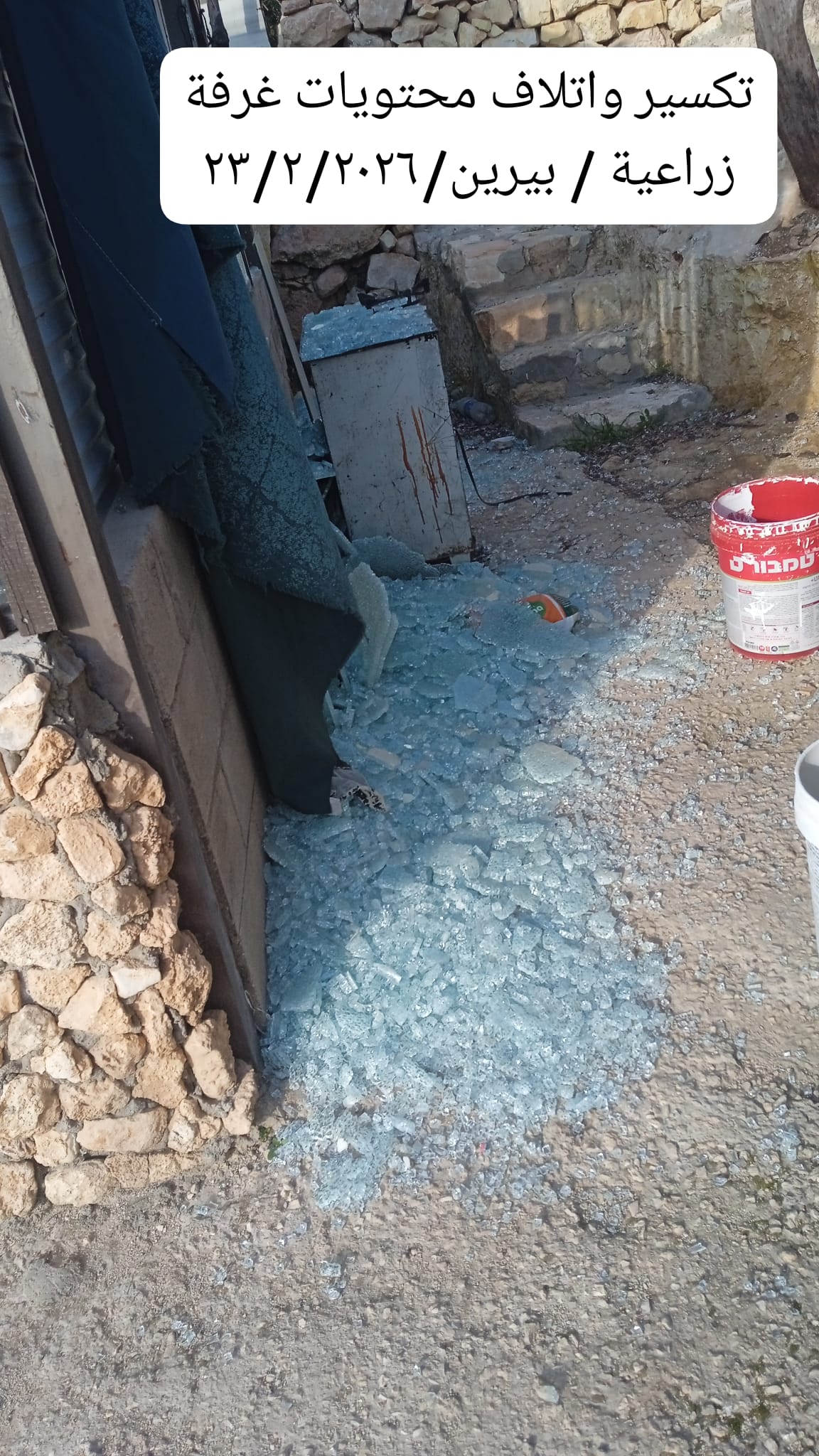
Demolition of agricultural rooms and a water collection well, and destruction of fences and irrigation systems.
The Ministry of Agriculture affirms that the continuation of these violations:
Threatens the livelihoods of thousands of farming families.
Undermines food security and social and economic stability.
Weakens farmers’ ability to remain on their land.
The Ministry stresses that verbal condemnation alone is no longer sufficient and calls for urgent international action to halt these violations, ensure protection for farmers, and safeguard their legitimate rights to their land and natural resources.
Protecting the Palestinian agricultural sector today is essential to preserving community stability, food security, and the future of sustainable development in the region.