Notification
حظر استيراد كافة أنواع الطيور الحية الداجنة والبرية وطيور الزينة وبيض التفقيس والصيصان عمر يوم ومخلفاتها الغير معاملة حراريا من تركيا ولحين استقرار الوضع الصحي

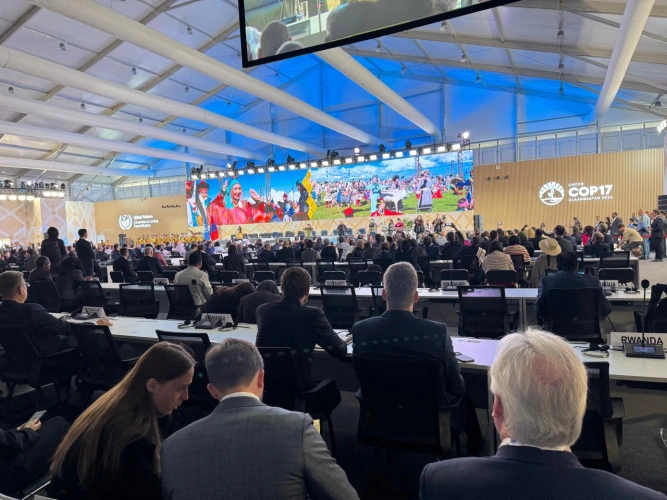
Ulaanbaatar/Mongolia: 28/8/2026
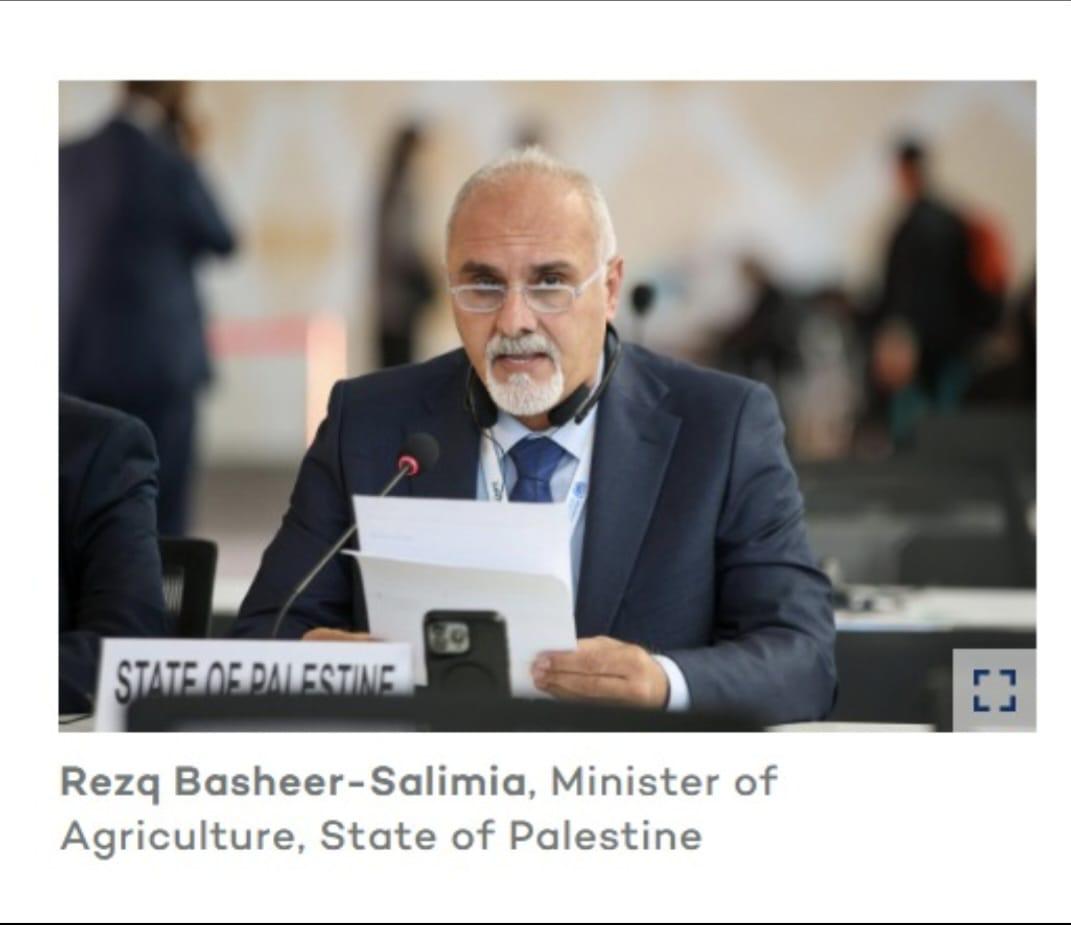
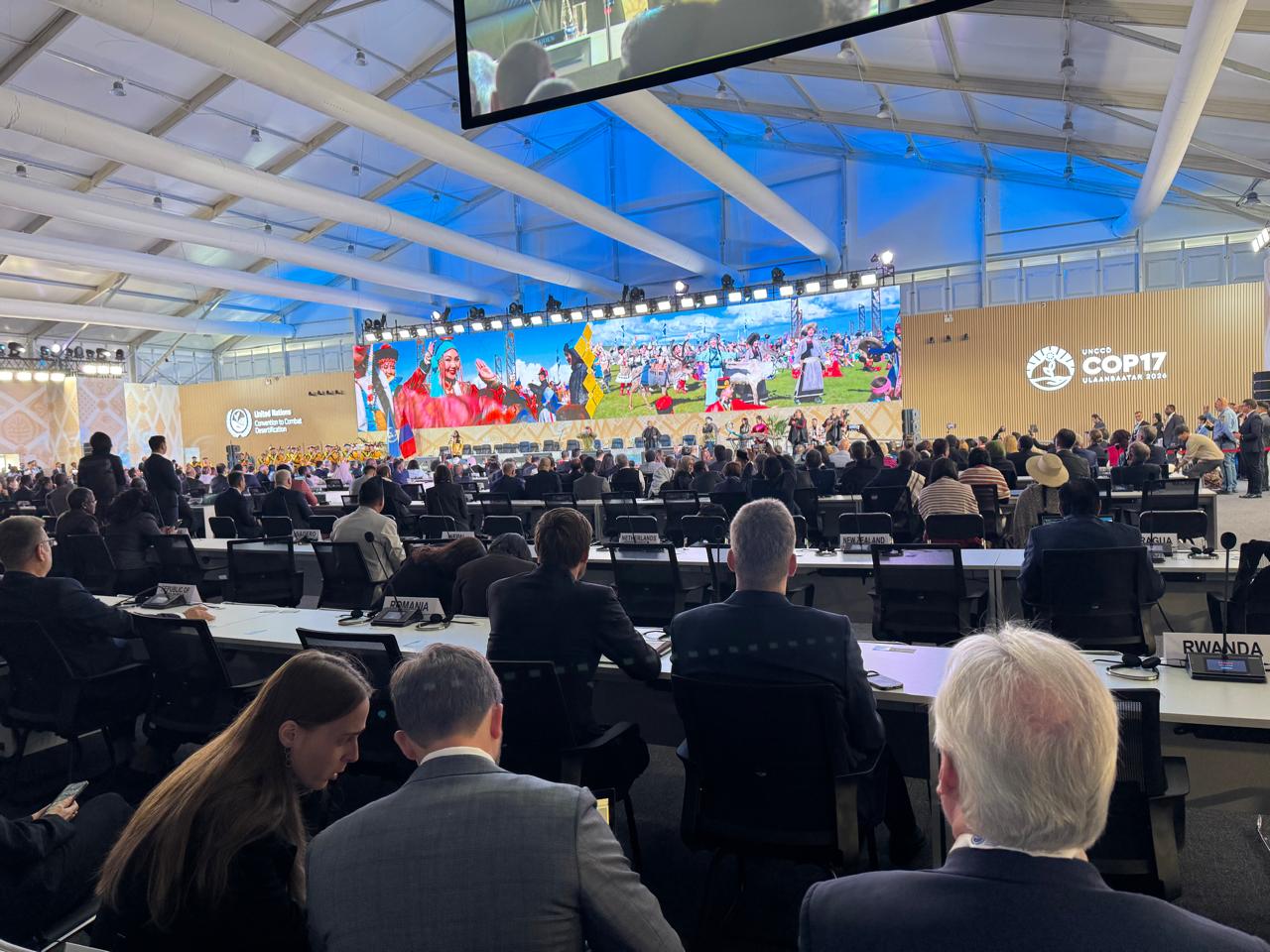
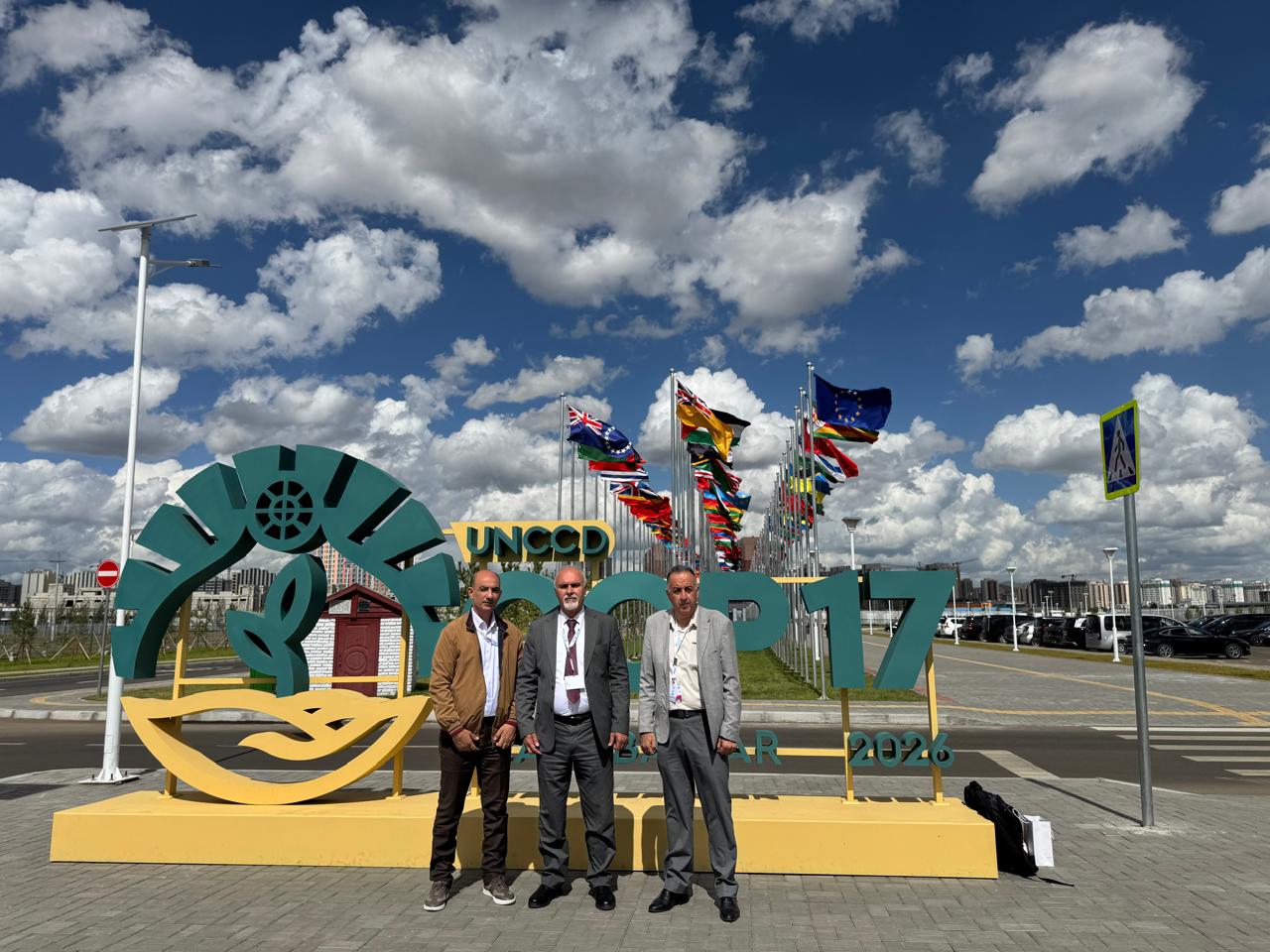
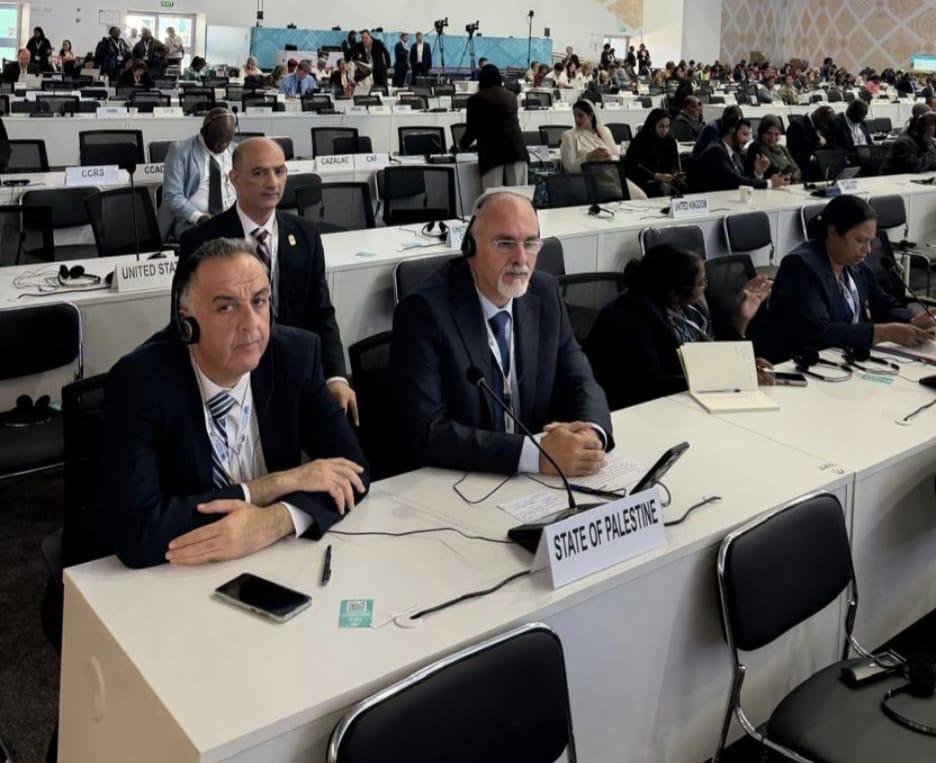
Headed by the Minister of Agriculture, Professor Rizq Slaimiya, the State of Palestine's delegation participated in the 17th session of the Conference of the Parties to the United Nations Convention to Combat Desertification (COP17), held in Mongolia. The conference had broad international participation to discuss ways to combat desertification, land degradation, and drought, as well as to promote the sustainable management of natural resources.
During its participation, the State of Palestine emphasized that drought has become one of the most serious challenges facing food and water security and the livelihoods of agricultural and rural communities. It noted that its effects are increasing in Palestine due to rising temperatures, declining and fluctuating rainfall, and recurring drought seasons.
The Palestinian delegation explained that while the Israeli occupation does not directly cause climatic drought, it exacerbates its effects and multiplies its risks through restrictions on access to land and water, obstruction of well development and water infrastructure, destruction of agricultural land and facilities, uprooting and burning of trees, restrictions on grazing and rangeland development, and the depletion of natural resources. These actions limit the ability of Palestinian farmers, herders, and rural communities to adapt and persevere.
Palestine stressed that addressing drought requires a shift from crisis management after the fact to drought risk management before it occurs. This can be achieved through developing monitoring and early warning systems, promoting climate-smart agriculture, improving water use efficiency, protecting soil and restoring degraded lands, developing more drought-tolerant varieties and crops, and empowering farmers, herders, and rural communities.
The State of Palestine emphasized that providing equitable and sustainable international financing is essential to enabling countries and communities most vulnerable to drought and land degradation to invest in prevention, adaptation, and resilience building, rather than simply funding post-disaster response.
Palestine also reiterated its call for strengthening international and regional partnerships and mobilizing support for the Palestinian agricultural sector. This support is crucial to ensuring the protection of land and natural resources, enhancing food and water security, and achieving sustainable agricultural development.
The Palestinian delegation stated that sovereignty over water resources and their sustainable and equitable management are fundamental pillars for managing drought risks and strengthening community resilience. They affirmed that investing in people, land, water, and knowledge is a true investment in the future.
The Palestinian delegation included Engineer Hossam Talib, Assistant Undersecretary for the Natural Resources Sector, and Engineer Thaer Al-Rabi, Director General of Forests and Rangelands.