Notification
حظر استيراد كافة أنواع الطيور الحية الداجنة والبرية وطيور الزينة وبيض التفقيس والصيصان عمر يوم ومخلفاتها الغير معاملة حراريا من تركيا ولحين استقرار الوضع الصحي

Ramallah | February 8, 2026
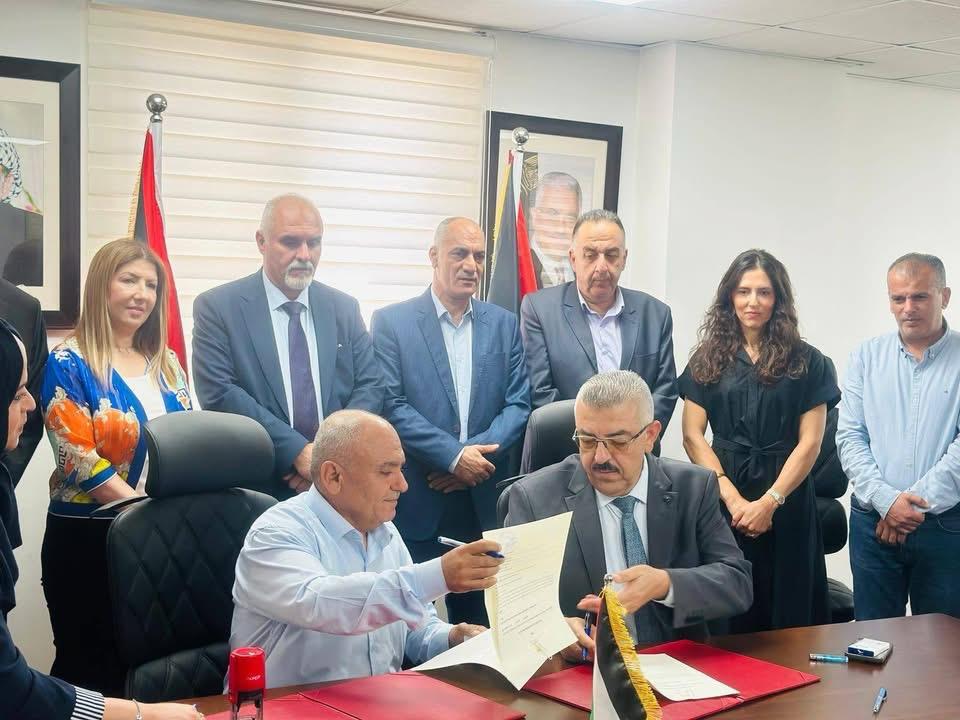
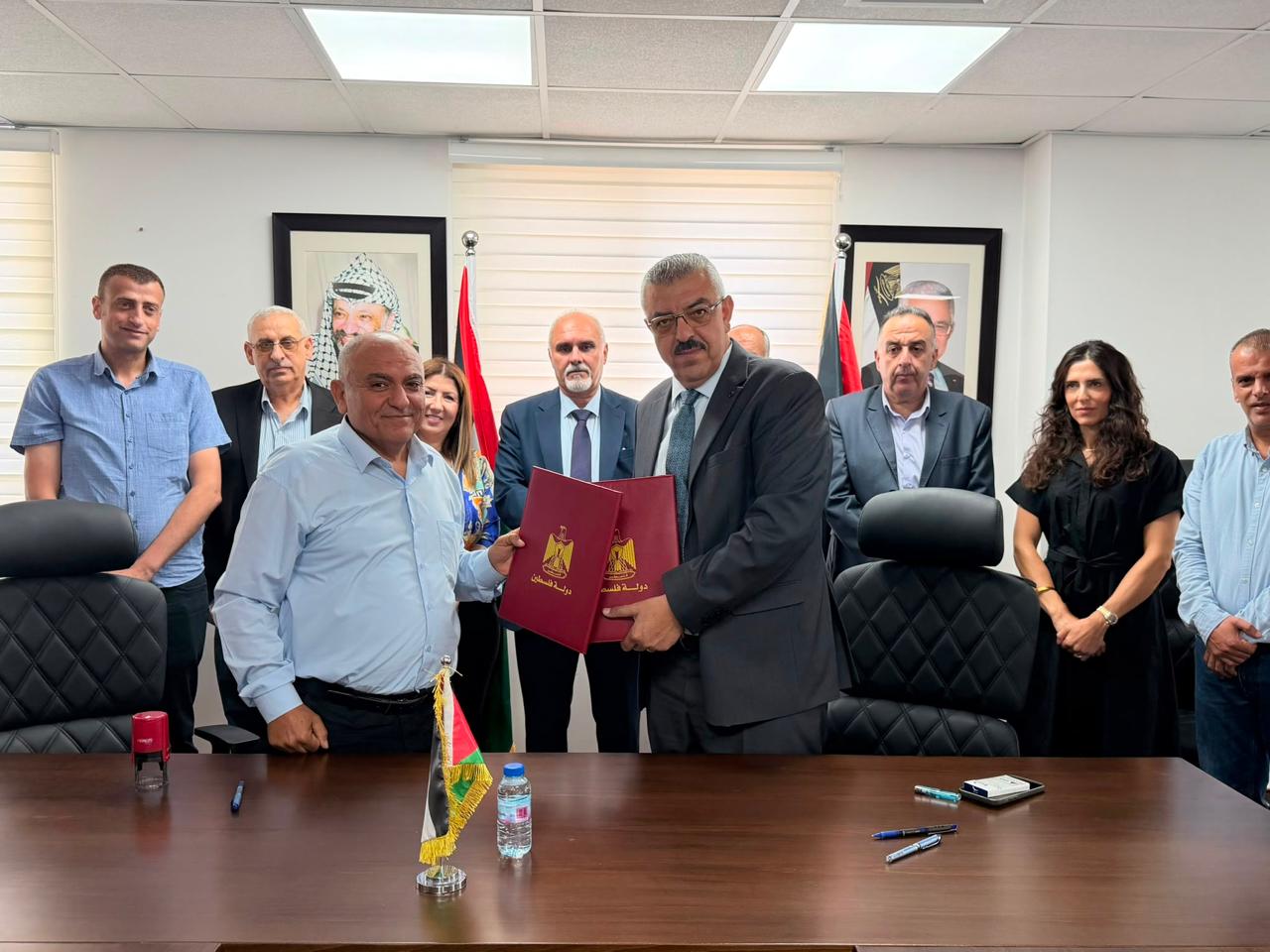
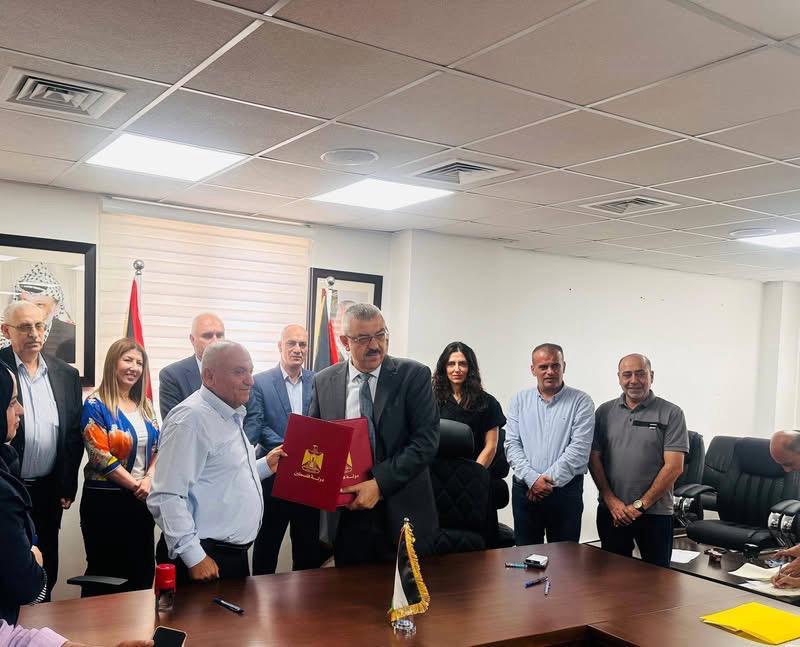
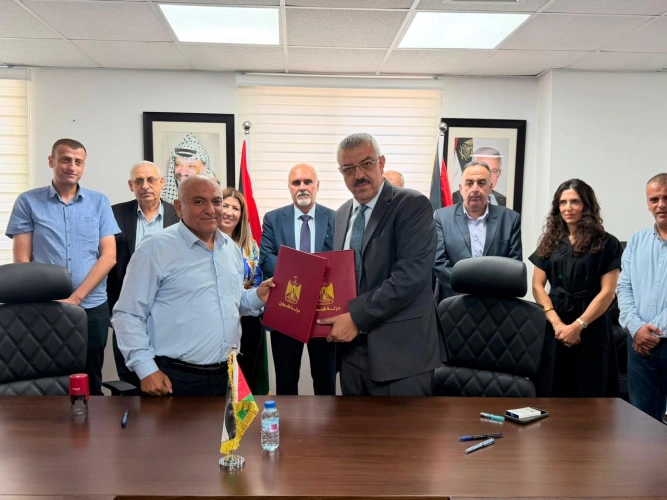
Under the patronage of the Minister of Agriculture, Professor Rizq Slaimiya, an agreement was signed today at the Ministry's headquarters in Ramallah for 280,000 shekels to establish and equip a unit for producing alternative animal feed in the town of Bardala, Tubas Governorate. This initiative falls under the "My Initiative" project, implemented by the Ministry of Agriculture in partnership with the United Nations Development Programme (UNDP), and with support from the governments of India, Brazil, and South Africa through the IBSA Fund. The agreement was signed by Eng. Omar Bisharat, Director General of the Tubas and Northern Jordan Valley Agriculture Directorate, on behalf of the Ministry of Agriculture, and by Mr. Ibrahim Sawafteh, Chairman of the Bardala Cooperative Society for Livestock Development. The signing ceremony was attended by Mr. Abdullah Abu Mohsen, Deputy Governor of Tubas and Northern Jordan Valley, Eng. Bader Hawamdeh, Undersecretary of the Ministry, Assistant Undersecretaries, Eng. Hussam Melhem, Head of the Projects Unit, and several Directors General from the Ministry.
Slaimiya emphasized that the project embodies the Ministry of Agriculture's commitment to implementing high-quality projects that support livestock breeders and provide practical and sustainable solutions to the challenges they face. He pointed out that investing in the production of alternative animal feed using agricultural waste contributes to reducing production costs, enhancing the sector's sustainability, and transforming local resources into added economic value. He added that the Ministry is continuing to expand its partnerships with international organizations and cooperative societies to implement development projects that strengthen farmers' resilience, increase agricultural production efficiency, and support sustainable development in the Northern Jordan Valley and various governorates.
The project includes the establishment and equipping of a specialized unit for the production of alternative animal feed. This will be achieved by providing a complete production line encompassing harvesting and post-harvest equipment, agricultural waste shredding and processing machines, a silage baler, a hay-making machine, a feed pelletizer, a vertical feed mixer (TMR), a packaging machine, an agricultural waste dryer, and a crusher. The project also includes the rehabilitation and equipping of the unit's site and the implementation of training and capacity-building programs for beneficiaries to ensure its sustainable operation and optimal results. The project aims to utilize locally available agricultural waste and transform it into high-quality alternative animal feed, thereby contributing to increased efficiency in agricultural resource use and reduced waste.
The project is expected to directly benefit at least 30 livestock breeders in the Bardala and Northern Jordan Valley region by improving access to locally produced feed, reducing production costs, and enhancing the sustainability of their agricultural projects. This intervention comes within the framework of the efforts of the Ministry of Agriculture and its partners to support the resilience of farmers, develop the livestock sector, and encourage the effective and sustainable use of agricultural resources and waste, which contributes to promoting sustainable agricultural development and improving livelihoods in the Palestinian countryside.