Notification
حظر استيراد كافة أنواع الطيور الحية الداجنة والبرية وطيور الزينة وبيض التفقيس والصيصان عمر يوم ومخلفاتها الغير معاملة حراريا من تركيا ولحين استقرار الوضع الصحي

Bethlehem: May 9, 2026
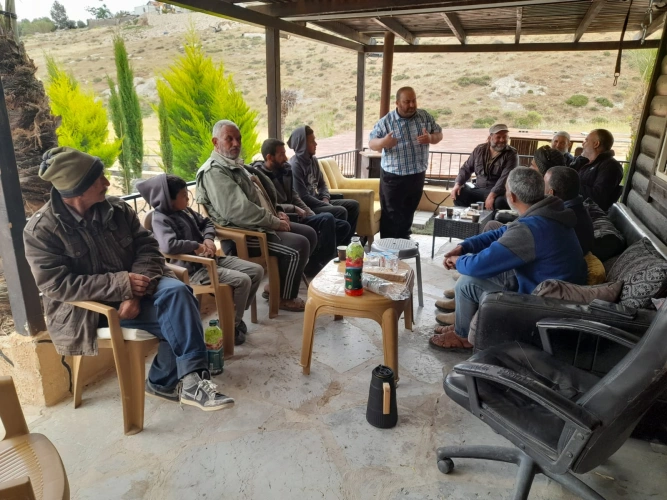
Bethlehem Directorate of Agriculture, through its Extension Services Department – Ruminants Section, conducted the second and third sessions of its intensive extension workshops for field schools in the communities of Tuqu', Za'tara, and Al-Ubaidiya in Bethlehem Governorate. This initiative, implemented in partnership with the United Nations Development Programme (UNDP), is part of the Ministry of Agriculture's efforts to strengthen farmers' resilience and develop the livestock sector in marginalized areas.
The workshops were attended by 40 farmers participating in "My Initiative" project. The technical team provided theoretical and practical explanations of the field school methodology and its importance in promoting knowledge and experience sharing among farmers. The workshops also focused on biosecurity measures and their role in reducing the spread of infectious diseases and protecting livestock.
The training included an overview of the most prominent sheep breeds raised in Palestine and their productive characteristics. Furthermore, technical guidance was provided on preparing balanced feeding systems for flocks and adapting them to different physiological stages, thereby contributing to increased production efficiency, improved breeding quality, and reduced costs for farmers. The Bethlehem Directorate of Agriculture emphasizes the importance of these meetings in enhancing the technical awareness of sheep farmers and enabling them to adopt modern and sustainable agricultural practices that contribute to improved production and support food security in rural areas.
These activities are being implemented within the framework of the "My Initiative: Empowering Marginalized Communities through Investment in Agricultural Business Development" project, jointly coordinated by the Palestinian Ministry of Agriculture and the United Nations Development Programme (UNDP), with support from the International Bank for Agricultural Development (IBSA), which includes India, Brazil, and South Africa. The project aims to build the technical capacities of farmers and promote sustainable rural development in the targeted areas.


