Notification
حظر استيراد كافة أنواع الطيور الحية الداجنة والبرية وطيور الزينة وبيض التفقيس والصيصان عمر يوم ومخلفاتها الغير معاملة حراريا من تركيا ولحين استقرار الوضع الصحي

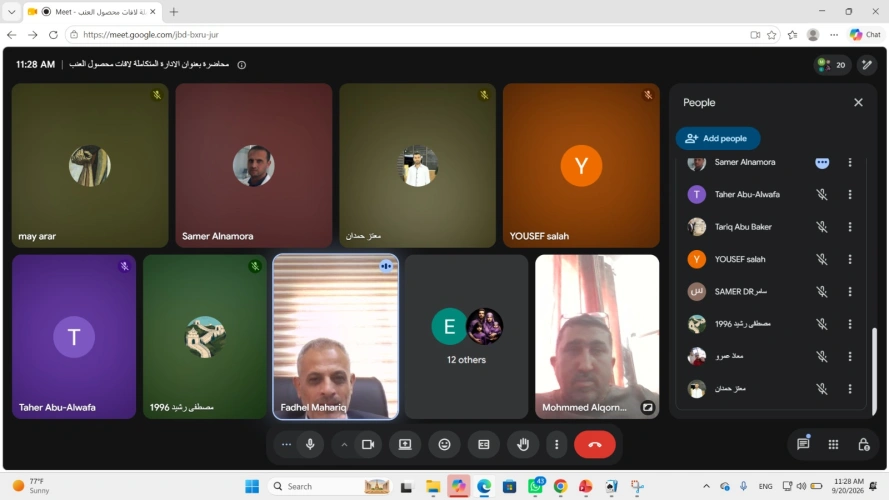
⭕ Over 25 participants—including technical staff, agriculture students, and volunteers—attended the lecture.
⭕ Emphasis placed on the importance of early monitoring and reducing over-reliance on agricultural pesticides.
⭕ Promoting a shift toward data- and information-driven Integrated Pest Management (IPM) programs.
Ramallah: September 23, 2026
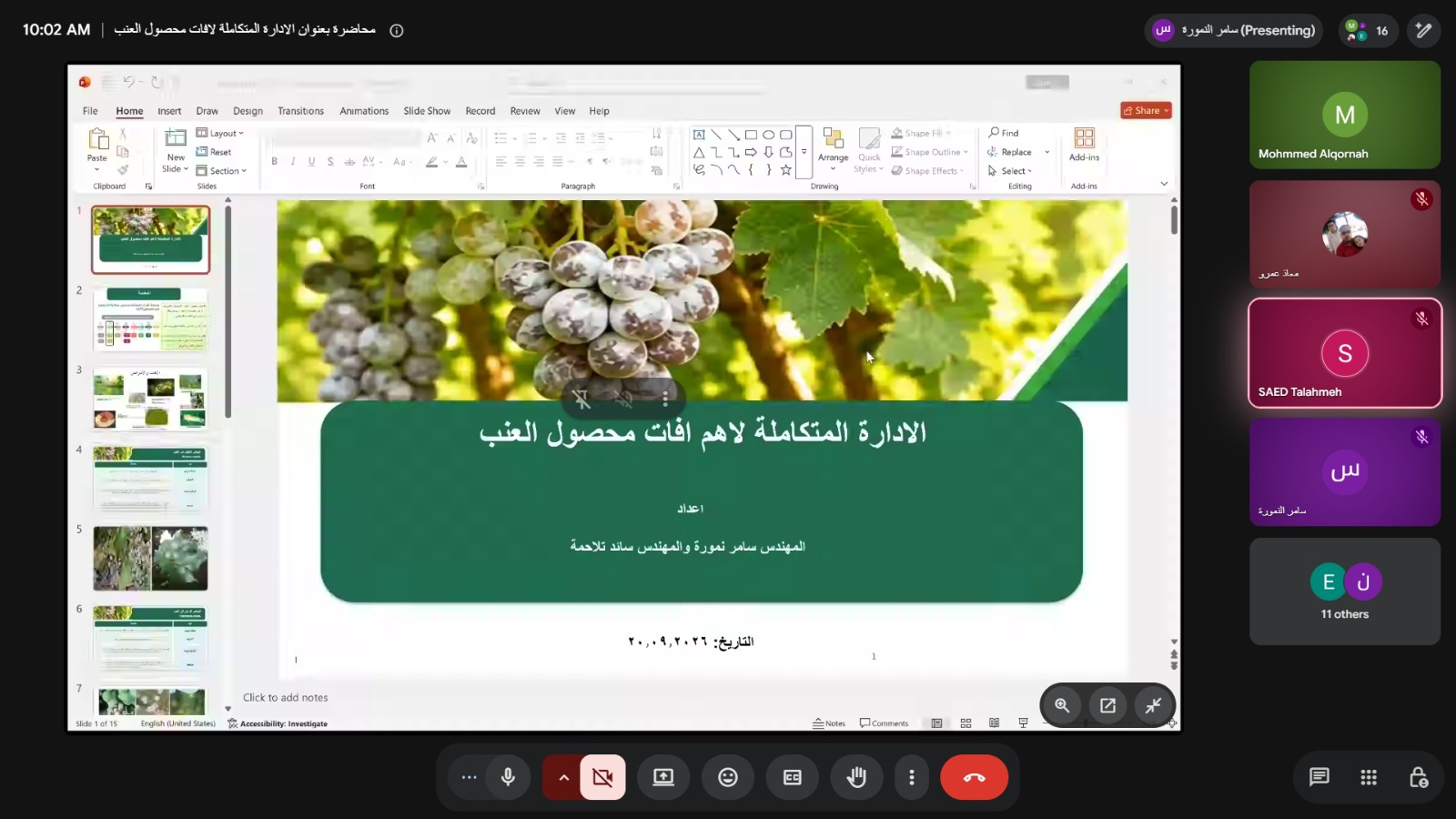
The Ministry of Agriculture—represented by the General Directorate of Plant Protection and Agricultural Quarantine and its Department of Agricultural Pest Monitoring and Control—conducted an awareness lecture via Zoom. The session focused on Integrated Pest Management (IPM) for grape crops and the promotion of modern plant protection practices. This event was part of a series of lectures and scientific meetings organized by the Ministry to raise awareness of modern plant protection methods and enhance the technical knowledge of staff and participants.
At the start of the meeting, Eng. Fadl Al-Mahariq, Director General of Plant Protection and Agricultural Quarantine, welcomed the participants. He emphasized the importance of adopting the Integrated Pest Management (IPM) approach, noting its role in improving the efficiency of control programs and reducing excessive reliance on agricultural pesticides. He highlighted how this approach contributes to protecting crops, public health, and the environment, while fostering the sustainability of agricultural production.
Agricultural engineers Samer Namoura and Saed Talahmeh delivered a technical presentation covering key economically significant pests affecting grape crops, the conditions conducive to their spread, and the resulting symptoms and damage. They also outlined monitoring techniques and appropriate integrated control methods. Dr. Mohammad Al-Qurna moderated an extensive technical discussion that facilitated the exchange of expertise and information, addressing major challenges associated with controlling grape pests and exploring mechanisms to improve monitoring and control programs. The lecture emphasized the importance of shifting from a reactive approach—combating pests only after they appear—to a more proactive strategy based on early monitoring and informed decision-making using field data. This shift enhances the effectiveness of prevention and control programs while mitigating the adverse effects associated with unbalanced pesticide use.
More than 25 participants attended the lecture, including staff and inspectors from the General Directorate of Plant Protection, Agricultural Quarantine, and Agricultural Extension, as well as agriculture students and volunteers. Their participation underscores the importance of fostering cooperation and the exchange of knowledge and expertise among technical personnel and relevant stakeholders in the field of plant protection.
This lecture is part of the Ministry of Agriculture’s ongoing efforts to build the technical capacity of its staff, strengthen monitoring and surveillance systems, and advance modern agricultural pest management practices. These initiatives contribute to safeguarding Palestinian agricultural production and enhancing the efficiency of integrated pest management programs.