Notification
حظر استيراد كافة أنواع الطيور الحية الداجنة والبرية وطيور الزينة وبيض التفقيس والصيصان عمر يوم ومخلفاتها الغير معاملة حراريا من تركيا ولحين استقرار الوضع الصحي

Ramallah: March 4, 2026
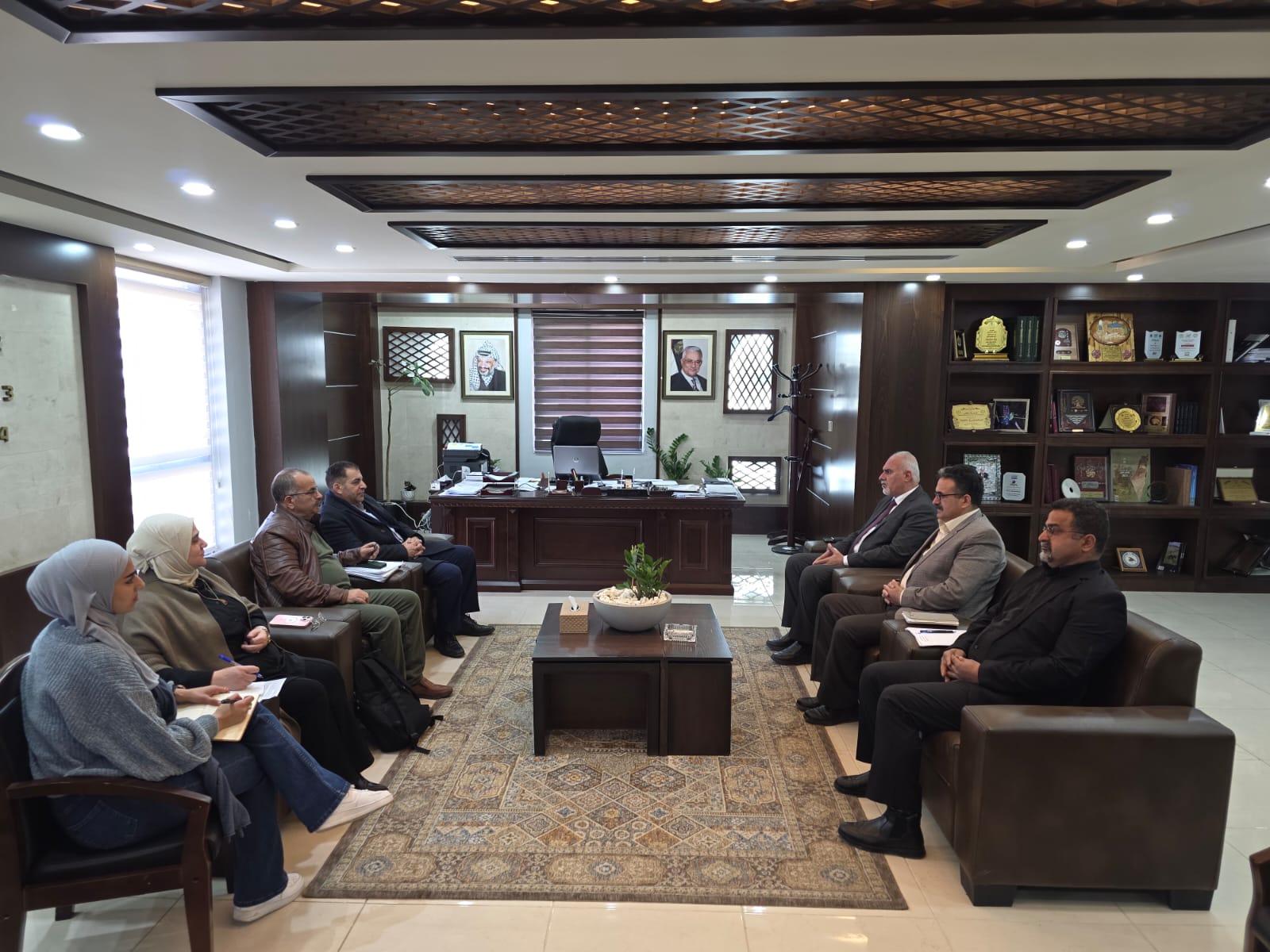
Minister of Agriculture, Professor Riziq Slaimiya, met at his office in the Ministry headquarters in Ramallah with a delegation from ANERA to discuss prospects for developing joint cooperation and expanding the scope of agricultural and development programs implemented in Palestine. This aims to contribute to strengthening food security and supporting the resilience of farmers in light of current challenges. This meeting comes within the framework of national efforts to protect the Palestinian agricultural sector and enhance its capacity for resilience and recovery.
The ANERA delegation included Dr. Khaled Rajab, Director of ANERA in Palestine, and Eng. Nasser Qaddous, Director of Agriculture and Community Development Programs. Also, among those who joind the meenting were the Deputy Minister of the Ministry, Eng. Bader Hawamdeh, the Director General of Planning and Policies, Eng. Maram Sawalha, the Director General of International Relations, Eng. Mahmoud Fatafta, and Khitam Hamayel from the Ministry's Project Management Unit.
Minister Slaimiya reviewed the situation of the agricultural sector in both the West Bank and Gaza Strip, highlighting the escalating challenges facing farmers and the severe damage inflicted on agricultural lands, infrastructure, and supply chains. He emphasized that the Ministry is working according to a comprehensive strategic vision focused on enhancing local production, strengthening food security, and fortifying the agricultural system as a cornerstone of national and economic security.
Slaimiya also outlined the agricultural initiatives launched by the Ministry as part of its plan to bolster the resilience of the agricultural sector. These initiatives include the Food Security Initiative, which aims to expand the cultivation of field and fodder crops to increase local production and reduce the food gap; the Water Security Initiative, which seeks to improve water resource management efficiency and increase water availability through infrastructure development and the implementation of rainwater harvesting programs; Greening Palestine Initiative, which aims to enhance vegetation cover and protect agricultural lands; the Rapid Response Initiative, which addresses immediate damage and attacks affecting the agricultural sector; and Gaza Reconstruction and Revitalization Initiative, which aims to restore the production cycle and rebuild agricultural value chains to ensure rapid recovery and economic sustainability.
The Ministry also presented the Rapid Response Initiative, which addresses immediate damage and attacks affecting the agricultural sector, and Gaza Reconstruction and Revitalization Initiative, which aims to restore the agricultural value chains and ensure rapid recovery and economic sustainability. Slaimiya praised ANERA's active role in supporting farmers' resilience and implementing impactful interventions that improve livelihoods, particularly in marginalized and affected areas. He emphasized the importance of aligning programs with the Ministry's priorities and strategic plans to maximize developmental impact.
For its part, ANERA delegation reviewed its programs across various sectors, with a focus on agriculture. They stressed their commitment to developing joint work mechanisms and planning to ensure the sustainability of services provided to the most vulnerable groups and to enhance integration with the Palestinian government's plans. The delegation also presented new projects targeting farmers in several key areas, including agricultural water, livestock, crop production, and support for the household and rural economy.
In closing, Minister Slaimiya emphasized the importance of unifying efforts between the Ministry and international organizations to coordinate interventions and achieve service integration. He stressed that supporting the Palestinian agricultural system at this critical juncture is a national and humanitarian priority that necessitates effective strategic partnerships and a sustainable development response that preserves farmers' rights to their land and strengthens their resilience in the face of challenges.