Notification
حظر استيراد كافة أنواع الطيور الحية الداجنة والبرية وطيور الزينة وبيض التفقيس والصيصان عمر يوم ومخلفاتها الغير معاملة حراريا من تركيا ولحين استقرار الوضع الصحي

- Fair distribution of support across governorates and affected groups
- Development projects that enhance agricultural production and economic sustainability
- Minister Salimiya: Our battle today is a battle for food, survival, and strengthening the resilience of farmers
Ramallah: March 31, 2026
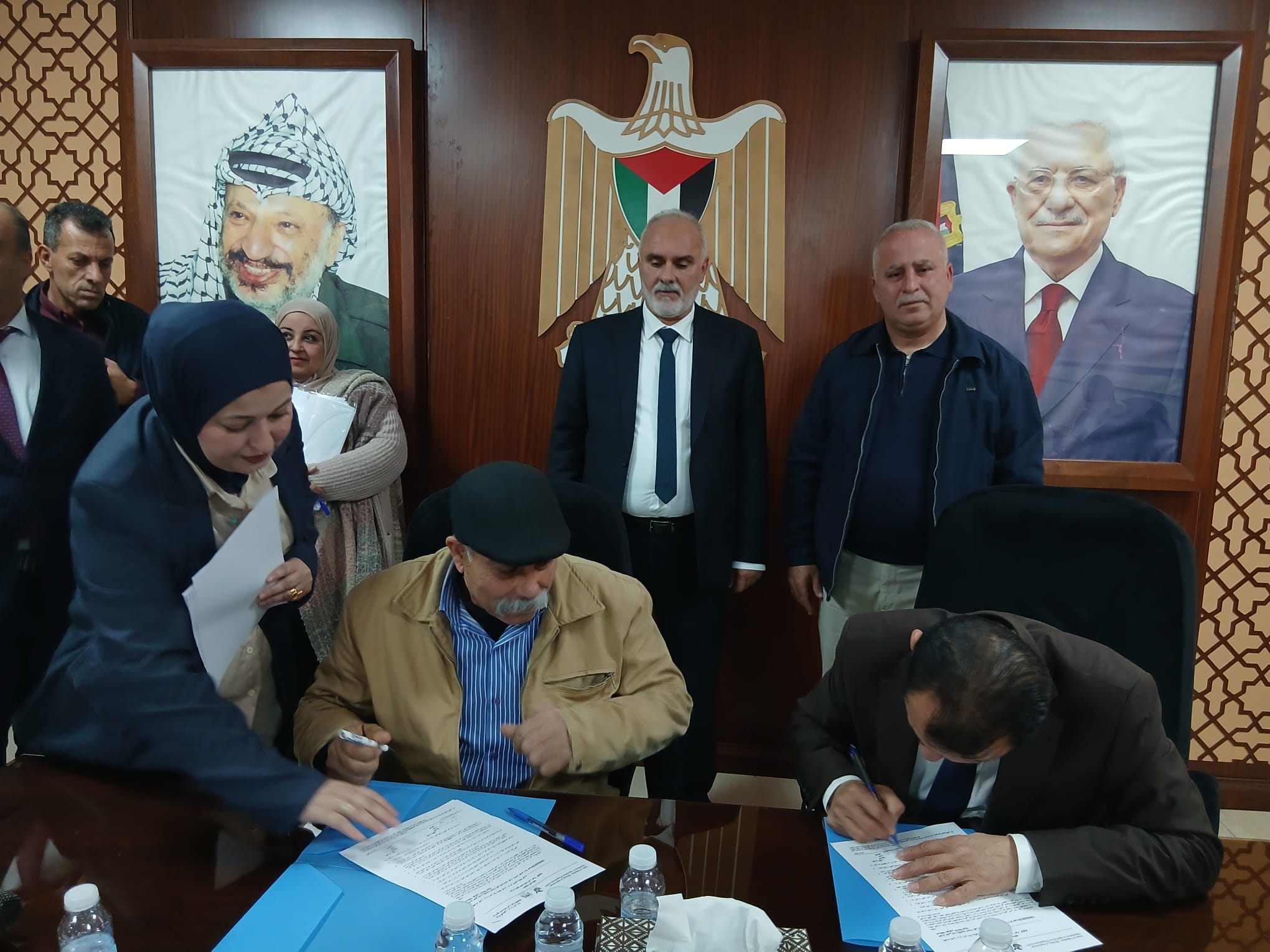
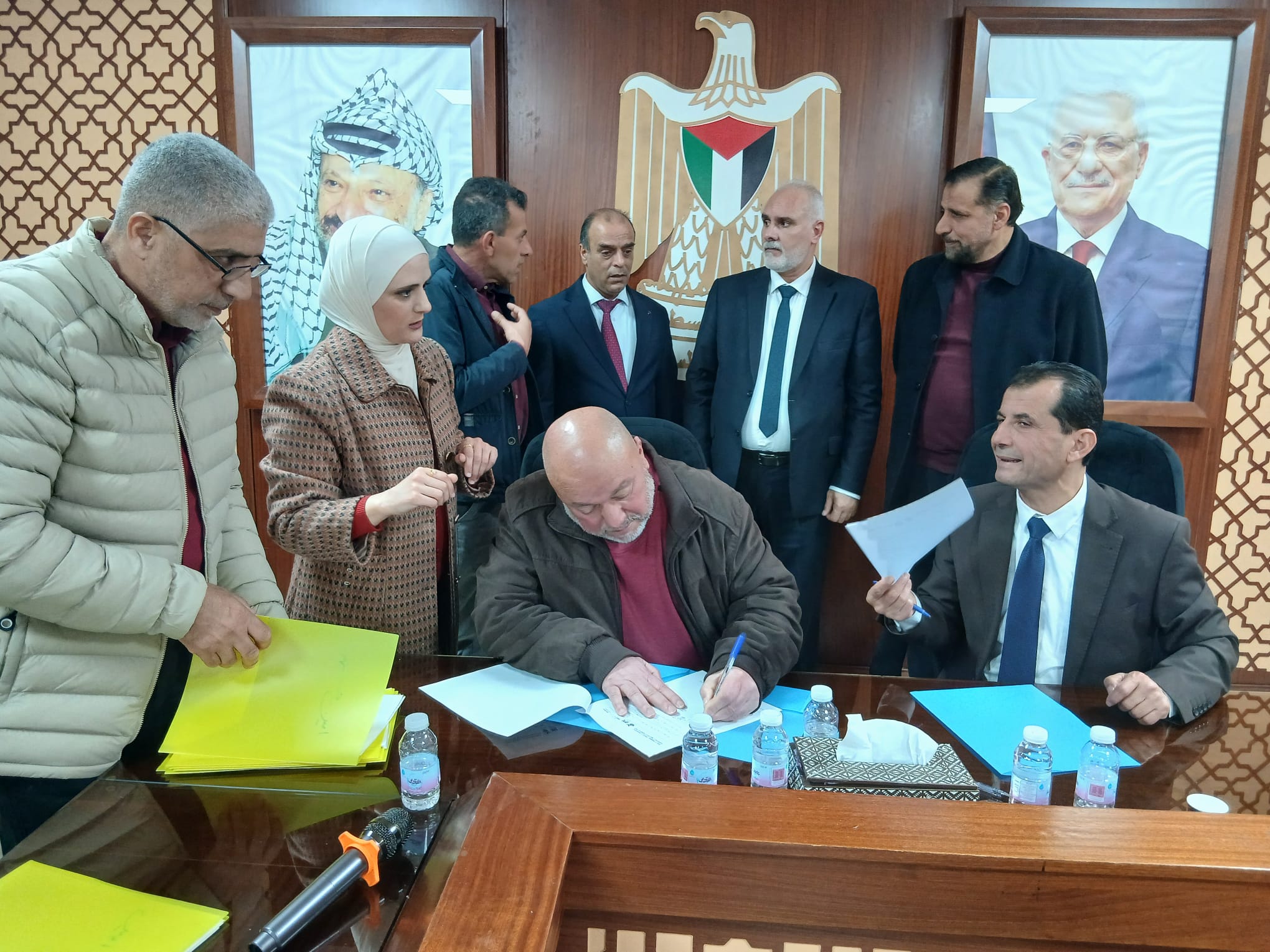
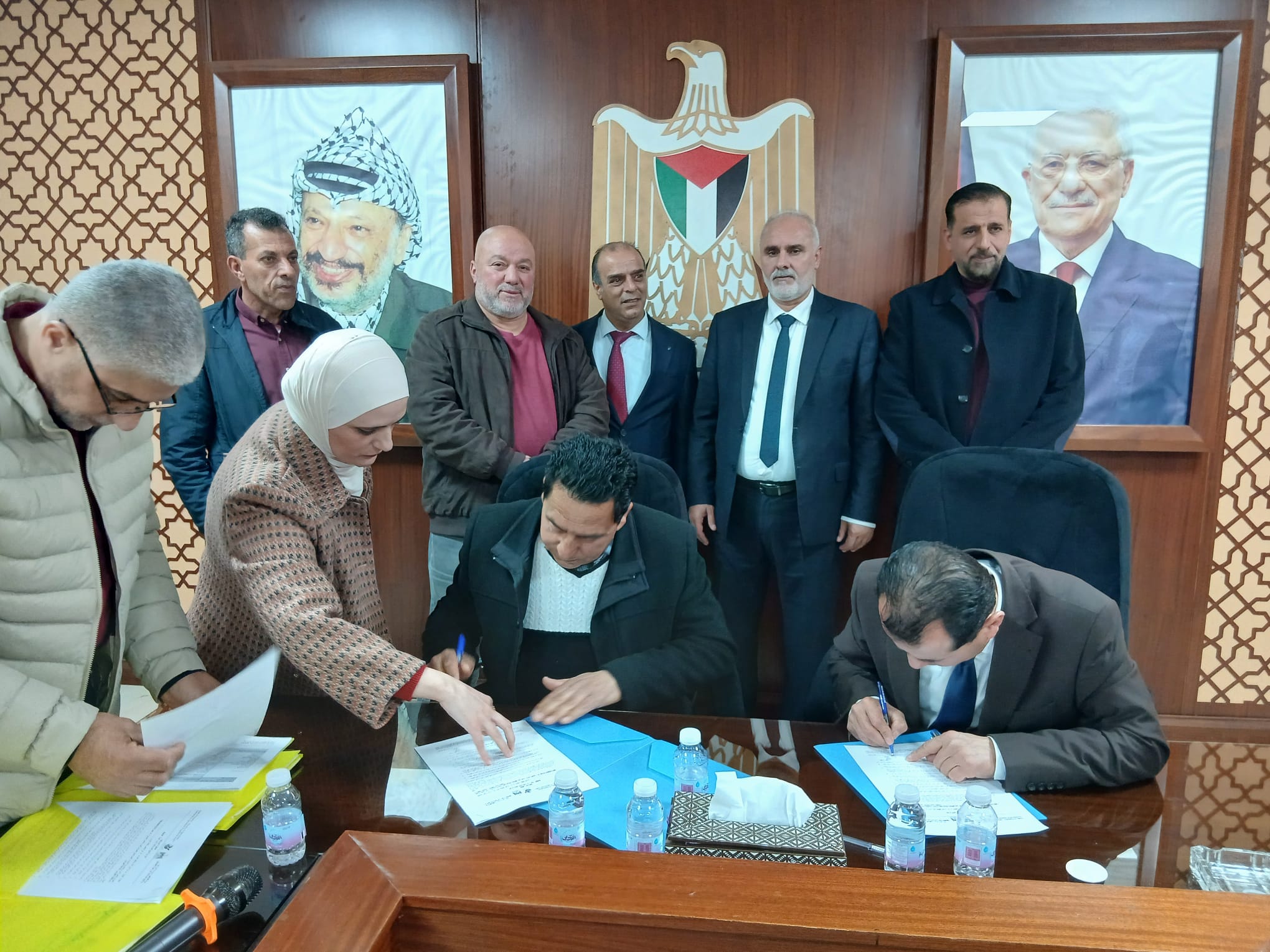
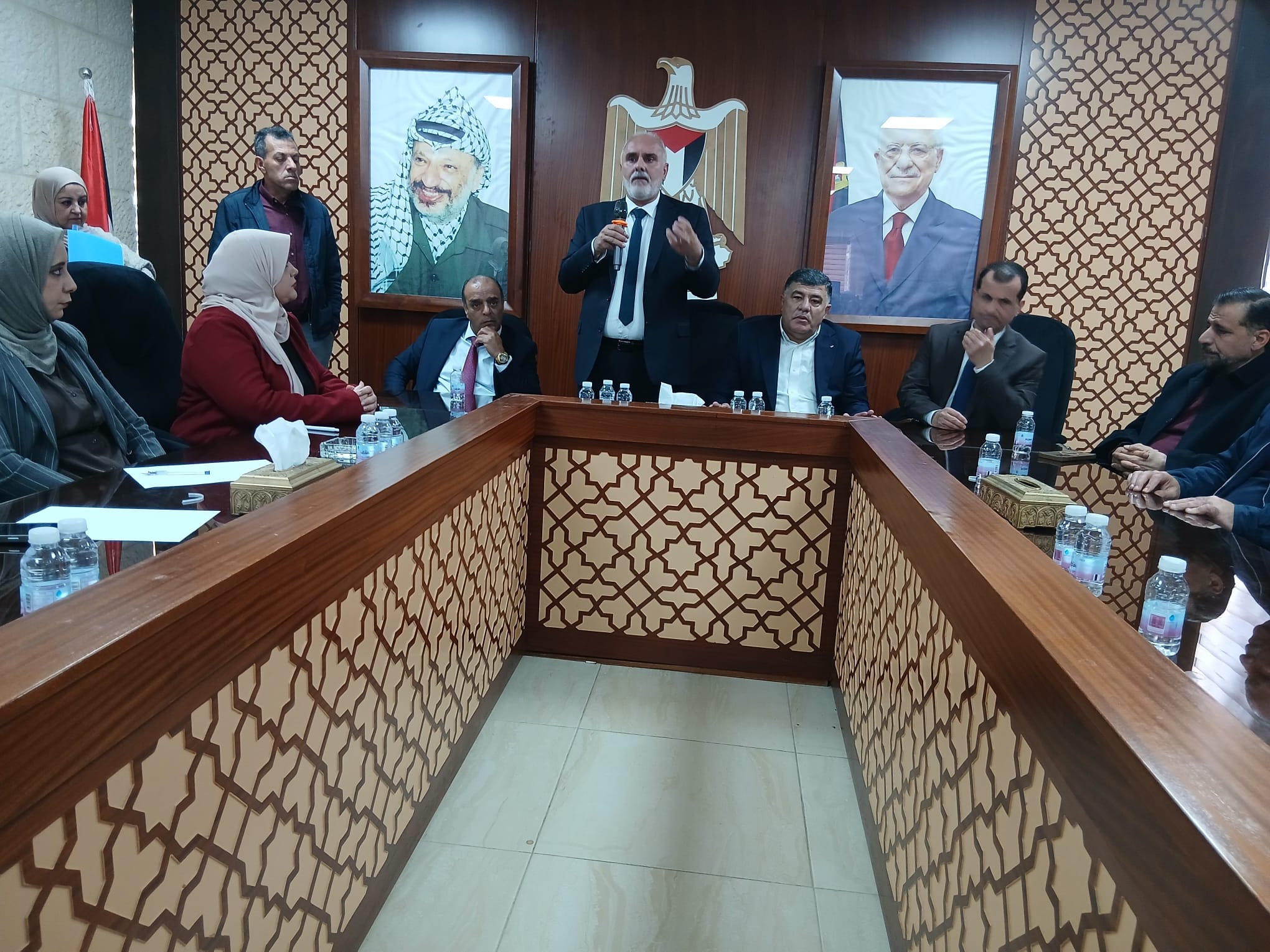
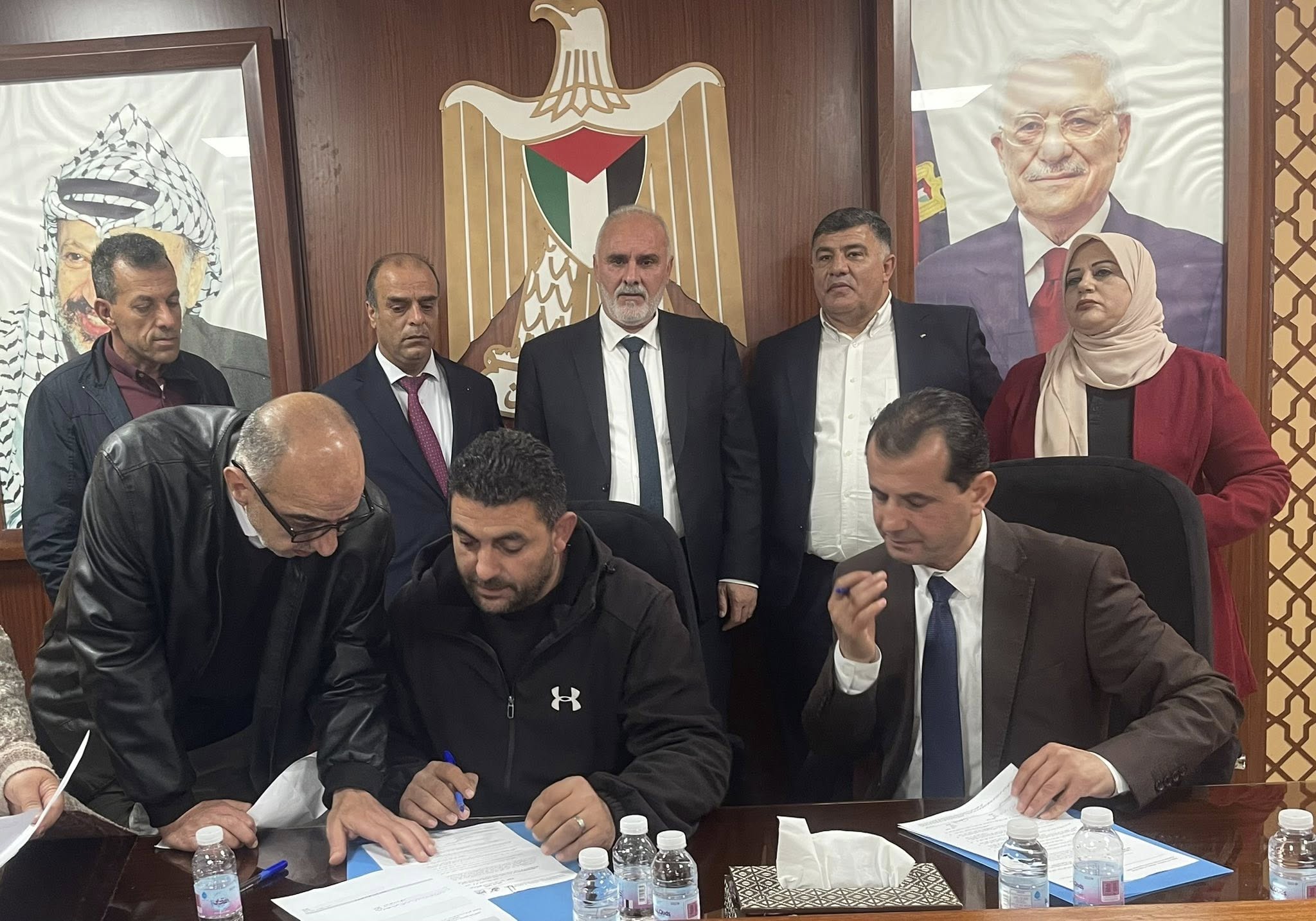
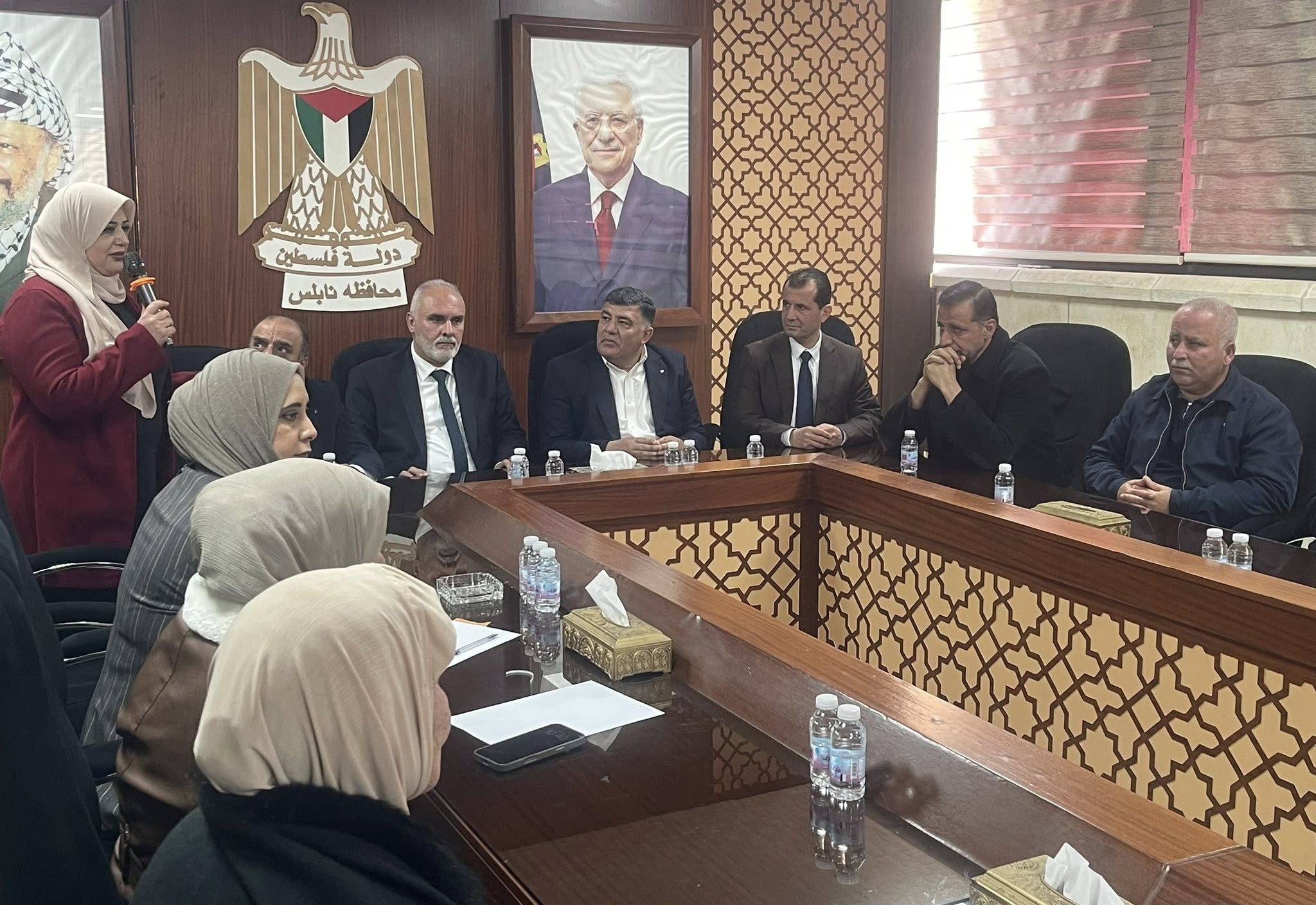
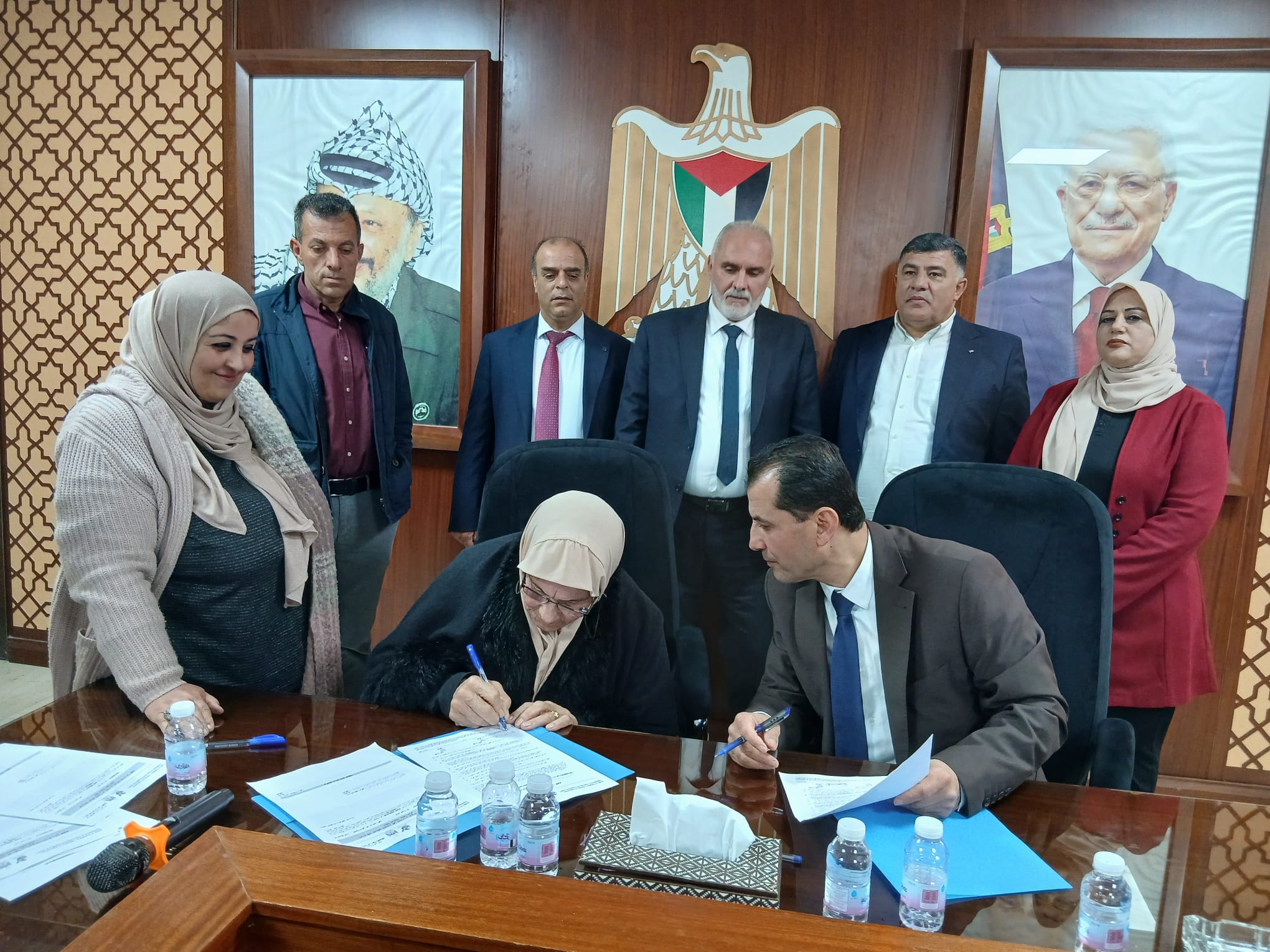
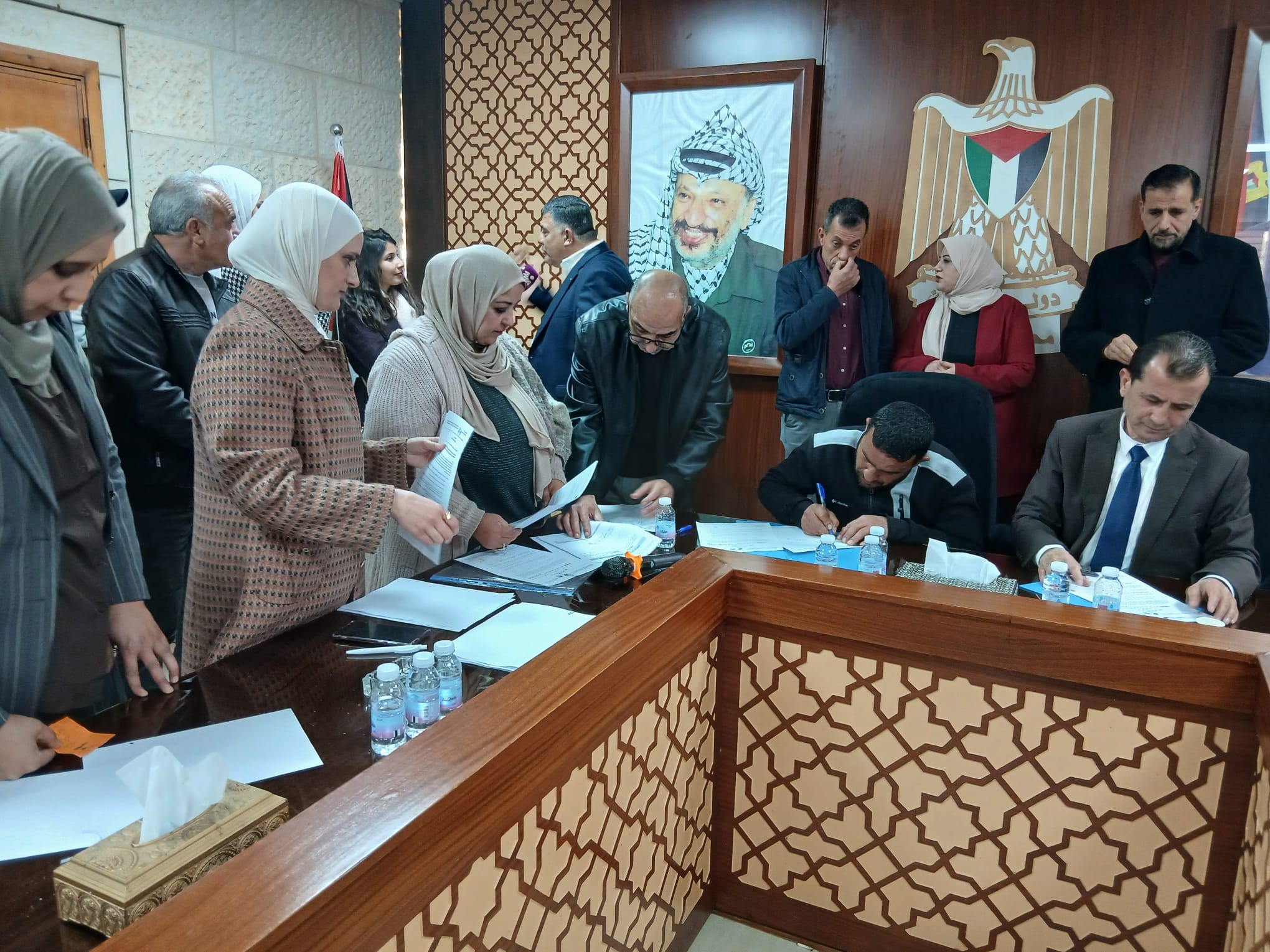
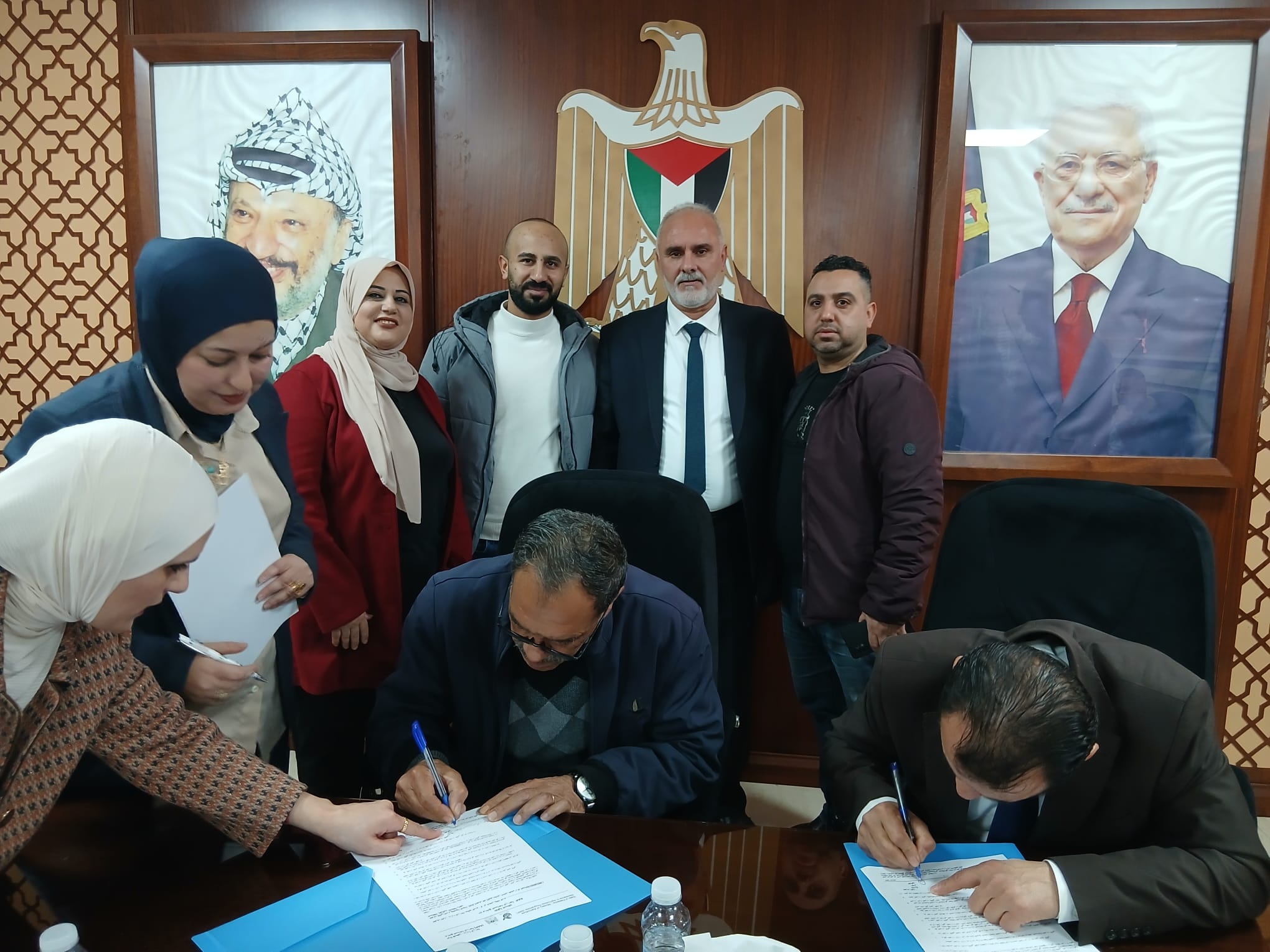
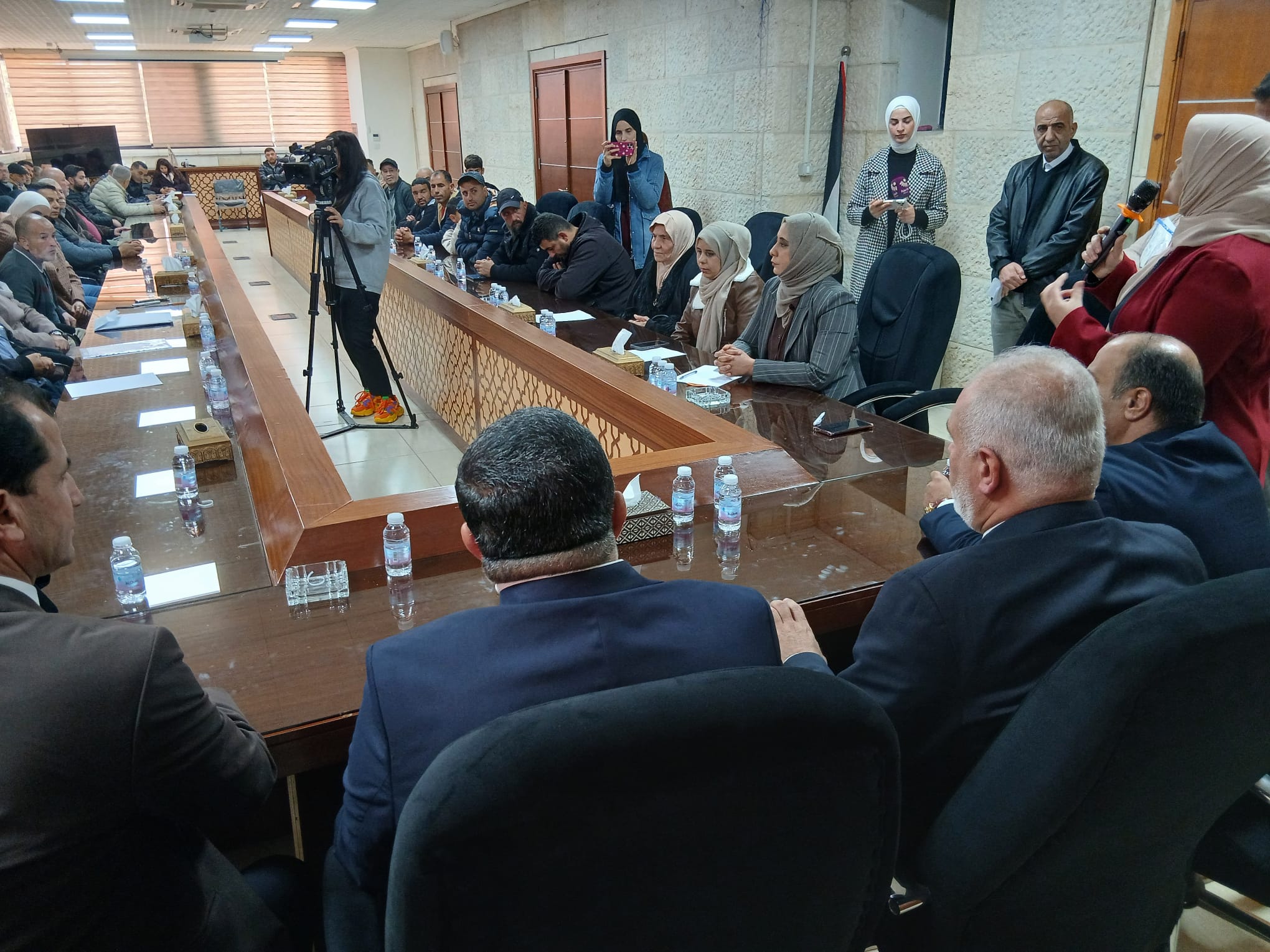
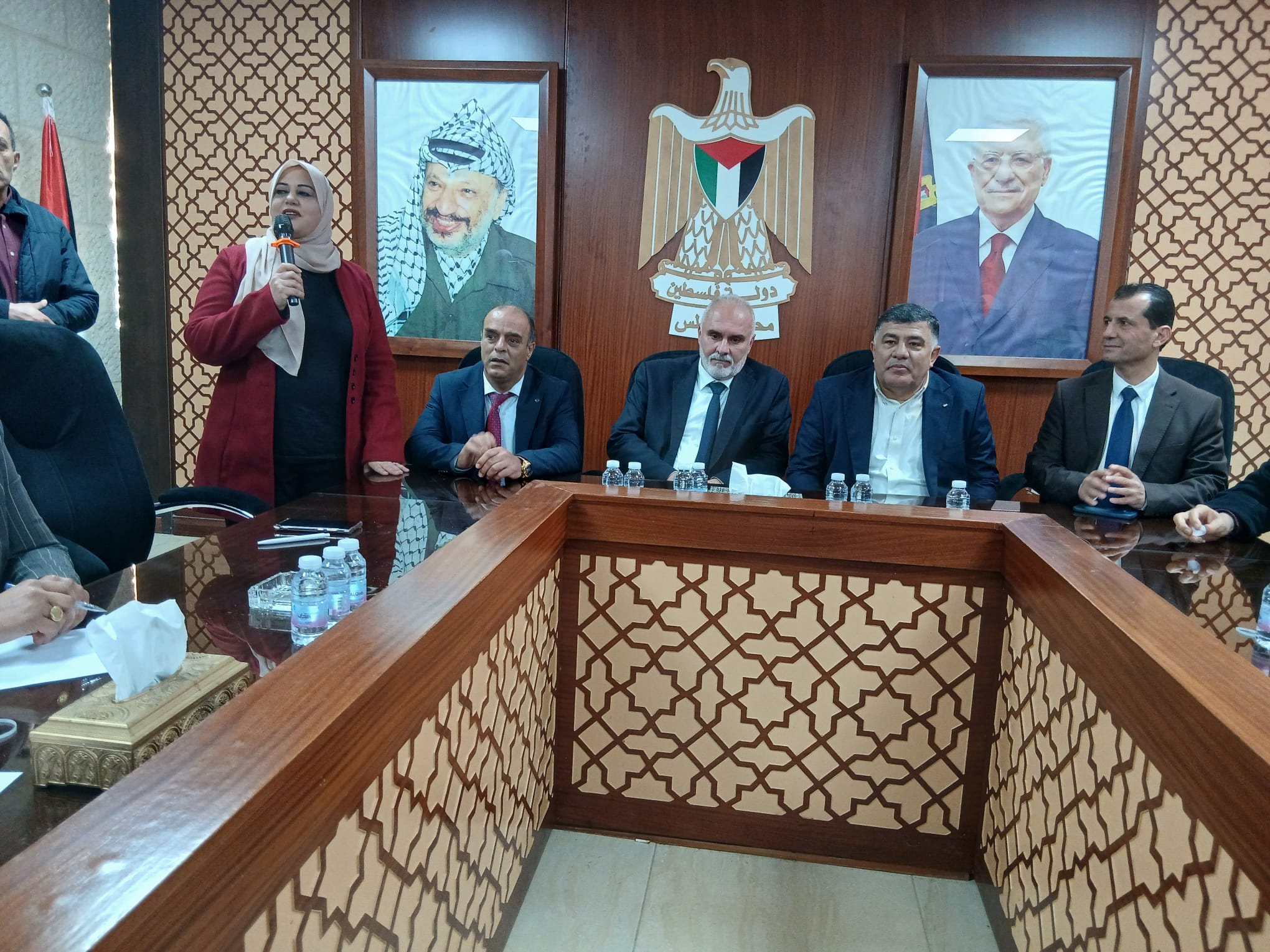
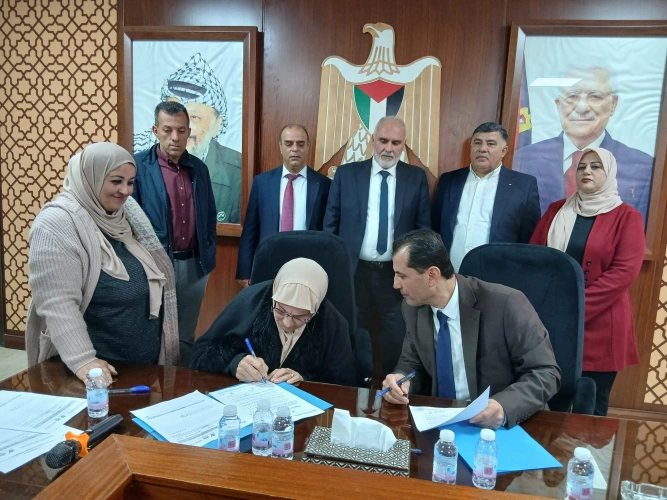
The Ministry of Agriculture signed (25) agreements today, to support agricultural projects for farmers in Nablus Governorate who have documented their losses, with a total value of (1.236) million shekels. This is part of the EU-funded agricultural assistance program, within the framework of its efforts to strengthen the resilience of farmers and rehabilitate their productive capacities.
The agreements were distributed among 25 affected farmers in several governorates, including 9 farmers from Nablus Governorate (484,000 NIS), 7 farmers from Tubas Governorate (244,000 NIS), 6 farmers from Tulkarm Governorate (324,000 NIS), and 3 farmers from Qalqilya Governorate (184,000 NIS).
The funding amounts for the beneficiaries ranged from 14,000 NIS to 114,000 NIS. Eleven farmers received projects valued at over 60,000 NIS, while the funding for 14 farmers ranged from 14,000 to 44,000 NIS, reflecting the diversity of interventions tailored to the farmers' needs and production capacities.
The development plans included the implementation of a range of productive agricultural projects, most notably the supply and installation of solar photovoltaic systems for water wells, the construction of sheds, the development of sheep farming projects and the provision of feed, the implementation of water conveyance networks for tree groves, the construction and equipping of greenhouses and the supply of their metal structures, and the purchase of agricultural equipment such as tractors. Support was also provided for livestock projects through the supply of improved pregnant ewes. These projects are expected to contribute to revitalizing farmers' productive capacities, improving their incomes, and enhancing their contribution to the local economy.
This program targets farmers whose losses have been documented in the records of the Ministry of Agriculture. Beneficiaries were selected according to European Union criteria, after fulfilling all the necessary conditions and providing the required documentation and complete files. These agreements complement the implementation of the EU-funded agricultural assistance program, which aims to revitalize the productive capacities of farmers/producers who have been directly affected, thereby contributing to the promotion of sustainable social and economic development.
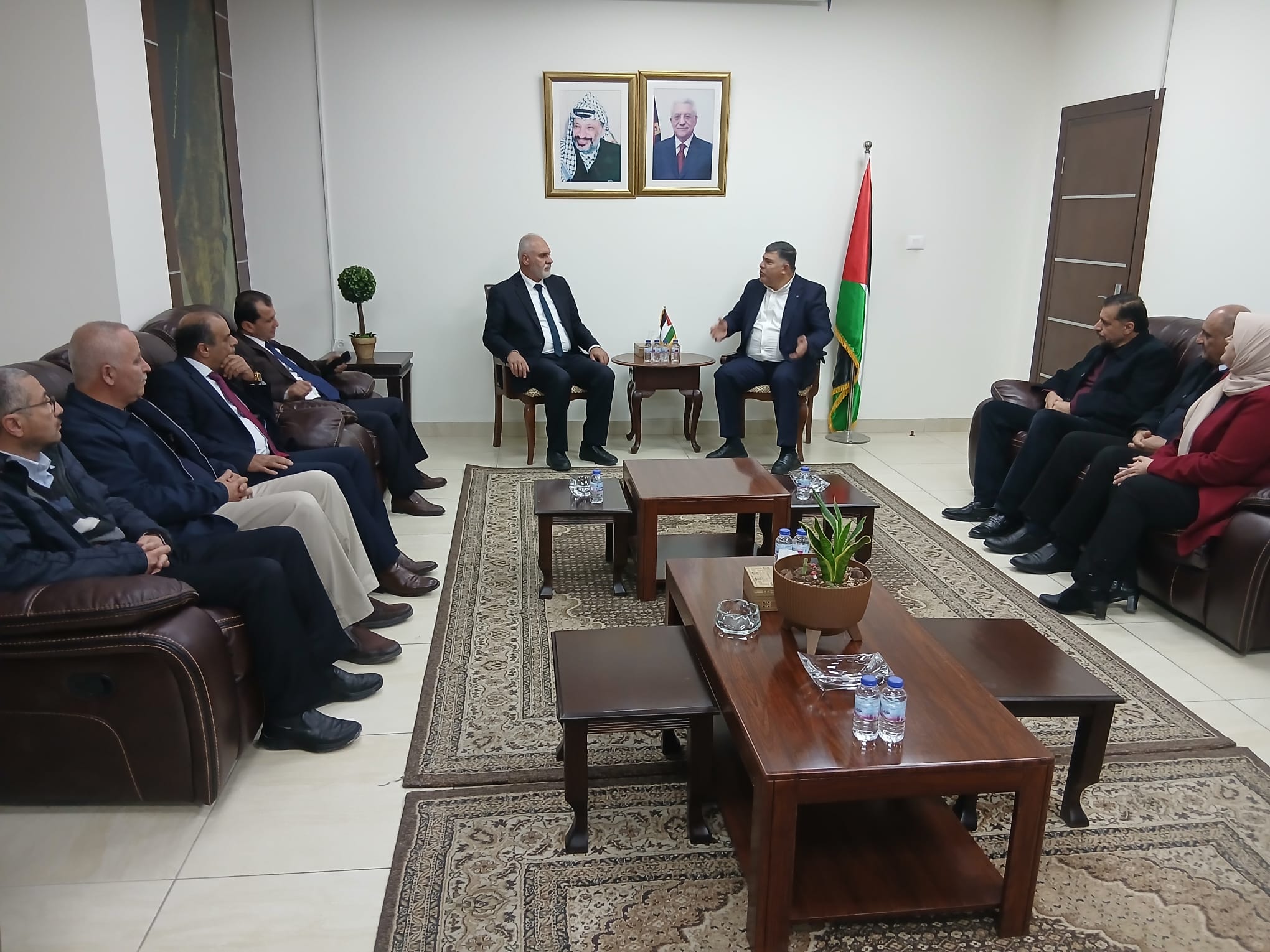
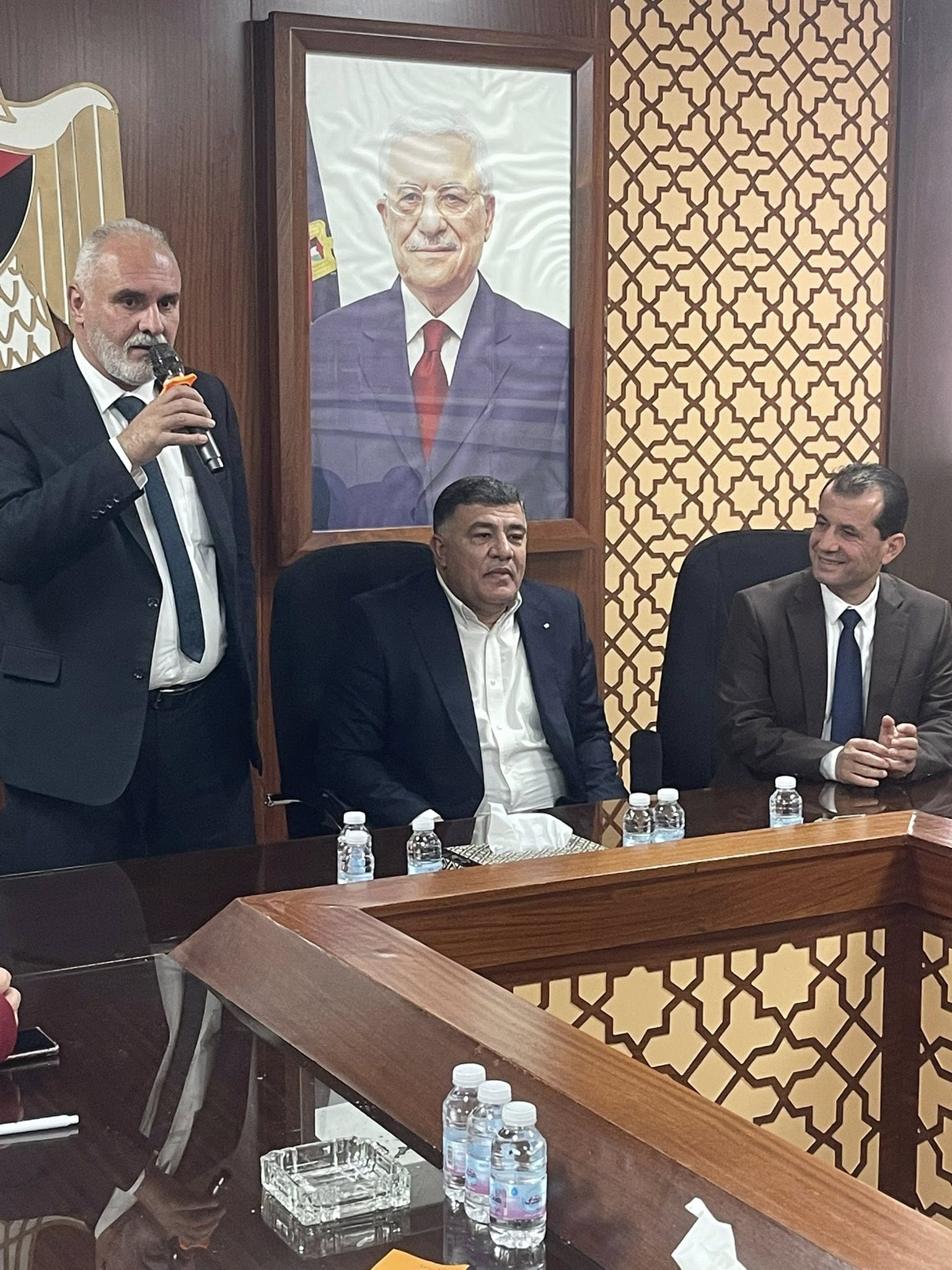
Minister of Agriculture Professor Riziq Slaimiya explained that the agricultural sector faces complex challenges under local and international circumstances, compounded by the occupation's practices targeting Palestinian land and farmers, in addition to the impact of crises on agricultural supply chains for essential production inputs.
Slaimiya called for strengthening the trend towards home gardening and community solidarity as tools for resilience, drawing inspiration from the experience of the First Intifada. He affirmed that the Ministry continues its field work to support farmers despite limited resources. He also noted that the first phase of the program saw the implementation of 318 projects worth 13 million shekels during the past months, while the second phase, comprising 53 projects, is currently underway. The remaining projects, totaling approximately 667, are expected to be completed this year with support from the European Union and its partners.
Moreover, Nablus Governor Ghassan Daghlas emphasized that the greatest challenge lies in meeting the needs of the citizens. He commended the Ministry of Agriculture's role in supporting the resilience of farmers and stressed the importance of concerted efforts to protect agricultural lands, preserve citizens' property, and strengthen their ability to remain on their land.
In closing, Slaimiya stressed that the Ministry of Agriculture will remain a support for farmers, emphasizing that "our battle today is a battle for food and survival," and that the ministry's staff continue to work to strengthen the resilience of the Palestinian farmer and consolidate his presence on his land.