Notification
حظر استيراد كافة أنواع الطيور الحية الداجنة والبرية وطيور الزينة وبيض التفقيس والصيصان عمر يوم ومخلفاتها الغير معاملة حراريا من تركيا ولحين استقرار الوضع الصحي

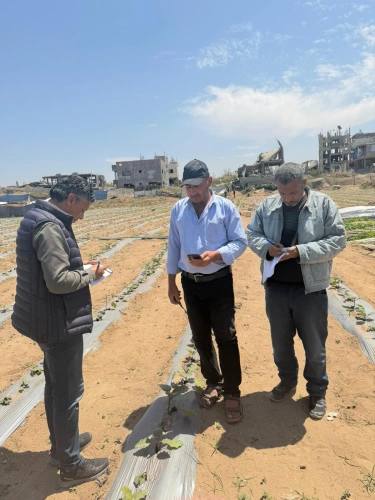
- Widespread destruction of agricultural infrastructure and large areas rendered unproductive.
- Variable agricultural activity and a limited, partial return to normalcy in some areas despite restrictions.
- Urgent needs to revive the sector include land reclamation, water support, and production inputs.
Gaza: April 30, 2026
The Higher Agricultural Emergency Committee, through the General Directorate of Farmers Services and in coordination with the North Gaza Agriculture Directorate, conducted a comprehensive field visit to the North Gaza Governorate. The visit aimed to monitor and document the extent of the damage inflicted on the agricultural sector by the ongoing aggression, assess the impact of the targeting on agricultural infrastructure and farmers' livelihoods, and identify the most significant challenges hindering the resumption of production.
The results of the visit revealed the extensive damage to agricultural infrastructure. Vast areas of land were subjected to intensive bulldozing, leading to a decline in their fertility and rendering them unproductive. Nurseries, greenhouses, open fields, and orchards were also destroyed. The destruction also affected agricultural wells, irrigation networks, water collection ponds, alternative energy systems, and storage facilities, depriving farmers of the essential resources for agricultural activity.
Data also revealed a sharp decline in the livestock sector due to the death of large numbers of cattle, poultry, and bees, in addition to the collapse of livelihoods for large segments of the farming population. The committee indicated that restrictions on access to land, especially in areas classified as the "yellow line," constitute a major obstacle to resuming agricultural activity. Activities have completely ceased in Beit Hanoun and large parts of Jabalia and Beit Lahia, while some areas are witnessing a partial and limited return to agricultural production.
According to field estimates, the area currently reclaimed and cultivated exceeds 200 dunams, with agricultural activity concentrated in some relatively safe pockets, alongside local initiatives to reactivate wells and construct water collection ponds, despite the significant challenges related to securing fuel and agricultural supplies. The Higher Agricultural Emergency Committee affirms that restoring livelihoods and reactivating the production cycle requires urgent interventions, including land reclamation using heavy equipment, rehabilitating and operating agricultural wells, providing irrigation networks and energy sources, securing production inputs such as seeds, seedlings, fertilizers, and pesticides, and providing direct support to farmers. It also stressed the importance of supporting agricultural nurseries and strengthening local initiatives such as home gardens and small production units, which contribute to enhancing the resilience of citizens and achieving a minimum level of food security under the current circumstances.
This tour comes within the framework of the ongoing efforts exerted by the Ministry of Agriculture and the Higher Agricultural Emergency Committee to revitalize the agricultural sector in the Gaza Strip, support affected farmers, and enhance their resilience and ability to restore their livelihoods.


