Notification
حظر استيراد كافة أنواع الطيور الحية الداجنة والبرية وطيور الزينة وبيض التفقيس والصيصان عمر يوم ومخلفاتها الغير معاملة حراريا من تركيا ولحين استقرار الوضع الصحي

Weekly briefing on the documentation of the Ministry of Agriculture's records of Israeli occupation violations against the agricultural sector during the period from 23/6/2026 to 2/7/2026

Weekly briefing on the documentation of the Ministry of Agriculture's records of Israeli occupation violations against the agricultural sector during the period from 23/6/2026 to 2/7/2026
  • تاريخ النشر: 4 July 2026

West Bank: 4/7/2026

The occupied Palestinian territories witnessed a marked escalation in Israeli policies and measures aimed at consolidating control over Palestinian land during the period from June 23, 2026, to July 3, 2026. This escalation coincided with ongoing attacks by Israeli occupation forces and settler groups against the Palestinian agricultural sector.

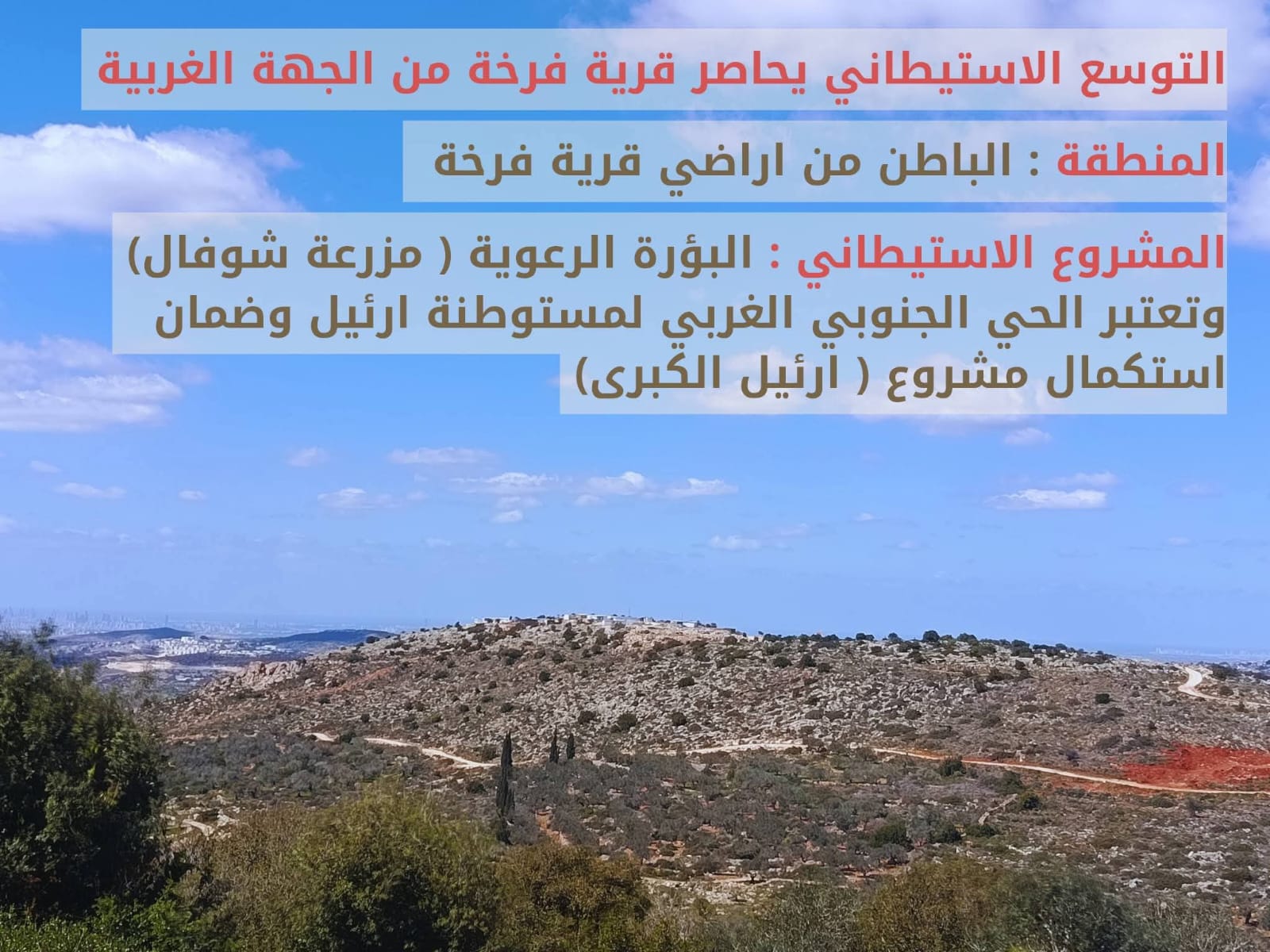
Through decisions and actions by the Cabinet and relevant ministries, the Israeli government continued to push for the expansion of the settlement project, strengthen settlement outposts and pastoral areas, and transfer further powers related to land management and planning in the West Bank. This was coupled with plans to establish new settlements and provide the necessary funding and infrastructure to expand existing settlements, thereby creating new facts on the ground and undermining Palestinian development opportunities. During this period, approval was announced for a plan to establish 13 new settlements in the central West Bank, alongside the continued legalization of several settlement outposts and the expansion of Israeli control over Palestinian land.

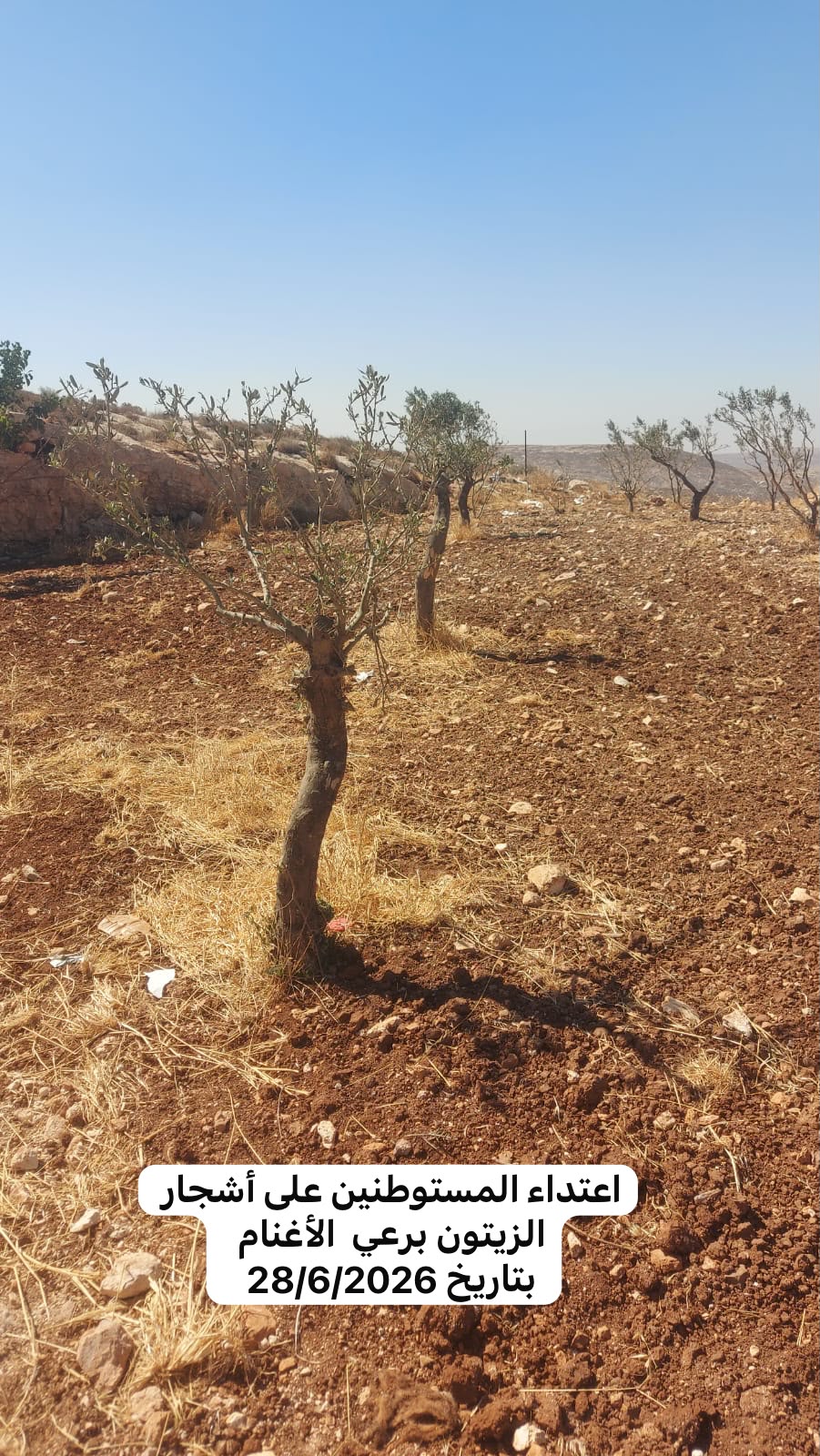
These policies have had a direct impact on the Palestinian agricultural sector. The West Bank governorates have witnessed an escalation in the uprooting, burning, and destruction of fruit trees, the bulldozing of agricultural lands, the destruction of water sources, agricultural facilities, and infrastructure, and the confiscation of equipment and machinery. This is in addition to attacks on livestock and preventing farmers from accessing their lands, all within a systematic policy aimed at undermining Palestinian resilience and emptying rural areas, particularly those adjacent to settlements and grazing outposts.

According to documentation by the Ministry of Agriculture's teams through the Emergency Damage Assessment System, the value of documented direct losses during this period reached US$11,780,947. The number of olive trees uprooted, burned, cut, or damaged reached 2,559, primarily concentrated in the governorates of Salfit, Jenin, and Nablus. This reflects the continued systematic targeting of the olive tree, a cornerstone of the Palestinian agricultural economy and a symbol of national identity and the Palestinian presence on their land. Extent of Documented Damage and Losses:

Ministry of Agriculture teams were able to document the direct losses resulting from these attacks through the Emergency Damage Assessment System. This week, 125 farmers were affected, noting that some farmers had been damaged more than once on different dates. The total value of losses for the past week reached approximately $12 million, while the number of trees damaged, whether uprooted, cut, or broken, reached 2,559, representing direct losses.
Key Findings

Indicator Value
Direct agricultural losses US$11,780,947
Farmers affected 125
Olive trees uprooted/burned/cut 2,559
New settlements announced 13
Main governorates affected Salfit, Hebron, Jenin, Nablus, Tubas

Distribution of Losses by Governorate

Governorate Olive Trees Damaged Olive Losses (USD) Total Losses (USD)
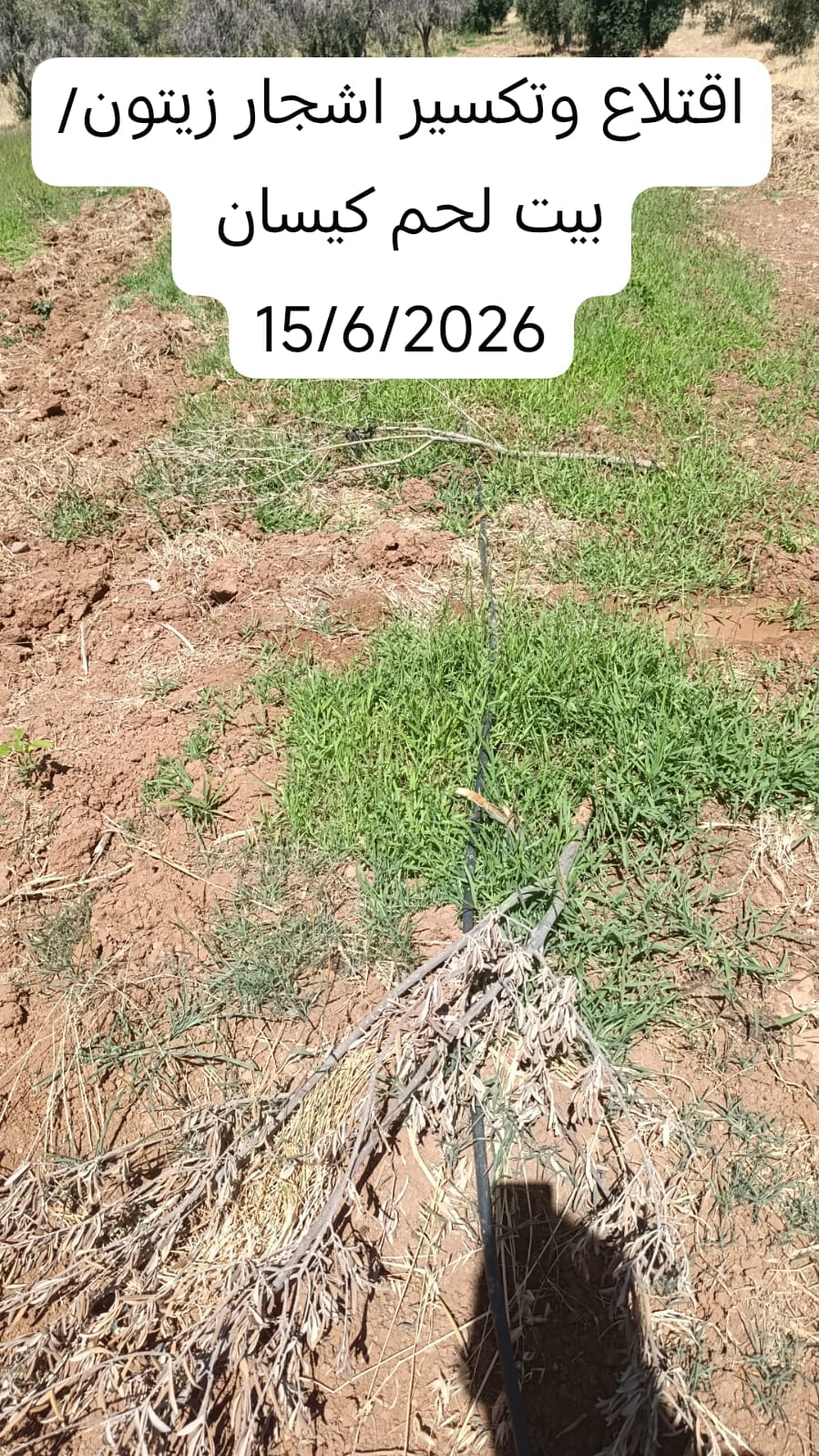
Hebron 140 34,000 7,547,044
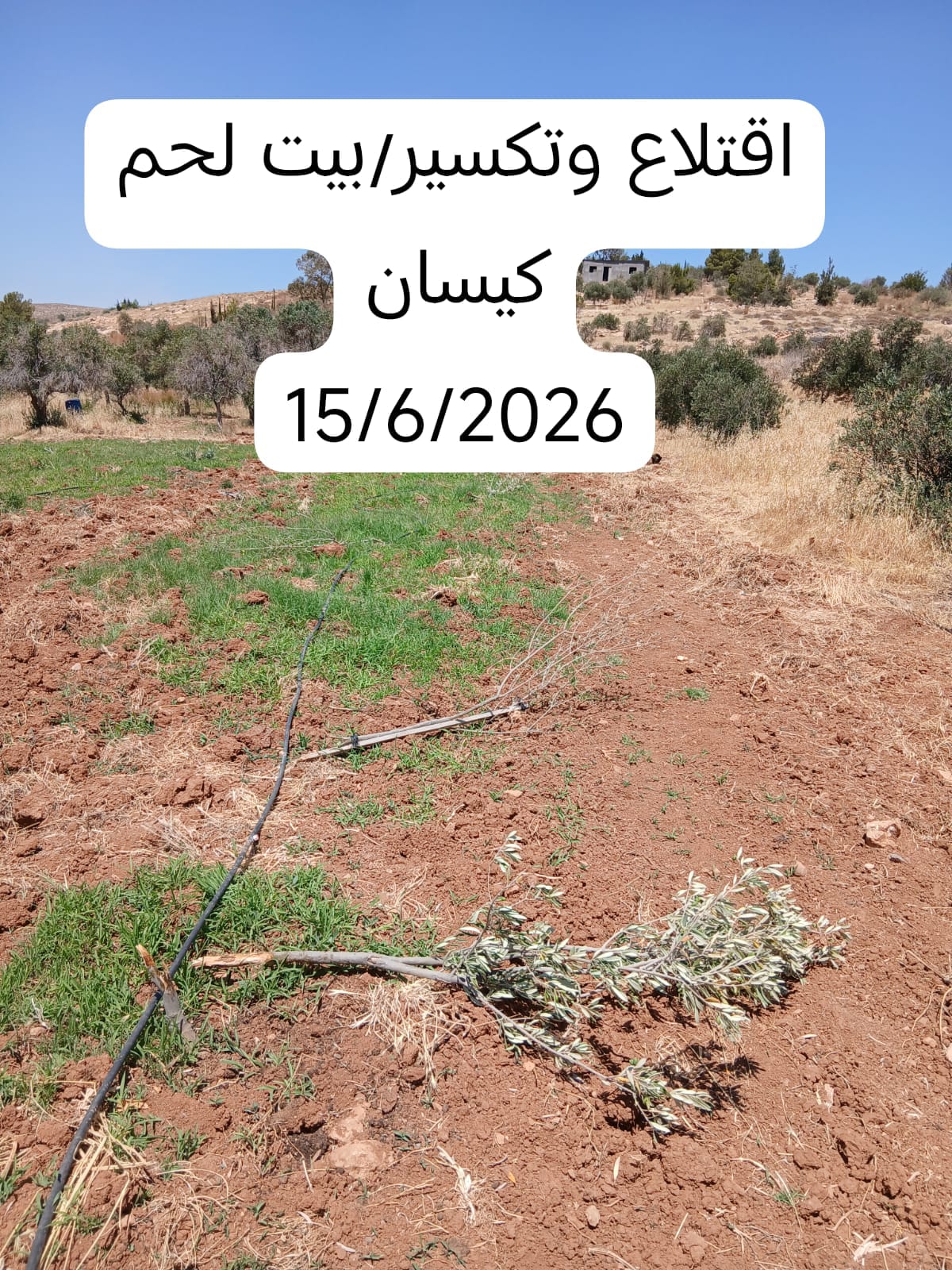
Bethlehem 110 16,500 22,354
Jenin 401 511,600 524,700
Ramallah 122 2,160 38,314
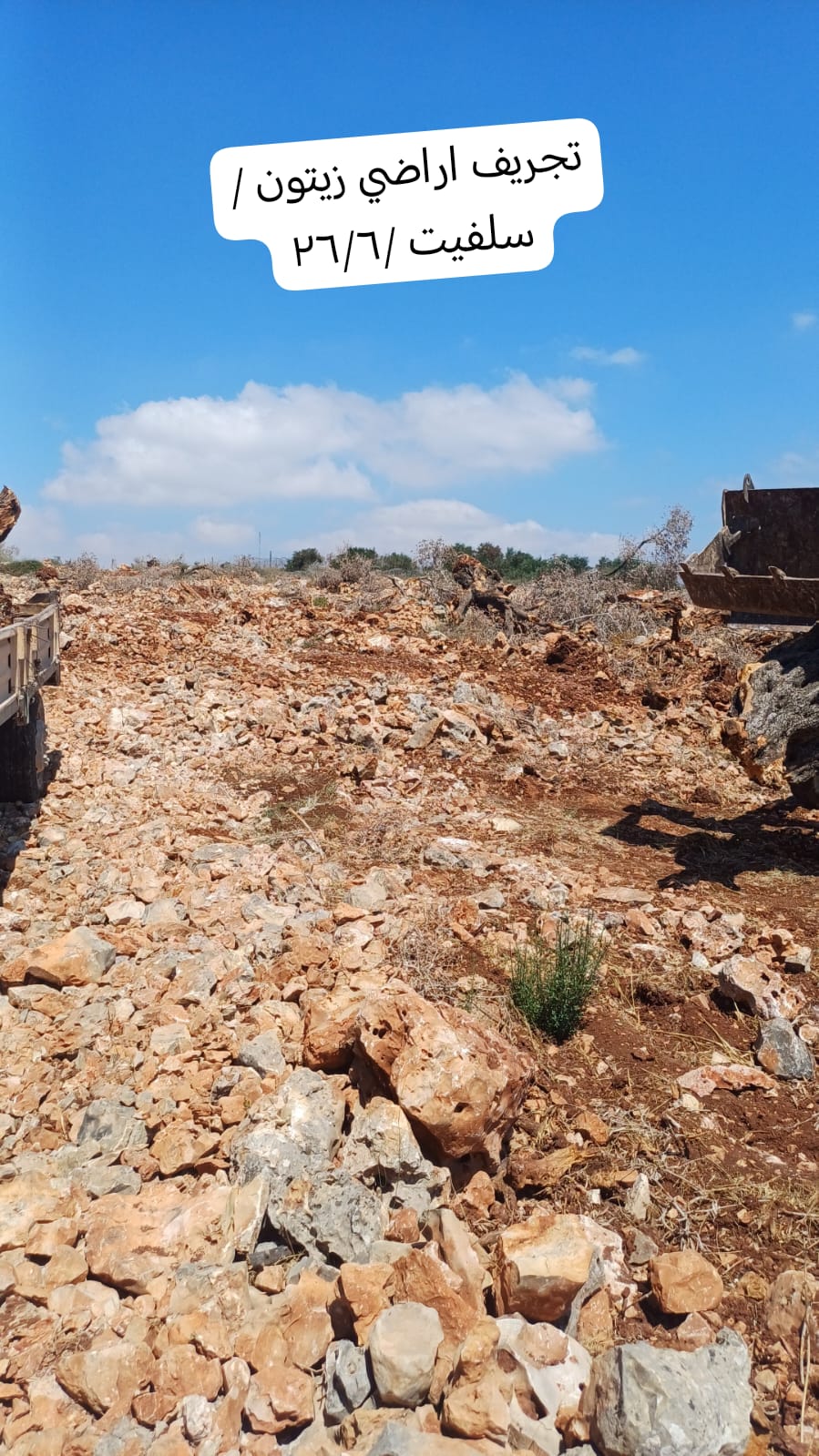
Salfit 1,570 3,103,000 3,124,389
Tubas 80,611
Tulkarm 39 78,000 80,290
Nablus 177 221,700 363,253
Total 2,559 3,966,960 11,780,947

Distribution of Losses by Damage Category

Damage Category Value (USD) Percentage
Olive Trees 3,966,960 33.7%
Water Sources 3,250,000 27.6%
Agricultural Facilities 2,180,000 18.5%
Other Fruit Trees 1,340,000 11.4%
Field Crops and Vegetables 510,000 4.3%
Agricultural Infrastructure 285,000 2.4%
Livestock 175,000 1.5%
Agricultural Equipment 74,000 0.6%
Total 11,780,947 100%

Hebron Governorate Damage Summary

Location Type of Damage Details
Al-Buweira Almond trees 100 uprooted
Al-Buweira Grapevines 310 uprooted
Beit Einun Grapevines 300 uprooted
Al-Buq'a Grapevines 170 uprooted
Al-Buq'a Olive trees 60 uprooted
Al-Buq'a Trellis 3,000 m² demolished
Al-Balouta Olive trees 60 uprooted
Al-Balouta Grapevines 70 uprooted
Beit Ummar Agricultural land 1.8 dunums bulldozed
Beit Ummar Zucchini 600 m² destroyed
Beit Ummar Grapevines 90 uprooted
Sa'ir Almond trees 80 damaged by grazing
Halhul Grapevines 135 damaged
Susya Fruit trees 90 destroyed
Shaab al-Batim Barley 19 dunums grazed
Shaab al-Batim Mixed fruit trees 175 damaged
Beit Ummar Equipment Water pumps, irrigation network, solar panels confiscated

Ramallah Governorate Damage Summary

Community Type of Damage Details
Burqa Wheat and barley 3 dunums burned
Khirbet Abu Falah Livestock 16 sheep killed
Turmus Ayya Olive trees 122 uprooted/burned
Ras Karkar Sheep pen 200 m² demolished
Ras Karkar Retaining walls 100 m² bulldozed

Tulkarem Governorate Damage Summary

Damage Details
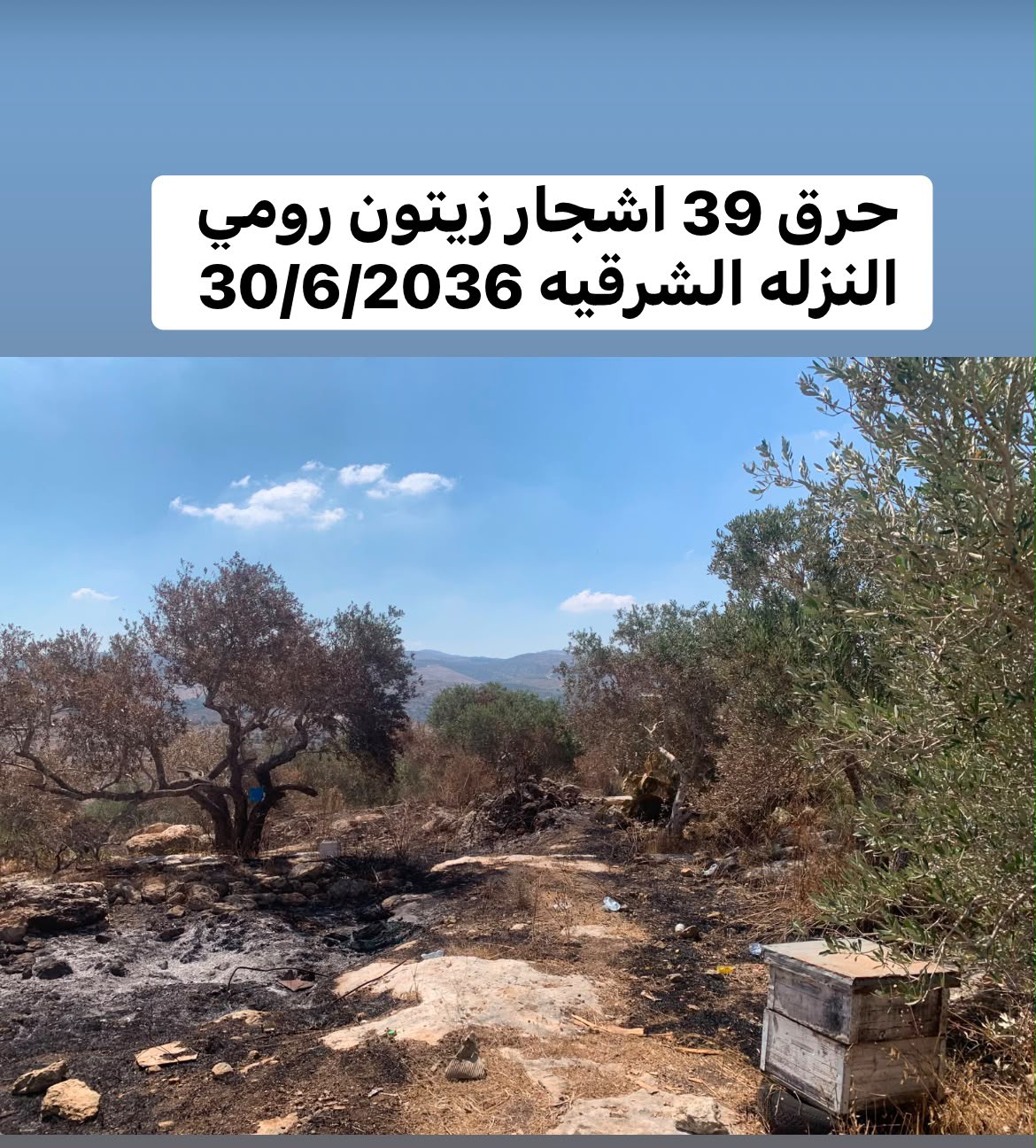
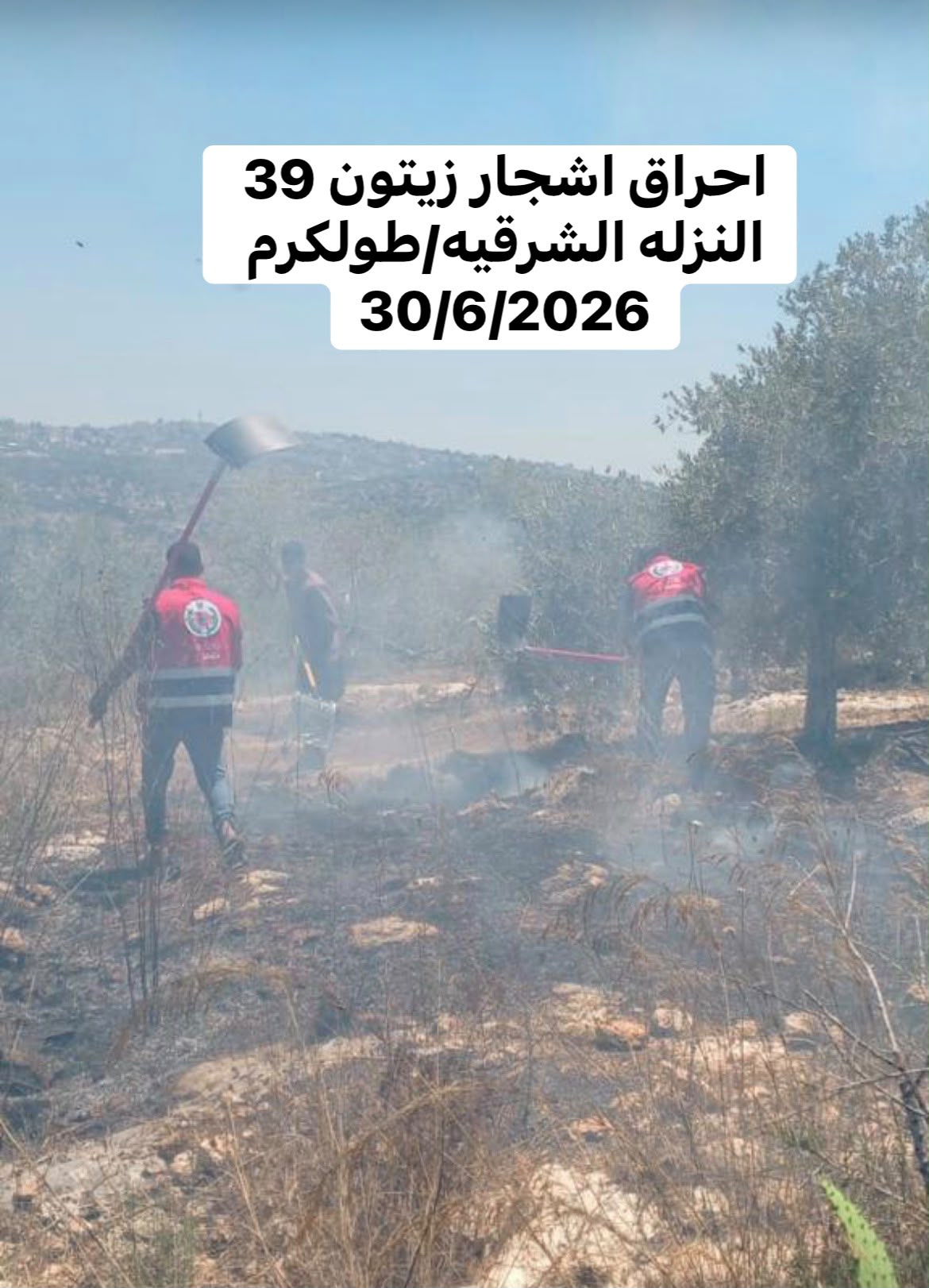
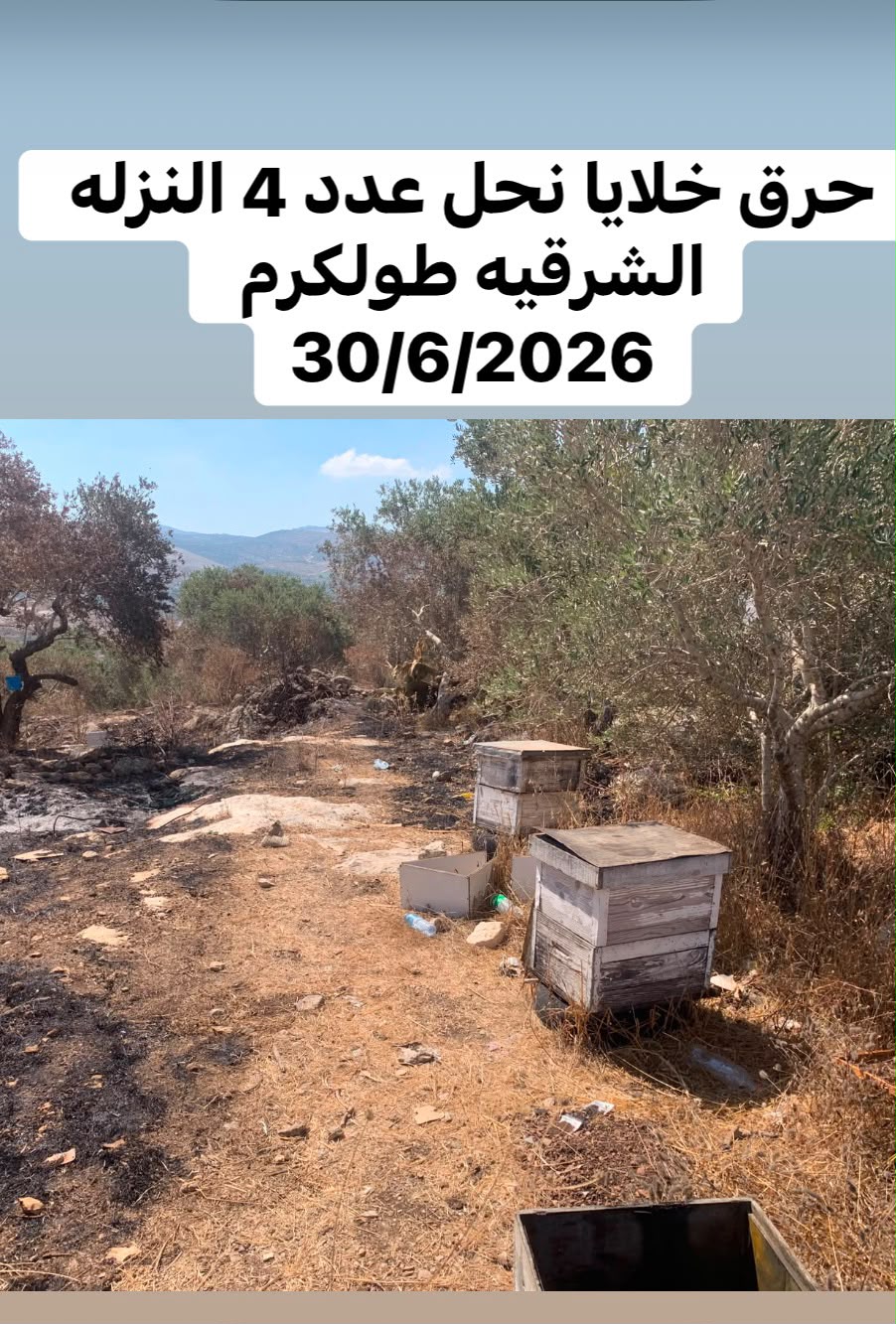
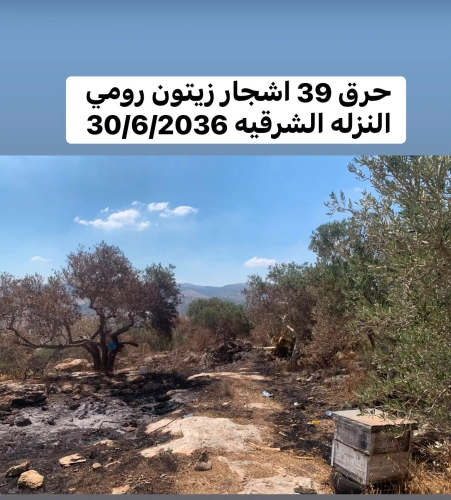
Roman olive trees 39 burned
Beehives 4 burned
Water tank 5 m³ stolen
Irrigation network Destroyed
Farmers affected 6

 Tubas Governorate Damage Summary

Damage Quantity
Onion fields bulldozed 35 dunums
Greenhouses destroyed 200 dunums
Main water pipeline 4,000 m
Banana trees without irrigation 450,000
Cantaloupe fields 80 dunums
Honeydew melon fields 80 dunums
Onion fields inaccessible 260 dunums

Salfit Governorate Damage Summary

Location Damage
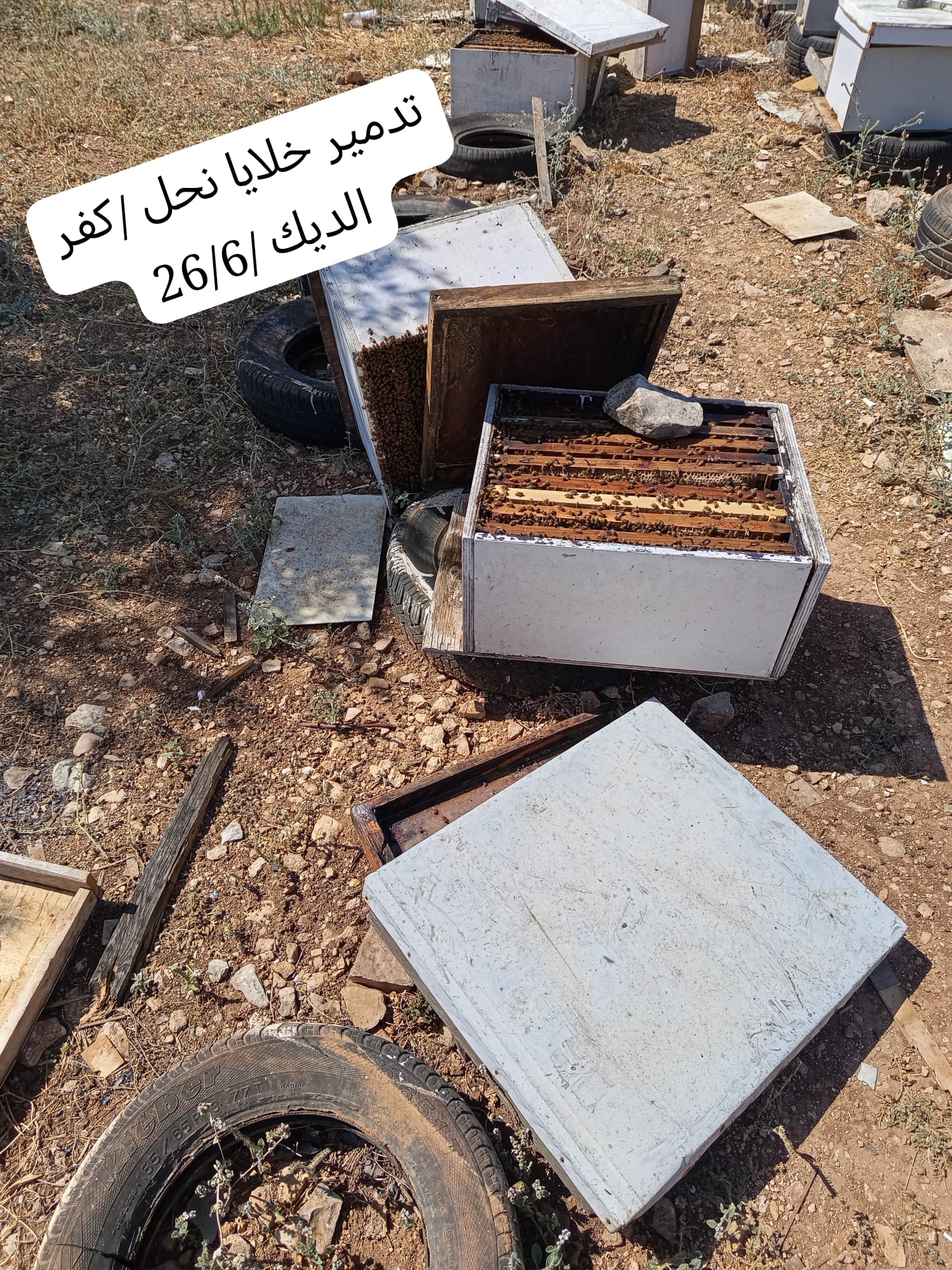
Khirbet Susa 30 beehives destroyed
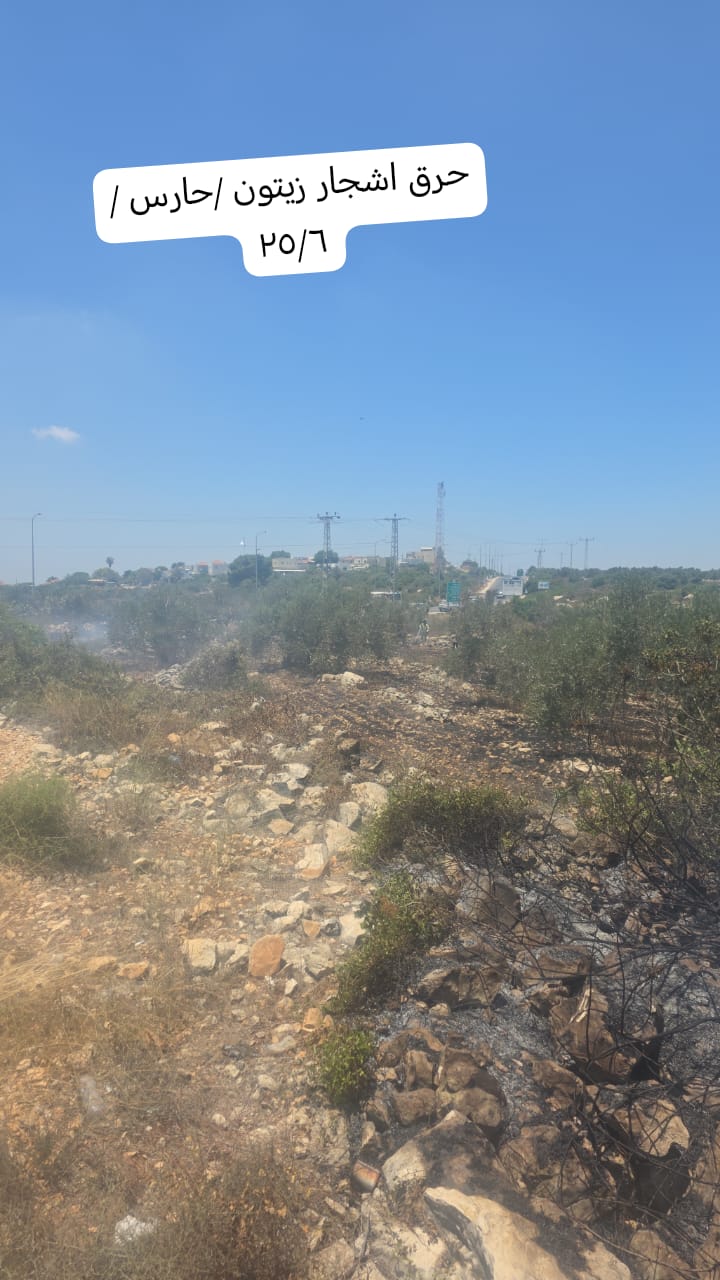
Shamiyah 74 ancient olive trees burned
Khallat Jahm 249 Roman olive trees uprooted
Al-Makhraqah 290 Roman olive trees uprooted; 30 almond trees uprooted
Al-Marajim 221 Roman olive trees uprooted
Al-Afran 112 Roman olive trees uprooted
Al-Aqran 614 Roman olive trees uprooted
Khallat al-Haramiya Grapevines, almond trees, trellis, water tank, retaining walls, equipment damaged
Kafr ad-Dik Forced displacement from agricultural land

Nablus Governorate Damage Summary

Location Damage
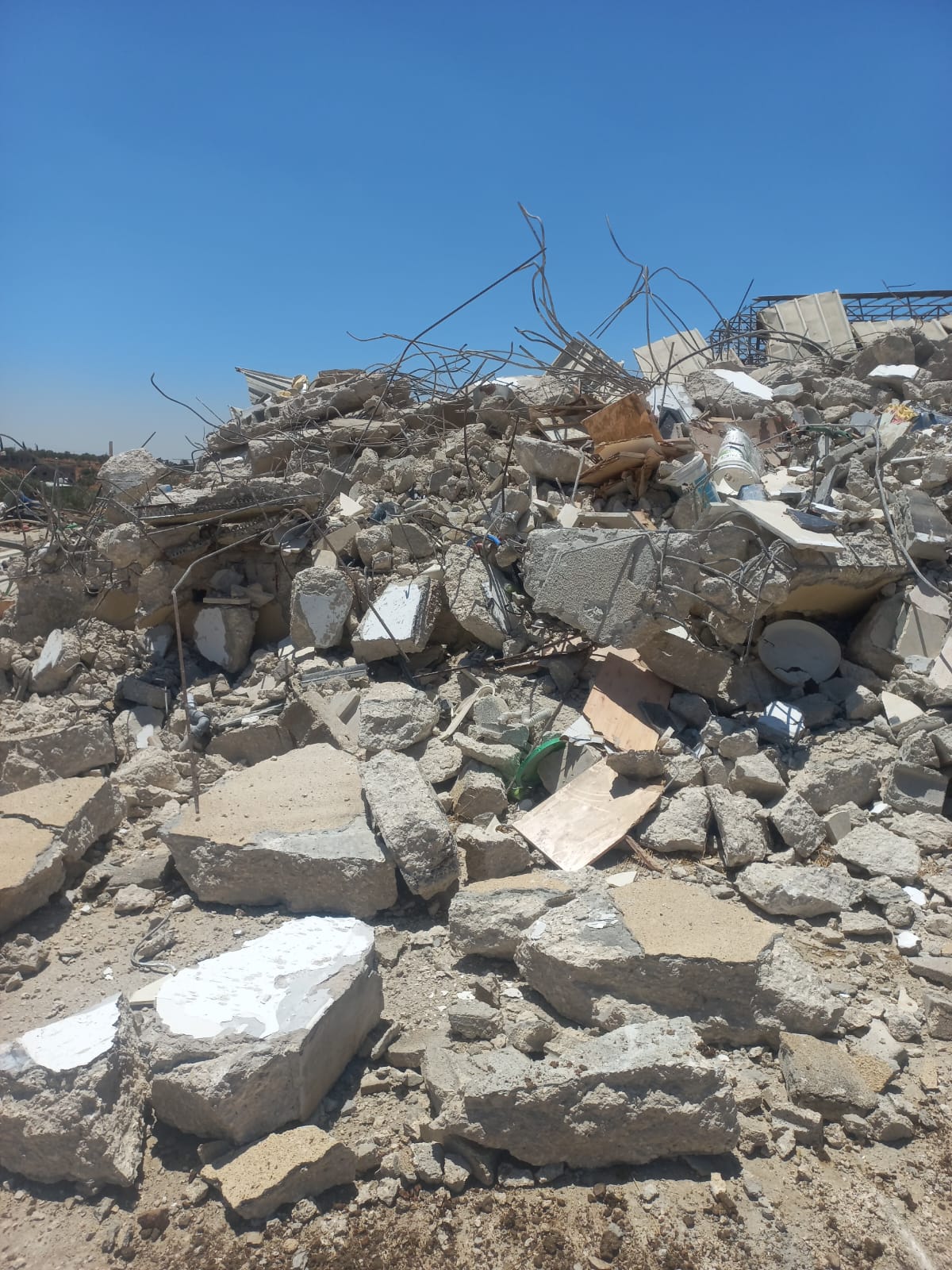
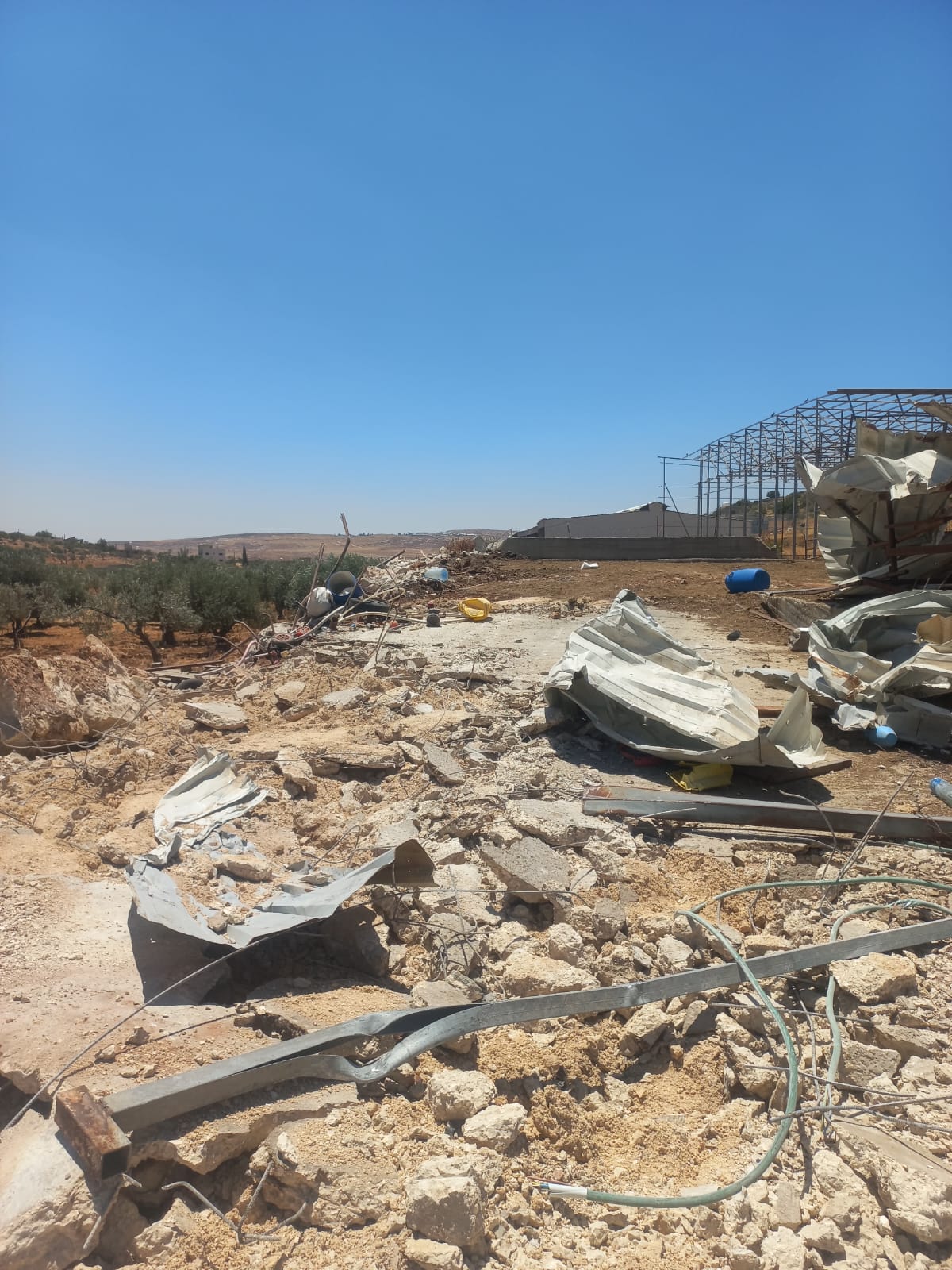
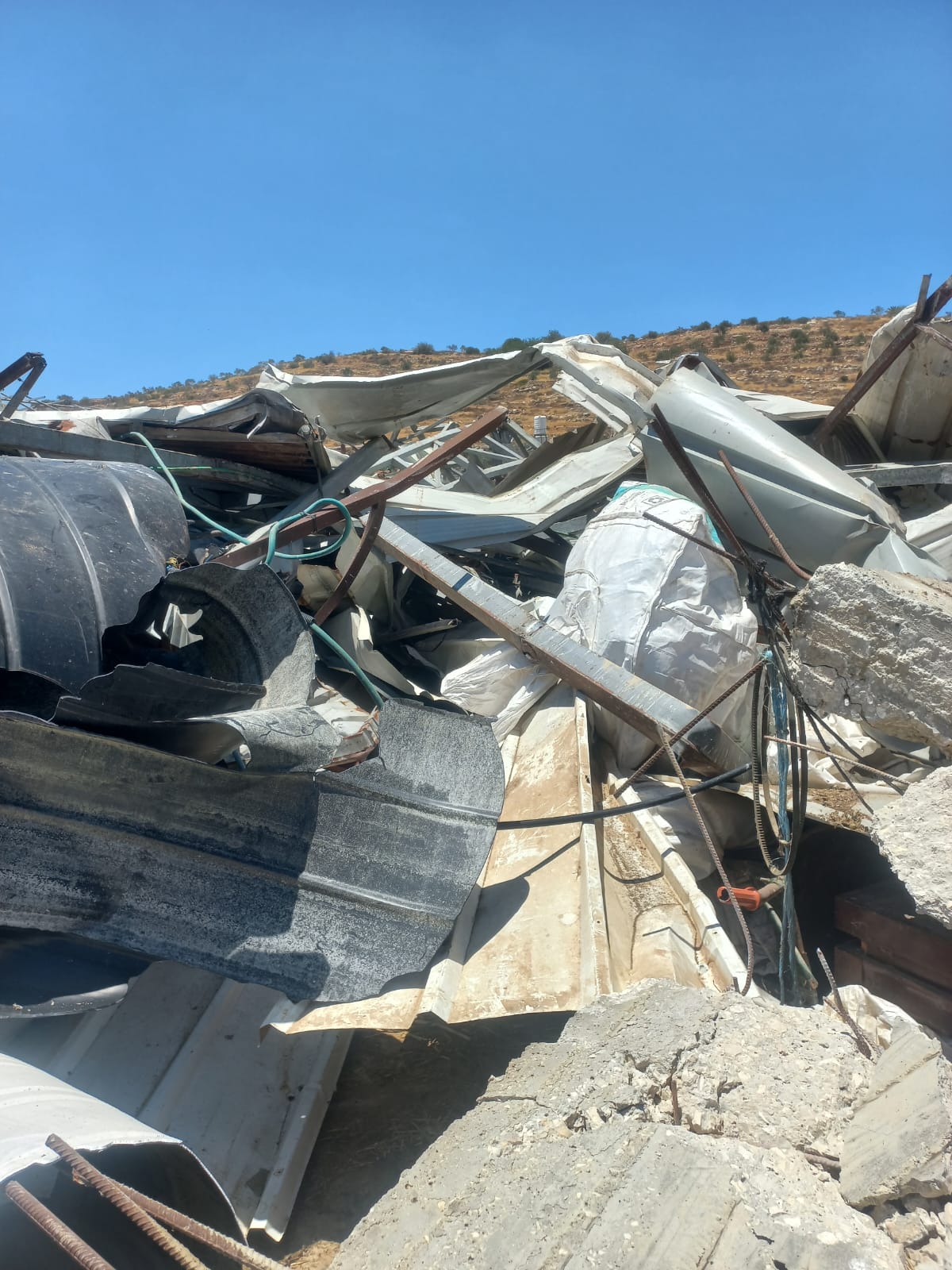
Duma 2,500 m² cattle shed demolished
Duma 180 m³ concrete water tank demolished
Duma Automatic milking parlor destroyed
Duma 8 tons of animal feed damaged
Duma Stainless steel milk tank damaged
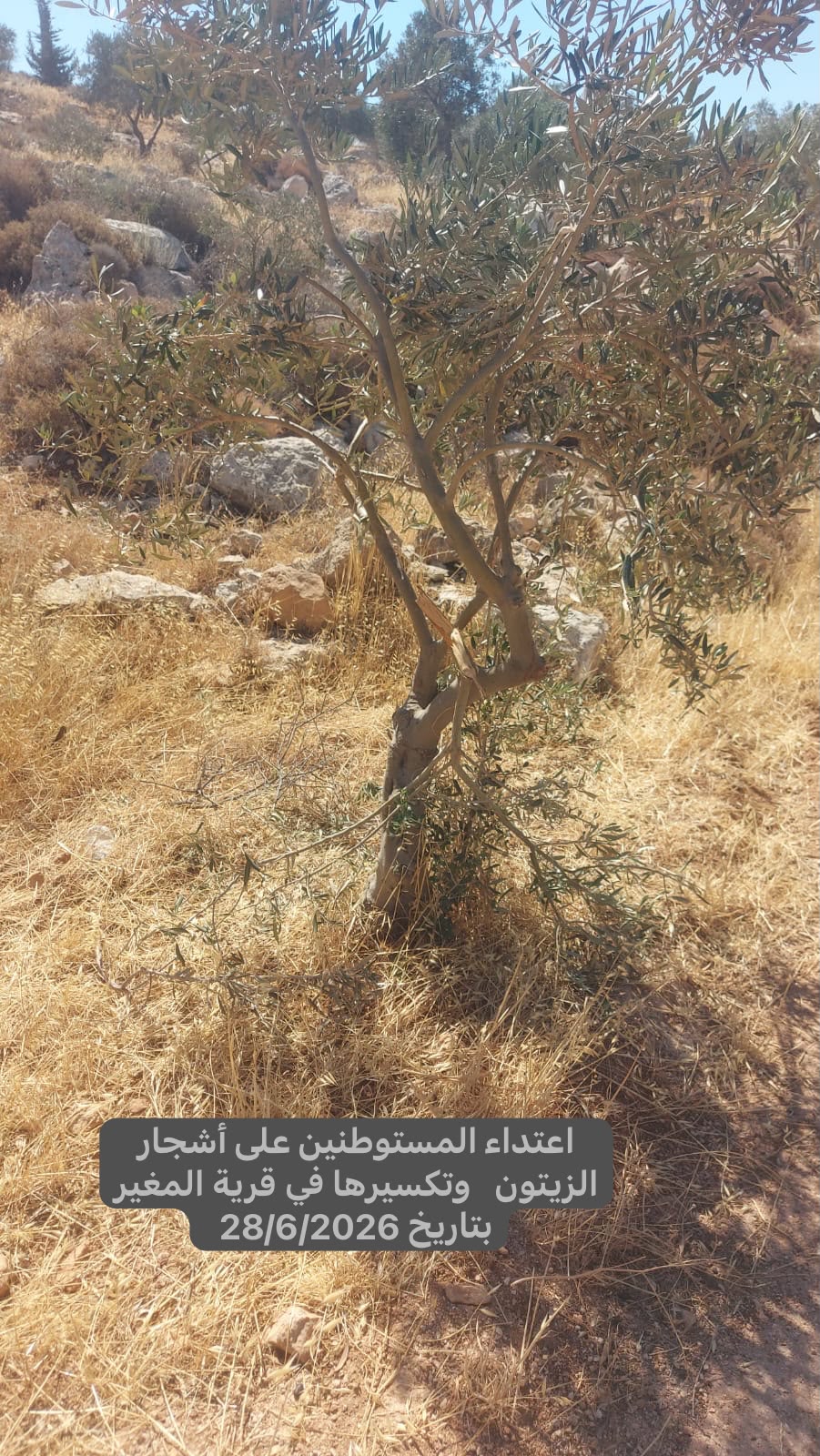
Duma 34 Roman olive trees cut
Aqrabah 25 sheep stolen
 

Impact of these violations on the agricultural sector and Palestinian farmers:

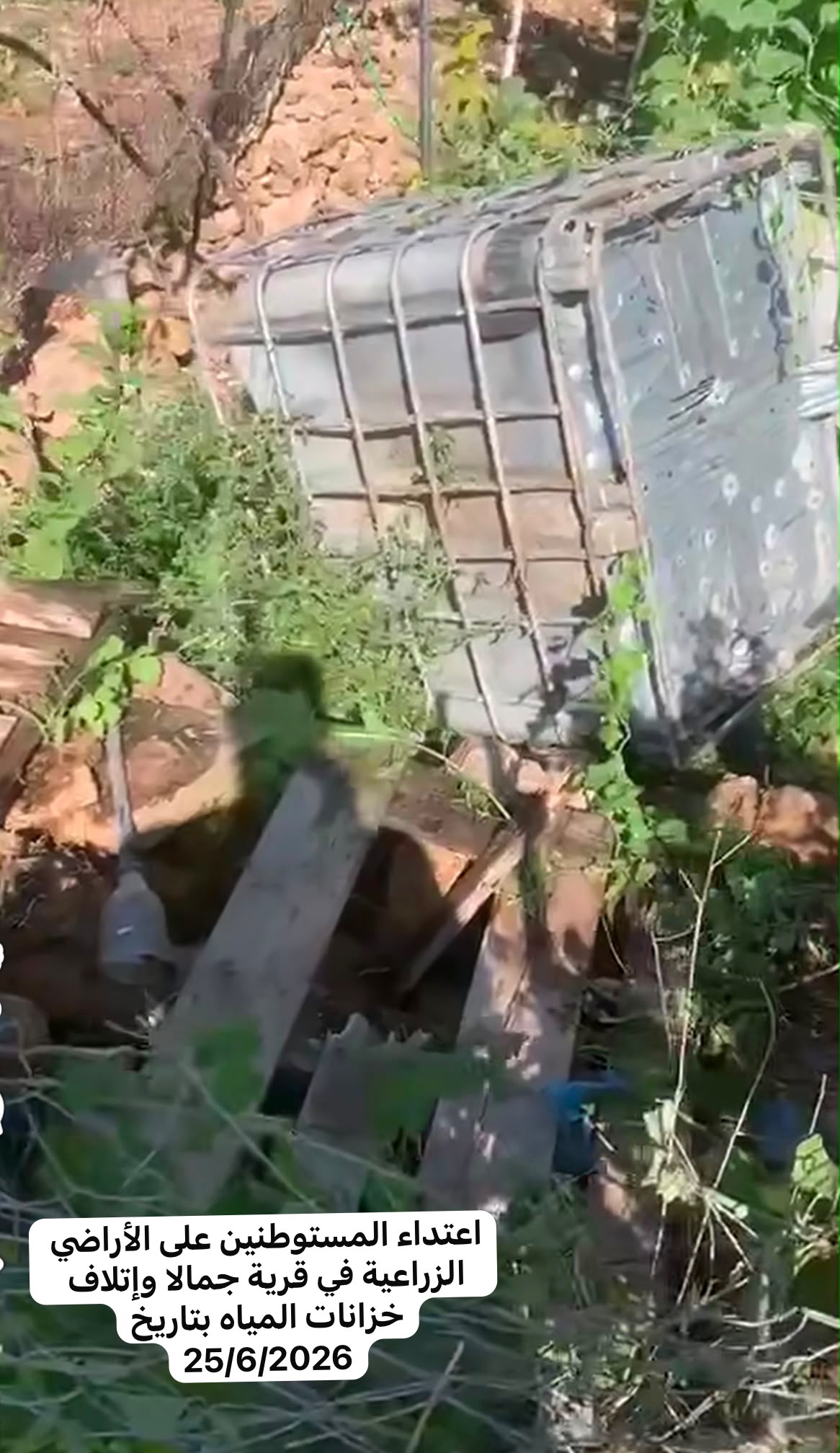
  • A decline in agricultural production due to the uprooting and burning of fruit trees, especially olive and grape trees, and the destruction of field crops, leading to losses in the current and future agricultural seasons. - Depletion of water resources through the demolition of water reservoirs, destruction of irrigation networks, and confiscation of water pumps, which threatens the sustainability of agricultural production and exacerbates water scarcity.
  • Weakening of Palestinian food security due to the decline in the production of staple crops and fruits, and the reduced ability of farmers to meet local market demands.
  • Significant economic losses for farmers due to the loss of mature trees, agricultural facilities, livestock, and agricultural equipment, impacting the income of farming families and increasing poverty and unemployment rates in rural areas.
  • Restriction of farmers' access to their lands due to settler attacks, eviction notices, and expulsion policies, preventing them from cultivating and tending their land and leading to a decline in agricultural investment.
  • Acceleration of settlement expansion through the targeting of agricultural lands adjacent to settlements and grazing outposts, contributing to the imposition of a new reality on the ground and the reduction of Palestinian agricultural land.
  • Threat to the sustainability of the agricultural sector.

The repeated targeting of agricultural infrastructure and production sources reduces the sector's ability to recover and continue operating.

  • Targeting the resilience of Palestinian farmers and forcing them to abandon their land due to repeated losses and the high cost of rehabilitation, which threatens the Palestinian presence in the targeted areas.
  • Damaging agricultural heritage and national identity by uprooting ancient trees, especially the ancient olive trees, which represent economic, historical, and cultural value for the Palestinian people.
  • The high cost of reconstruction and rehabilitation due to the need to rebuild water networks and agricultural facilities and replant trees, which requires many years and significant financial resources.

Ministry of Agriculture Interventions to Revitalize the Agricultural Sector:

Despite the scale of the ongoing Israeli attacks targeting the agricultural sector, the Ministry of Agriculture continues to implement urgent intervention programs to support farmers' resilience and enhance their ability to remain on their land, through:

  • Conducting technical assessments and documentation of damages using the "Al-Wateera" system, ensuring that losses are documented according to an approved national methodology.
  • Providing emergency interventions to rehabilitate damaged agricultural lands and remove the effects of the attacks whenever field conditions permit. - Rehabilitating and maintaining damaged water sources, irrigation networks, and agricultural facilities to the best of our ability.
  • Providing agricultural inputs to affected farmers, including seedlings, seeds, animal feed, and other production necessities.
  • Supporting the rehabilitation of orchards and the planting of fruit trees, especially olive trees, to preserve agricultural land and enhance the resilience of the population.
  • Strengthening livestock protection programs and supporting affected livestock breeders in the most targeted areas.
  • Preparing damage assessment reports and submitting them to governmental and international bodies and donors to mobilize the necessary funding for reconstruction and recovery.
  • Continuing fieldwork in threatened areas despite restrictions and risks, to ensure the continuity of agricultural services for farmers. The Ministry of Agriculture affirms that revitalizing the agricultural sector is no longer merely a development option, but has become a national and strategic imperative for preserving Palestinian food security, strengthening the resilience of citizens, and protecting the land from land confiscation and settlement expansion schemes.

The Ministry of Agriculture's Appeal to the International Community:

The Palestinian Ministry of Agriculture reiterates its urgent appeal to the international community, United Nations agencies, and international human rights and humanitarian organizations to assume their legal and moral responsibilities regarding the escalating violations against the Palestinian agricultural sector. These violations target the land, farmers, natural resources, and the foundations of food security in the Palestinian territories.

The continued attacks on agricultural lands, including bulldozing, uprooting, and burning, settlement expansion and the establishment of pastoral outposts, the confiscation of land and water resources, and the prevention of farmers from accessing their lands, pose a direct threat to the agricultural sector's ability to withstand challenges and produce, and undermine opportunities for rural development and economic and social stability in Palestine. The Ministry calls upon the international community to take immediate and effective action to halt these violations, provide protection for Palestinian farmers, their lands, and their property, compel the occupying authorities to comply with international law and international humanitarian law, and hold accountable those responsible for the repeated violations against the Palestinian agricultural sector.

The Ministry also calls for increased international support for agricultural recovery and rehabilitation programs, funding for land reclamation projects and the protection of natural resources, and enabling affected farmers to resume their productive activities, thereby contributing to strengthening their resilience and preserving food security and food sovereignty for the Palestinian people.