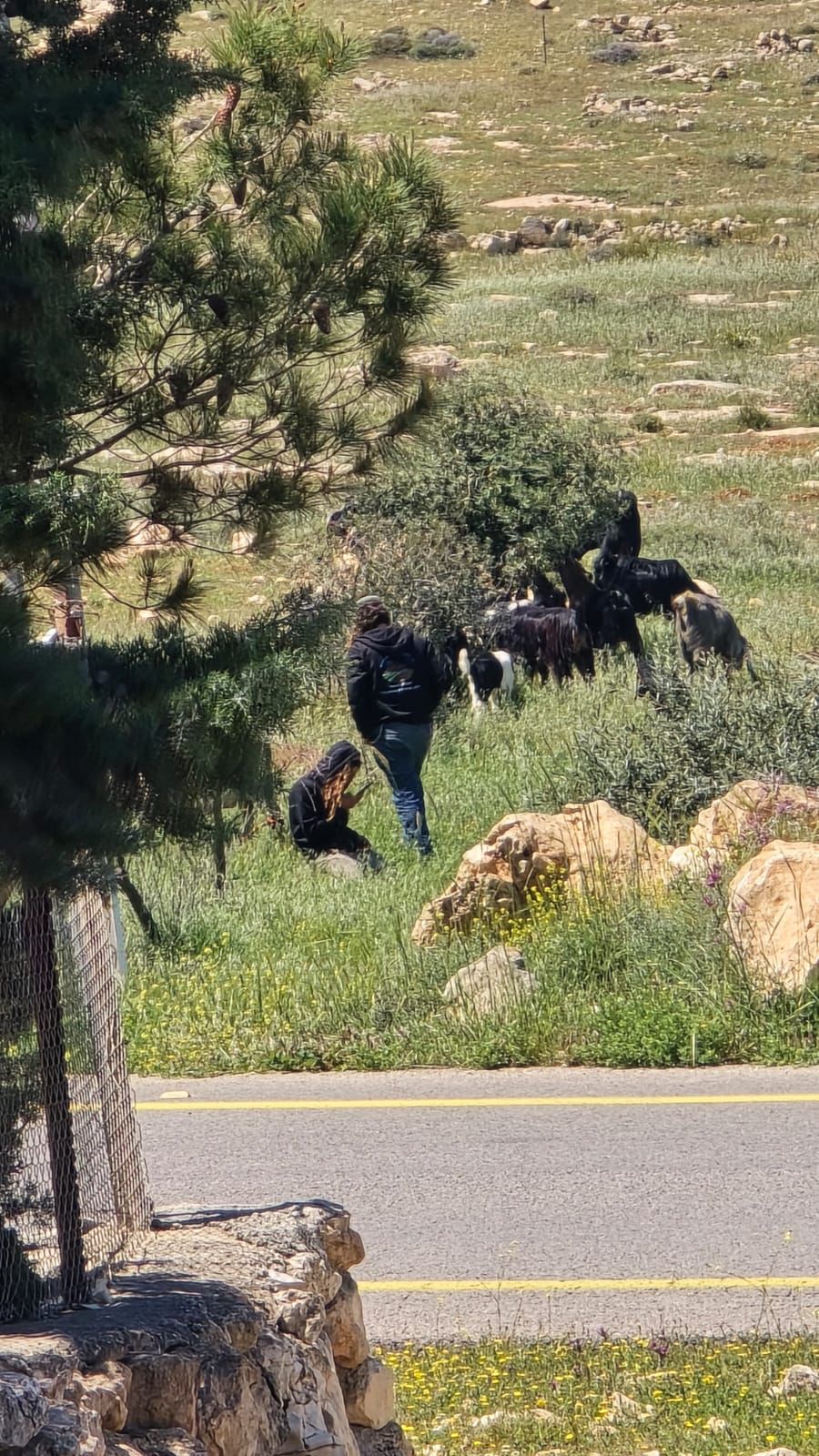
The Ministry of Agriculture monitored, during the period from 11/4/2026 to 16/4/2026, a series of attacks in several northern governorates. These attacks varied between uprooting fruit trees, destroying agricultural crops, assaulting livestock through theft and killing, demolishing agricultural facilities, seizing land, and constructing military and settlement roads. In addition, farmers’ access to their lands was restricted in areas near Israeli settlements and military camps. A summary is as follows:
Key Cabinet Decisions and Measures (within the current context):
First: Accelerating settlement road projects
Second: Legalizing settlement outposts
- Number of outposts under legalization: 10–15 in the near period
- Estimated area per outpost: 200–500 dunams
- Total threatened area: 2,000–7,500 dunams
Third: Expanding structural plans for settlements
- Number of settlement units being advanced: 3,000–6,000 units
- Number of targeted settlements for expansion: 20–30 settlements
Fourth: Seizure and confiscation orders
- Number of orders/notifications during the week (estimated): 15–30 notices
- Confiscated or threatened areas: 5,000–15,000 dunams
The continuation of these policies and violations, in the absence of international accountability, is likely to lead to further deterioration of the agricultural sector, deepen economic and social crises in rural communities, and increase the risk of forced displacement, thereby directly threatening the food security system and sovereignty over natural resources.
Documented Damage and Losses
The Ministry of Agriculture’s teams were able to document direct losses resulting from these attacks through the emergency damage assessment system. The total value of direct losses during the past week, as documented by field teams, reached approximately $2,516,075 USD.
Olive trees accounted for the largest share of these losses, with damages estimated at about $2,320,810 USD, affecting 1,831 mature olive trees aged between 30 and 100 years. These were concentrated in Salfit Governorate during the construction of a colonial road (“Samaria Crossing”) serving a large network of settlements.
Attacks also targeted grape trees, especially during the grape leaf harvesting season. A total of 330 grape trees were destroyed, with direct losses estimated at $88,500 USD, mainly in Halhul.
Distribution of Direct Losses by Governorate (USD):
| Governorate |
Losses (USD) |
| Hebron |
211,325 |
| Jerusalem |
381,715 |
| Ramallah & Al-Bireh |
461,921 |
| Salfit |
1,446,250 |
| Tulkarm |
14,864 |
| Total |
2,516,075 |
Summary of Damages by Governorate:
Hebron Governorate:
- Beit Kahil: uprooting of 250 olive trees
- North Hebron (Beit Ula): destruction of 110 dunams planted with wheat and barley
- 100 olive trees broken
- 30 almond trees broken
- 20 grape trees broken
- Bani Na’im: destruction of 150 mature olive trees; 50m of fencing damaged
- Halhul: uprooting of 330 grape trees
- Nuba: prevention of almond harvesting on 10 dunams
- Yatta (Tuba): theft of 5 sheep
- Al-Bayda & Khashm al-Karm: grazing of crops over 75 dunams; destruction of 40 cactus trees
Tulkarm Governorate:
- Kafr al-Labad: destruction of a 480 m² poultry farm; killing of 4,000 broiler chicks
Bethlehem Governorate:
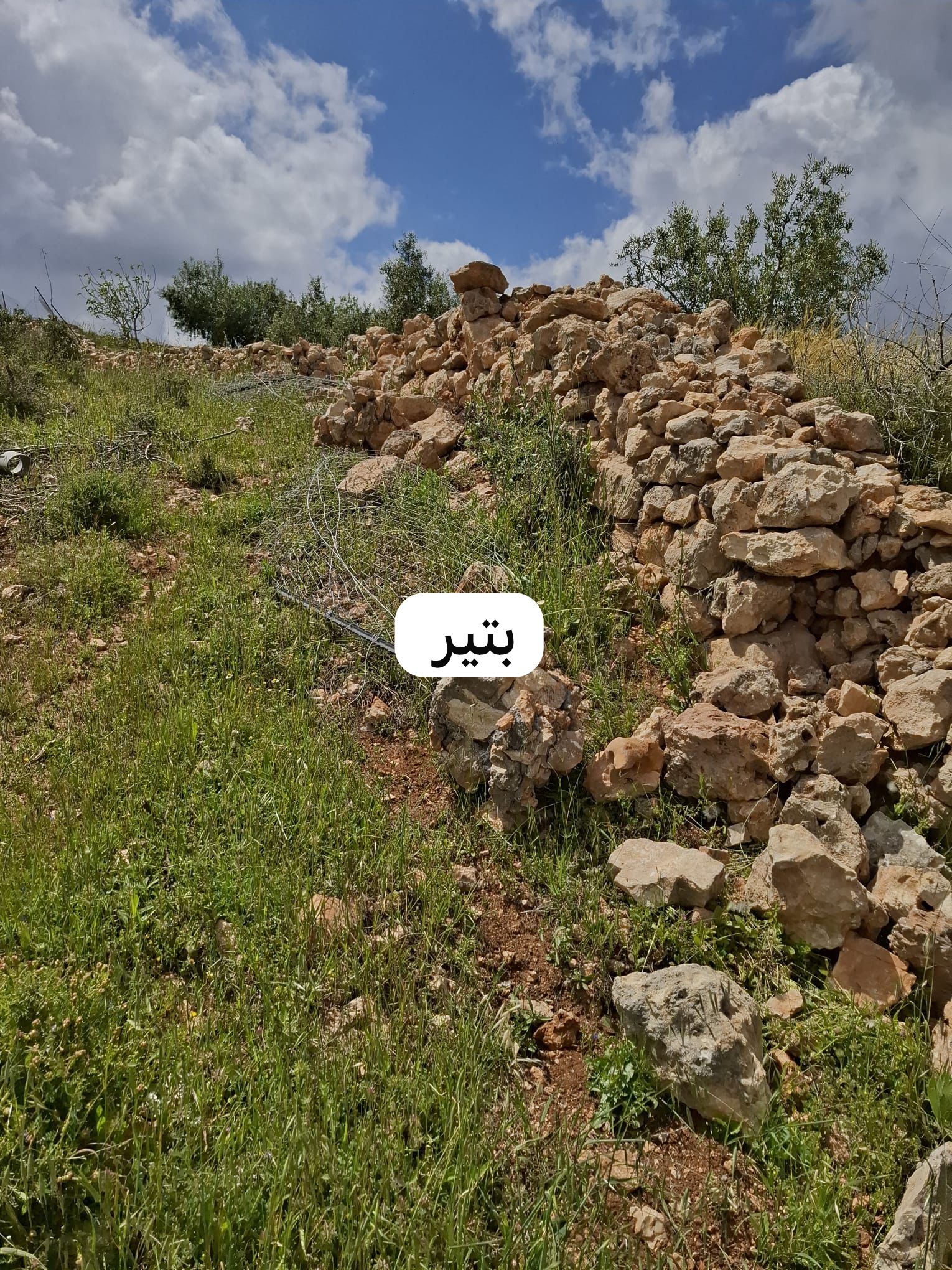
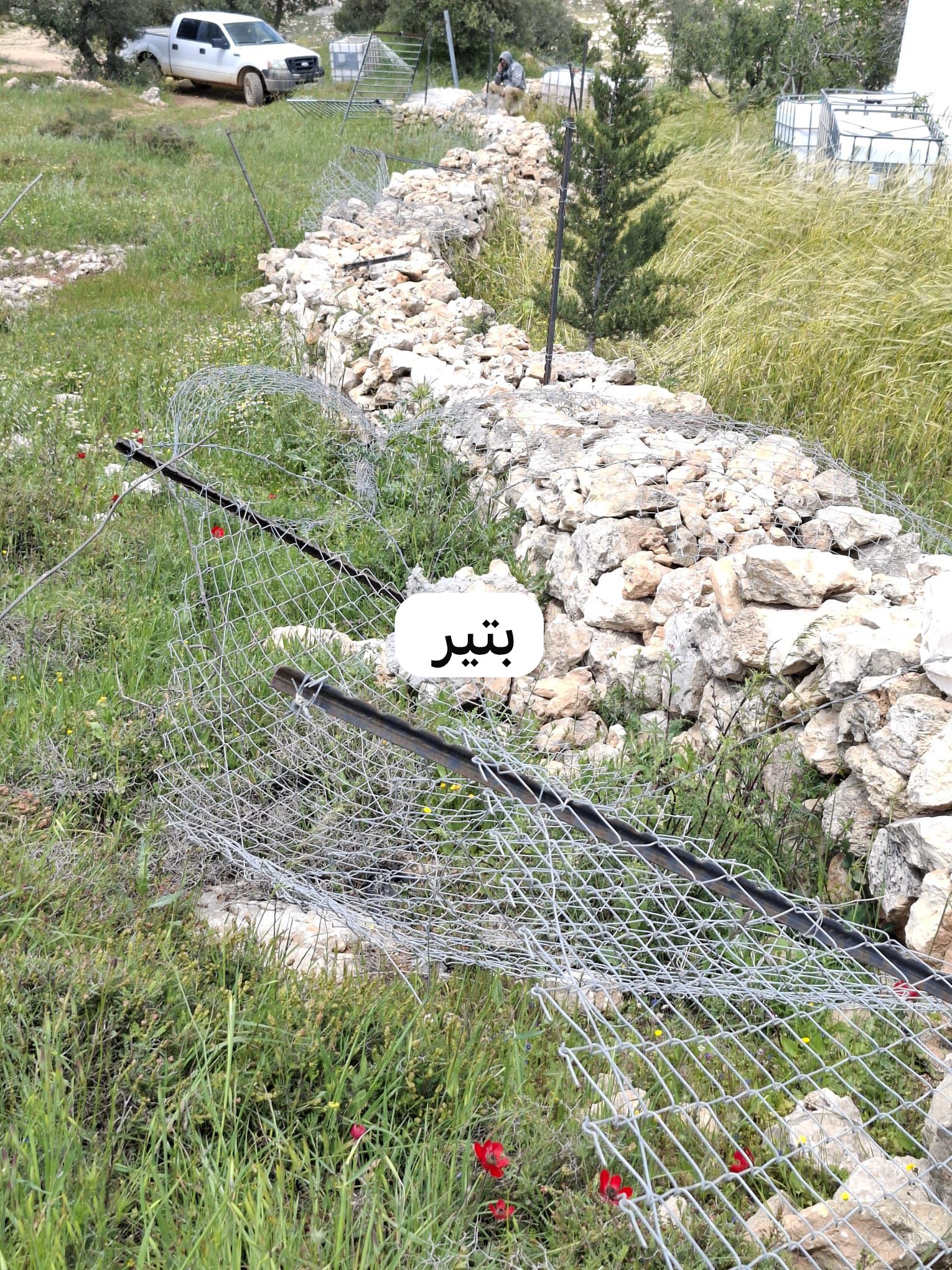
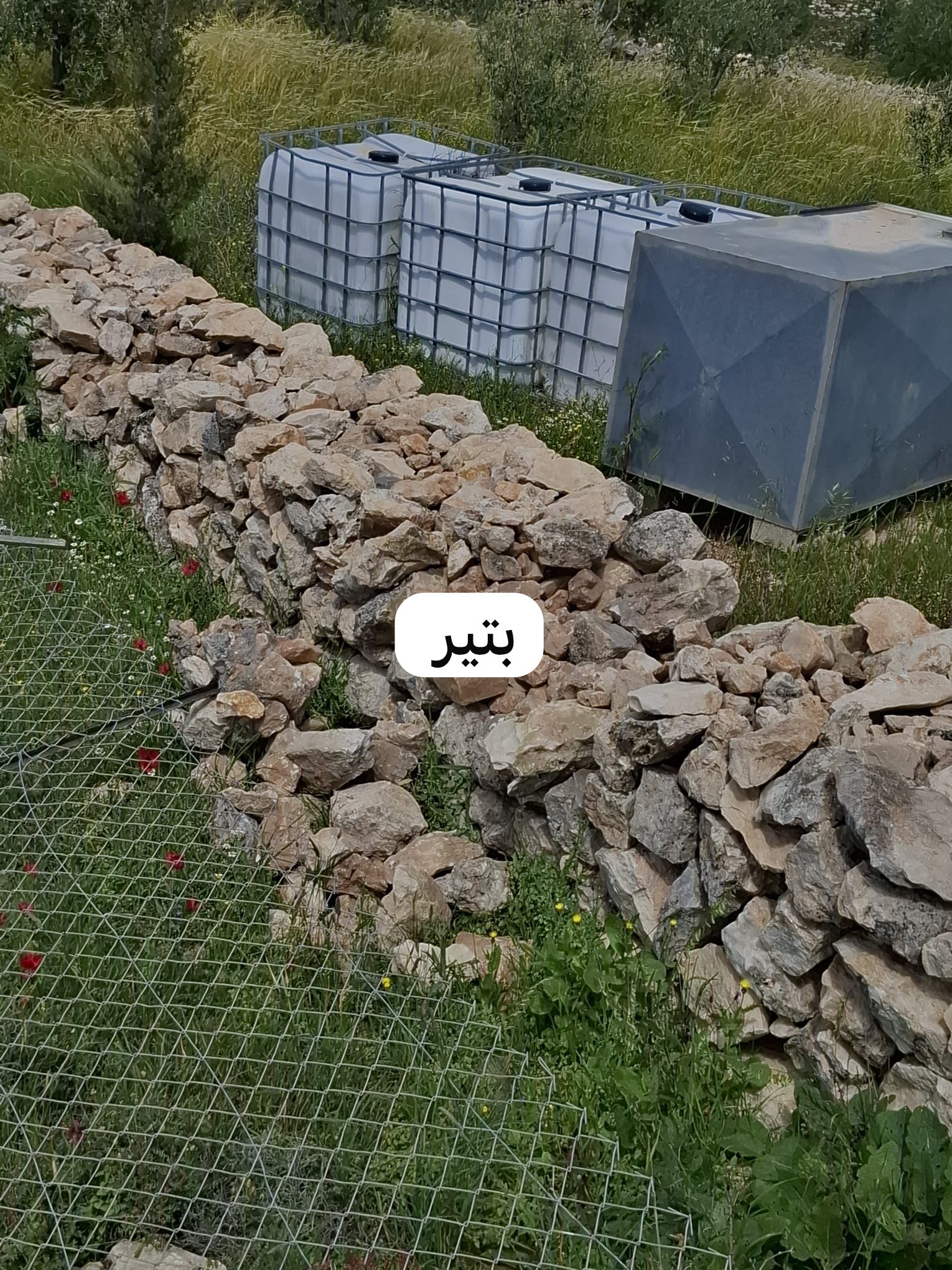
- Battir:
- Damage to 13 water tanks
- Theft and destruction of 250 meters of fencing
- Destruction of 80 iron corner supports
- Partial demolition of stone terraces
Salfit Governorate:
- In Marda, Kifl Haris, and Deir Istiya: uprooting of 723 mature olive trees for expansion of the “Samaria Crossing” road
Ramallah & Al-Bireh Governorate:
- Bil’in: uprooting of 55 olive trees (5 years old)
- Birzeit: destruction of a 60 m² sheep barn; theft of feeding troughs, water tanks, and equipment
- Turmus Ayya: uprooting of 80 olive trees (40 years old)
- Khirbet Abu Falah: theft of 101 sheep belonging to three farmers
- Deir Qaddis: uprooting of حوالي 110 olive trees
- Ras Karkar: uprooting of 45 olive trees
- Rantis: destruction of field crops over 4,020 dunams; damage to trees, fencing, and structures
- Deir Ammar: uprooting of 45 olive trees (50 years old)
- Yabrud: theft of 22 sheep
Jerusalem Governorate:
- Beit Iksa: burning of hay bales; destruction of water tanks, fencing, and structures
- Sur Baher: uprooting of 542 olive trees
Impact of Violations on the Agricultural Sector
1) Economic Impact:
- High direct losses ($2.5 million in one week), concentrated in long-term productive assets (mature olive trees), leading to loss of income for years, not just one season
- Decline in agricultural production (olive, grapes, field crops) and reduced market capacity
- Depletion of agricultural capital (farms, barns, water networks, fencing), increasing rehabilitation costs
- Disruption of production chains (e.g., killing 4,000 chicks, livestock theft), affecting local food security
2) Social Impact:
- Weakening rural livelihoods and pushing farmers toward poverty or abandoning their land
- Threat to community stability due to theft and destruction, increasing insecurity
- Decline in social cohesion tied to agricultural seasons (olive and grape harvests)
3) Environmental Impact:
- Destruction of century-old trees leads to loss of vegetation cover and increased erosion and desertification risks
- Damage to agricultural ecosystems (terraces, water systems, grazing lands)
- Overgrazing, burning, and land leveling accelerate soil degradation and biodiversity loss
The Ministry of Agriculture Calls on the International Community to:
- Provide immediate international protection for farmers and their agricultural property
- Pressure to halt settlement expansion and road projects (such as “Samaria Crossing”)
- Send international fact-finding missions to document violations and ensure accountability
- Provide urgent support for compensation and agricultural rehabilitation programs
- Guarantee farmers’ access to their lands and protection during agricultural seasons
The Ministry of Agriculture affirms that the continuation of these violations poses a direct threat to the sustainability of the Palestinian agricultural sector, deepens economic losses, drains productive resources, and worsens social conditions for farmers. It also causes serious environmental damage, including soil degradation and loss of vegetation and biodiversity.
The Ministry warns that escalating attacks, without effective international intervention, will accelerate the decline in food security and limit the agricultural sector’s ability to continue, requiring urgent action by the international community to fulfill its responsibilities in protecting farmers, stopping these violations, and supporting agricultural rehabilitation efforts.