Notification
حظر استيراد كافة أنواع الطيور الحية الداجنة والبرية وطيور الزينة وبيض التفقيس والصيصان عمر يوم ومخلفاتها الغير معاملة حراريا من تركيا ولحين استقرار الوضع الصحي

Hebron: May 9, 2026
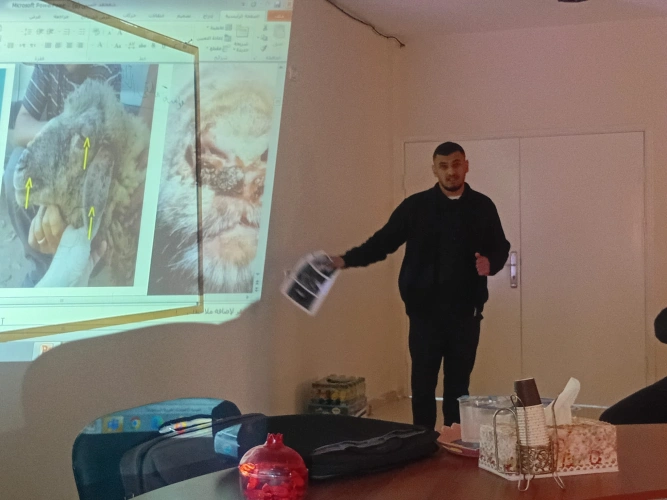
Dura Agriculture Directorate, represented by its Animal Production and Veterinary Services departments, conducted the fourth session of its "Field Schools" training program, as part of "My Initiative" project. The session targeted sheep farmers in the Al-Sarra area and surrounding communities south of Hebron, with 20 sheep farmers participating.
The training session saw active participation from the farmers benefiting from the project. Veterinarian Dr. Muhammad Jawadeh delivered a specialized presentation on diseases causing abortions in sheep, reviewing the most prominent bacterial and viral causes and methods of prevention. He emphasized the importance of proper nutritional management for ewes during different physiological stages.
For his part, the head of the Animal Production Department, Engineer Ahmad Tabisha, stressed the importance of balanced nutrition in reducing abortion problems and improving productivity. He emphasized the necessity of adhering to national vaccination programs against epidemic diseases, particularly brucellosis and foot-and-mouth disease, which contributes to preserving livestock and reducing newborn mortality rates. At the conclusion of the meeting, the participating farmers expressed their appreciation for these field extension interventions, emphasizing the importance of acquiring modern scientific skills in developing sheep farming projects and transforming them into sustainable agricultural investments. They also called for the continued provision of essential vaccines to protect their flocks and enhance production stability.
These activities are being implemented within the framework of "My Initiative – Empowering Marginalized Communities through Investment in Agribusiness Development" project, a partnership between the Palestinian Ministry of Agriculture and the United Nations Development Programme (UNDP), with support from the International Bank for Agricultural Development (IBSA), which includes India, Brazil, and South Africa. The project aims to build the technical and institutional capacities of farmers and promote sustainable rural development in the targeted areas.


